EPT Prague: Tips from the top: Kenny Hallaert on how to make the most of your EPT
He's been to two World Series finals in a 20-year poker career, so it's worth listing to Kenny Hallaert's top tips on surviving the EPT
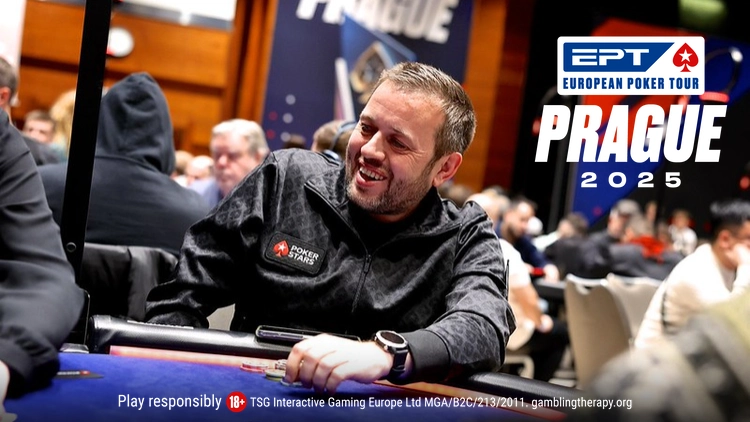
Playing any poker festival is tough. But imagine doing it pretty much every month for 25 years. That takes incredible dedication and longevity, as well as unique skill set that you find in only the most talented players.
In other words, it takes Kenny Hallaert.
At EPT Malta back in October, we sat down for an extended interview with the Team PokerStars Ambassador and two-time WSOP Main Event final table finisher. At the time, Hallaert was focused on trying to win the PokerStars Live League, but the advice he offered about how to make the most out of an EPT festival is timeless.
Drawing on that interview, here are some of Kenny Hallaert’s top tips for approaching an event on the EPT.
STUDY THE SCHEDULE CLOSELY AND TAKE ADVANTAGE OF LATE REG
Any EPT festival has numerous different events at all price points, offering players the broadest selection of tournaments at any European poker festival. Hallaert advises studying the schedule closely, both before travelling and while you’re on site, to maximise your time and playing all the events that suit you best.
It’s also well worth remembering that late registration is open on almost all EPT events, and it often makes sense to join the tournament slightly later than the advertised start time. This is especially useful if you’re either playing another event, or merely need some extra time to sleep, relax or work out before playing.
Hallaert says: “It is exhausting. I do it by not starting every tournament necessarily at level 1. Because I know that if a tournament starts at noon, I might still be playing until 3am, because if I bust this, I want to go enter another one.
On an average day, for example, there might be a tournament starting at 1. My plan might be just to jump in after the first break.“

CLICK HERE TO VISIT THE POKERSTARS STORE – USE PROMO CODE EPTCZ25 FROM DEC 3-14
BE PREPARED TO BE FLEXIBLE

Kenny Hallaert has been at the top of the game for more than 20 years
It’s very difficult to know precisely how long any tournament is going to last. In some instances, you could bust in the first level. At other times, you could be negotiating an ICM chop at 3 a.m. It means that there’s only a certain amount of planning you can do ahead of time. You need to be flexible with your time.
Hallaert says: “I don’t have routines. It’s nearly impossible. Sometimes you’re done at 9pm, other times you’re playing until 2am. You don’t really know when you start the day how your day will finish and when the next day will look. If I would have had a restart, well I would probably have to restart at noon.
“Some days I will go to the gym. But if I’d had a restart I would have had to skip that. So it’s really hard to plan, say every other day I’m going to go to the gym, because you just don’t know. Usually when you actually make a Day 2 you’re been playing later, and you have to start at noon or 1pm. So those are actually the days when you don’t have the room to do something relaxing. But when you don’t have a day 2, you can take it a bit easier. There’s never something set in stone.
“Just go with the flow, take it day by day. I do have my schedule of tournament that I’m interested in playing, but you just adapt on the go. You take it day by day. Having more than 20 years experience as a player definitely helps to just stay calm and be able to take it easy. Don’t be too stressed about it.
“Sometimes there’s multiple tournaments going on at the same time, so you have to pick and choose a little bit. It is definitely quite the grind. When you’re busting a tournament, you’re quickly opening the app to see what’s the next one that I can play. And how will I plan my day. If I bust from this, what can I play? Or should I first play this and then play the other one. It requires a little bit of planning.”
PRIORITISE YOUR HEALTH AND WELL-BEING — AND KNOW YOUR LIMITS
Probably the single biggest way that poker has changed in the past two decades is the way in which players look after themselves. There was a time where poker players were stereotyped as heavy drinking, unhealthy night owls, who would be more wary of a bowl of salad than a 48-hour sleepless binge.
And it’s absolutely vital that you look after yourself if you’re going to be a successful poker player.
Hallaert says: “Make sure you’re not getting burned out. Still try to get in a good amount of sleep every night. That’s key.
“I try to work out a little bit, try to eat healthy. No alcohol. All of these things definitely help you throughout the festival. To keep your focus going on.
“When you’re younger, you definitely have more energy and it’s easier to put in the grinds. Online as well. Twenty years ago, I had no issues 15 tabling for 12 hours long. That was fine to do. I was able to keep up with it. But nowadays, no. The younger you are, the more energy you have. The older you are, you need to make sure you prepare a little bit more and be aware of more times when your tiredness might take over.
“That grows throughout the years. You learn how to adapt. You learn more about yourself throughout your career what you can do, what you can’t, what your limits are. In that sense, you always try to think what’s the best for me, what’s the optimal for me, whenever I’m going into a festival.
“Take half a day or a day off, just so you can recharge yourself.
“Going out isn’t always good when you’re on a poker trip, at least not anymore. Fifteen, 20 years ago, at 6am you would still find poker players in the club. But nowadays you find them at 7am in the gym. That’s how the game has changed.“
IF POSSIBLE, ALLOW YOURSELF TIME AT THE END OF THE FESTIVAL TO RELAX

Remember to unwind too during EPT Prague
While professional players are obviously common at a festival as prestigious as the EPT, the majority of people don’t play poker for a living. They have a real job back at home and only play poker while on vacation. It’s often the case that a trip to the EPT is costing a few days’ annual leave at least.
Even if that’s the case, however, it’s good practice if possible to build something of a buffer around a trip to a poker festival. It’s going to be draining, but it helps if you know that you’ll be able to wind down and recharge a little at the end. The ultimate aim is to have a deep run in a big event, and that’s going to mean burning the candle at both ends. Your body has its own way of keeping you going, but it’s eventually going to need a recharge.
Hallaert says: “You do feel at the end of the festival that you are tired. The first day when you get home, you get a good night of sleep for sure. Because you have to be focused all the time.
“When you’re having a deep run, once you get to like Day 5 and Day 6, things start to get real. And that’s where your amount of sleep actually decreases, but the adrenaline makes up for the lack of sleep when you’re at that stage.“
WORK ON THE ‘SOFT SKILLS’ AS WELL AS THE NITTY GRITTY
Core poker skills have developed tremendously through the two-and-a-half decades Hallaert has been playing poker. Nowadays there are many, many incredible training aids available to players to sharpen their skills.
But Hallaert says it’s also still vital to work on what he calls the “soft skills”, namely emotional control and bankroll management. He says they are the deciding factor in allowing him to have prospered for so long.
Hallaert says: “I’ve seen many people come and go throughout my whole career, many people who were better poker players than I am. But to be a good poker player, you do not only need to be good at poker. You also need to have good soft skills: you need to have good bankroll management, you need to have a lot of patience, self control, all of these things. A lot of people just don’t have that.
“The reason I’m still around is because I do have a lot of these soft skills that I think I manage quite well. Other people, purely technically at the game of poker, they are better. But they can’t handle the money. They can’t handle the swings. They can’t handle the emotions. And sooner or later they have to step out of the game.
“That’s a bit of a pity for a lot of these players because they definitely had the skills in them, the basic poker skills to make a successful career in it. But they were missing all those soft skills.
“If you want to be able to play this game for a long time, you have to have your emotions so much under control, and all the other aspects of the game as well. Otherwise sooner or later you will have to leave the game, or start from scratch again. And that’s not something that you want. For me, I’ve always been very aware. I’ve always had good bankroll management. I’ve learnt to control my emotions. Yes, I did have emotional moments as a poker player early on in my career, but I learnt to overcome those emotions and I learn to accept things that you don’t have control over.
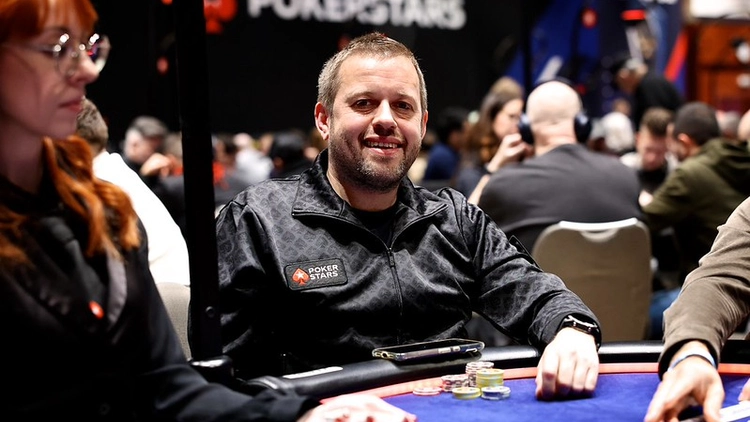
At 44, Hallaert still retains the sharpness he had when he was much younger
“You can’t control what your opponents are doing. You can only control what you are doing, and then you’re still often depending on the cards that come. Yes, yes, sometimes you will lost 10 coin flips in a row, and your aces will get cracked three times in a row. But that’s just part of the game. That’s why we like the game as well because if the best hand always held up, it wouldn’t be fun anymore. You learn to accept these things and you learn to understand how the game works as well. That’s why, 21 years later and I’m still here. And that’s not necessarily because of my poker skills.
“I’m not going to say I’m a bad player, but I’m definitely not the best player out there. But I’ve managed the other things that come with it very well.
MORE
Back to TopLatest Articles



View Other Blogs