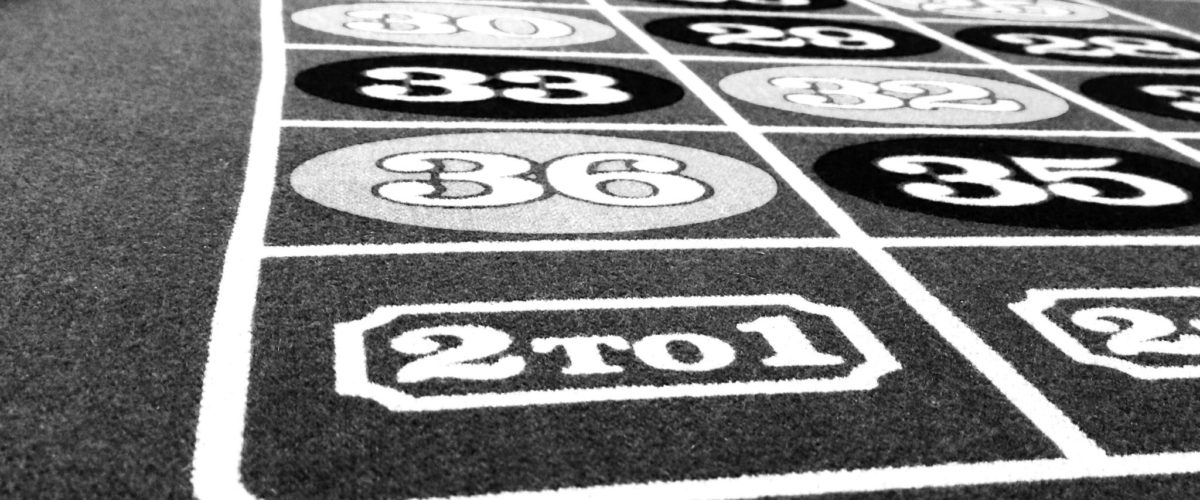
American Roulette Explained
When it comes to classic casino table games like roulette, there are lots of different varieties. It is therefore always important for a player to know the vagaries of each form of the game before placing chips on the various numbered and colored sections of a table.
What Is American Roulette?
American Roulette was derived from European Roulette and its main point of difference is that rather than having one green slot on the roulette wheel, it has two, which come in the form of numbers “0” and “00”. This affects the house edge, with it being 5.26% in American Roulette and 2.7% in European Roulette.
Keeping in mind that only 36 red or black numbers can be bet on also at an American Roulette table, the game works in much the same way as its European predecessor, however, more attentive players will have noticed that the sequence of numbers displayed on the wheel is different.
Online casinos now also tend to boast Live American Roulette, which has live dealers on hand to spin the wheel for virtual customers. Of course, there is always an automated version of the game available as well.

The Difference With American Roulette
What are the differences between American roulette and traditional roulette?
The Double-Zero Difference
The addition of the double-zero is not just a cosmetic change, it alters the mathematical advantage. With 38 pockets (numbers 1–36 plus 0 and 00), the true odds for a straight-up single-number bet are 1 in 38, yet the payout remains 35 to 1. This discrepancy yields the well-known 5.26% house edge, nearly double that of the European version with only 37 pockets .
Bet Types & Winning Chances
American Roulette offers a range of inside and outside bets, similar to its European counterpart:
- Inside bets include straight-up, splits, streets, corners, and lines. These deliver larger payouts (up to 35:1) but come with lower probabilities.
- Outside bets focus on red/black, odd/even, dozens, and columns. These have higher chances of hitting but yield more modest payouts (even-money up to 2:1).
Crucially, every bet includes the risk posed by both 0 and 00—meaning even outside bets can lose to either green pocket.
The History of American Roulette
Origins
Roulette as a concept dates back to 18th-century France, where it was influenced by earlier games like Roly Poly and Biribi.
The final wheel design is credited to Blaise Pascal, whose attempt to invent a perpetual motion machine inadvertently gave rise to one of the most enduring games of chance.
Over time, the game evolved into its current form, spreading from Parisian salons to casinos across Europe.
US Adoption
When roulette crossed the Atlantic in the 19th century, it took on a new identity. In the United States, casinos introduced a second zero (00) to increase their advantage.
In fact, early American versions also featured a third pocket labelled with an eagle, which further skewed the odds in favour of the house.
This was later dropped, but the double-zero format stuck and became the standard in American gambling establishments.
American Roulette Strategy Tips
While American Roulette carries a higher house edge than its European counterpart, players can still make informed choices to manage risk and extend playtime. No betting system can overcome the built-in mathematical advantage of the casino, but understanding how different bets work can help you play more strategically.
One common approach is to focus on outside bets such as red/black, odd/even, or high/low. These bets offer close to a 50% chance of winning (excluding the 0 and 00), which can help smooth out variance compared to inside bets. Although payouts are smaller, they may allow your bankroll to last longer.
Another option is to use structured betting systems like the Martingale, Fibonacci, or D’Alembert systems. These systems don’t change the house edge, but they can help players manage bet sizing and avoid emotional decision-making. It’s important to remember that table limits can restrict how effective progressive systems are, especially after a long losing streak.
Setting clear limits on how much you’re willing to spend and sticking to them ensures roulette remains entertainment.
The Role of the Roulette Wheel Layout
The physical design of the American Roulette wheel plays an important role in the game’s appeal. Unlike the European wheel, the American version places the 0 and 00 next to each other. This positioning increases the frequency with which outside bets are disrupted by green pockets.
Casinos also rely on the visual and tactile experience of the wheel to create excitement. The alternating red and black numbers, the spinning ball, and the anticipation of the final landing spot all contribute to roulette’s enduring popularity. In live casino settings, these elements are enhanced by real dealers, authentic wheels, and streamed gameplay.
Online versions replicate this experience digitally, with random number generators (RNGs) ensuring fair and independent outcomes on every spin. Reputable platforms regularly test and certify their RNG software to meet regulatory standards.
Live American Roulette vs Online Versions
Modern players can choose between traditional online American Roulette and live dealer versions. Each has its own advantages depending on personal preference.
Standard online roulette is fast-paced and convenient, allowing players to spin the wheel instantly and place bets with minimal delay. This version is ideal for players who prefer quick sessions or who want to test strategies efficiently.
Live American Roulette, on the other hand, recreates the casino atmosphere more closely. A real dealer spins a physical wheel in real time, with players placing bets through an interactive interface. Live chat features also add a social element, making it popular with players who enjoy a more immersive experience.
Both versions follow the same rules and odds, so the choice largely comes down to style rather than strategy.
Why American Roulette Remains Popular
Despite its higher house edge, American Roulette continues to thrive, particularly in the United States. Many players are introduced to roulette through the double-zero version and stick with what they know.
The game’s simplicity is another factor. There’s no complex decision-making, no skill barrier, and no learning curve beyond understanding the bet types. This accessibility makes it appealing to casual players and newcomers to casino play.
Additionally, American Roulette is often featured in land-based and online casinos, sometimes even more so than European Roulette. The promotions, bonuses, and table availability can also influence player choice.
American Roulette in Tournaments and Promotions
Some casinos and online platforms incorporate American Roulette into tournaments or leaderboard promotions. These events reward players based on volume or total winnings over a set period rather than outcomes.
The higher volatility of American Roulette can sometimes work to a player’s advantage. However, this also increases risk, making discipline and bankroll awareness even more important.
Final Thoughts on American Roulette
American Roulette is a classic casino game with a long and fascinating history. While its double-zero wheel favours the house more than European or French versions, it remains a staple of both land-based and online casinos.
For players who value atmosphere, tradition, and straightforward gameplay, American Roulette offers an enjoyable experience. It’s important to understand its differences, odds, and betting structure so you approach the game with realistic expectations. You can play many versions of American roulette at Poker Stars Casino.
FAQs
What is the house edge in American Roulette?
Is American Roulette harder to win than European Roulette?
Why does American Roulette have two zeros?
Should I always avoid American Roulette because of the higher house edge?
Is the number sequence different in American Roulette?

Top Content



Trending