Common Blackjack Mistakes to Avoid
Blackjack is often referred to as the casino game with the lowest house edge. Of course this could be the case if you were to play it perfectly. However, many players slip up through small, common mistakes. Whether you’re an online table player or live casino player, understanding and avoiding these pitfalls is one of the fastest ways to sharpen the experience.
This guide will walk you through the most frequent mistakes and how to fix them.
Ignoring the Basic Strategy
The basic blackjack strategy, which is sometimes referred to as the optimal strategy or the chart strategy, is the mathematically derived rule set that tells you exactly what bet to consider based on the card on display.
If you deviate from this strategy, it can potentially introduce mistakes that drive the house edge further in favour of the casino.
Common mistakes
- Standing on hard 12–16 against a dealer 10 (when the strategy chart says to hit).
- Failing to double down on 11 or soft hands when the dealer shows a weak up-card.
- Hitting or splitting where strategy tells you to stand or stay.
- Misplaying soft totals because “17 sounds safe.”
How to fix it
- Memorise or carry a Basic Strategy card (you can find these online).
- Practice in free or demo mode until the decision-making becomes instinctive.
- Start by mastering the spots (hard 12–16 vs. 10, splitting 8s/aces, doubling on 11) before refining the strategy.
Choosing Poor Blackjack Game Rules
In blackjack, even perfect play can’t fully overcome unbalanced rules. You should always make sure you know which game rules are being used before you join the table. Here are the rules to be aware of.
Payouts: 6:5 vs 3:2
Many modern blackjack tables pay 6:5 for a natural blackjack, which gives you 1.2× your bet back, instead of the traditional 3:2 (1.5×).
Dealer hits versus stands on soft 17
If the dealer is required to hit soft 17, it gives the house an extra edge of around 0.2 % compared to a table where the dealer stands on soft 17.
Doubling and splitting
Tables may restrict doubling only on 10–11, or disallow doubling after splitting, or disallow re-splits of aces.
Surrender rules
Some games offer late surrender, allowing you to forfeit half your bet against a poor up-card.
Number of decks
Playing tables with fewer decks, like single- or double-deck games, slightly favours the player more than heavy multi-deck games. As decks increase, the house edge typically creeps up.
How to fix it
- Always check the table rules before joining
- Always play the games with favourable rules
- On online platforms, many tables show the rules set clearly, so don’t skip that step.
Insurance or Even Money
Insurance is arguably the most misunderstood side bet in blackjack. When the dealer shows an Ace, you’re offered insurance, which is a side wager up to half your original bet. The bet is that the dealer’s hole card is a ten-value card, resulting in a natural blackjack.
The probability of the dealer having a ten in the hole is about 31%, and the payout is 2:1. That expectation does not justify the cost of the bet. The insurance bet has a house edge far exceeding the main game.
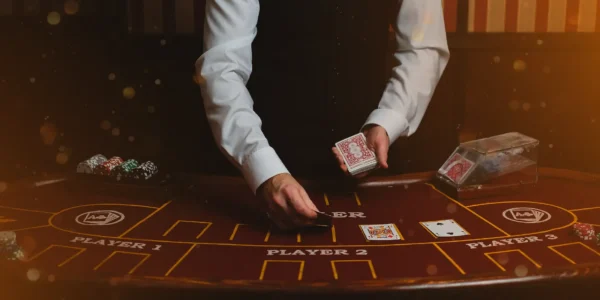
If you take even money, like accepting 1:1 on your blackjack when the dealer shows an Ace, you effectively give up your advantage. Mathematically, it’s identical to taking the insurance bet. You should only consider the insurance bet if you are card counting and know that the deck is heavily rich in tens.
How to fix it
- Resist the pressure or temptation when other players take insurance that doesn’t change the underlying math.
- If you’re doing advantage play or counting, plan a strategy around insurance
Splitting and Doubling Mistakes
These are among the highest leverage plays in blackjack, but also where inexperienced players often misstep.
You should never split 10s, as a 20 is a superb hand. Breaking it into two 10s typically weakens your average value unless you have a very strong count advantage.
Consider whether to split Aces and 8s as a pair of Aces gives two strong starting hands. A pair of 8s (16) is one of blackjack’s weakest hands, so splitting should be considered. For other pairs, the decision depends on the dealer’s up-card. Rely on your strategy chart (e.g. split 2s/3s vs dealer 4–7).
Doubling-down mistakes
- Look at whether it makes sense to double when the dealer’s hand is strong, such as against dealer 9, 10, or Ace in many cases.
- Missing double opportunities, especially doubling 11 vs dealer’s low up-card (2–10), or soft totals like A-3 through A-7 under favourable up-cards.
- Doubling on soft 17 incorrectly, like doubling A-6 vs a dealer 2, in many multi-deck games, consider other options instead. But against a dealer 3–6, you can consider double soft 17 (in certain rule sets).
- Some casinos restrict doubling after splitting or on certain hands. If you don’t adjust for those restrictions, you may misapply your blackjack strategy.
Multi-card soft hands and misinterpreting soft totals
If you already hit once, like 2 + 4 + Ace = soft 17, doubling might not be allowed. Many players freeze or stand in this case. The basic strategy for multi-card soft hands typically defaults to hitting in those cases.
You should practice your splitting/doubling decisions in demo mode and always consult your chart for splits and doubles in each table’s rule environment. Be especially cautious with soft-hand doubling in multi-deck games.
Poor Bankroll Management
Blackjack, even when played optimally, has variance. You will hit losing runs, and how you manage those swings is important in the long run.
This is one of the most psychologically damaging mistakes in any casino game. After a bad run, players may double or triple down in an attempt to get back some of their losses. But each new hand is independent, and increasing bets irrationally often accelerates your losses.

Common mistakes
- Betting too much of your bankroll in a single hand.
- No stop-loss or win limits, many players go ‘all in’ and bleed.
- Replenishing mid-session
- Switching to wild bets or abandoning the strategy when losing
How to fix
- Only gamble with disposable funds you can afford to lose.
- Consider a unit system – e.g. 1x, 2x, or 5x your base bet and consider cap bet scaling.
- Consider setting session limits like stop-losses and win-goals before you start.
- Avoid emotional play and take breaks, step away if you feel tilted.
Misunderstanding Odds and Variance
Ultimately, Blackjack, while skill can be beneficial, is a game of chance. There are some psychological myths and misinterpretations that cause players to make poor decisions.
The gambler’s fallacy
Many players believe that if they’ve lost several hands, a win is just around the corner. But each hand is completely independent, and past outcomes do not affect future ones.
Variance vs expectation
Even the perfect play strategy will not guarantee consistent success. You may lose several hands in a row even when playing optimally. That’s variance, not necessarily error.
Overvaluing “systems”
Systems like Martingale (doubling after every loss) or Fibonacci betting do not change the expected value. They just amplify the risk and can cause losses when a bad run is hit.
Thinking “luck will turn”
Some players lose discipline when they feel ‘lucky’. That’s when losses can happen. Treat each hand the same.
How to fix
- Accept that variance is part of the game.
- Judge your performance over many sessions and don’t let a single outing dictate your view.
- Stick to the strategy and bankroll rules.
- Avoid switching strategies mid-session unless a rule shift dictates it.
Etiquette, Tempo & Distractions
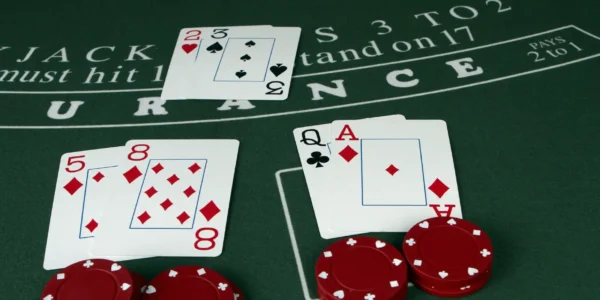
While etiquette doesn’t directly impact the odds, poor behaviour or distraction can lead to mistakes or slower play, which annoys others and can invite errors. This can include Fumbling cards or chip bets (in live blackjack) or using vague gestures or not announcing decisions clearly. Another is taking too long to act and disrupting the flow of the game. Additionally, using your phone or getting distracted will take you off track and drinking too much alcohol while playing will affect your decision-making.
How to fix
- Learn standard hand signals (hit, stand, double, split) and use them confidently.
- Observe table etiquette and be courteous and mindful of pace.
- Stay focused and take breaks to refresh your concentration.
- Don’t advise other players unless asked politely.
Underestimating the House Edge
Some players, if they hit a winning streak, let mistakes creep in. They relax, start making speculative plays, or raise bet sizes prematurely. Similarly, underestimating how small and persistent the house edge is can lead to complacency. A 0.5 % edge sounds small, but over thousands of hands it compounds.
How to fix
- Never assume you “beat” the house, and always stay humble and disciplined.
- Maintain discipline when increasing bets only when your strategy justifies it.
- Track your wins/losses and check your error rate.
- Use tools like simulators or hand analysis to spot rough patches or bad habits.
Failing to Adapt to Live vs Online
Although the core strategy is the same, some differences between live and online blackjack can lead to errors if you aren’t prepared.
Speed/pressure: Live dealers maintain pace, so pausing or hesitating may annoy others or lead to mistakes. In online games, you have more time, but distractions may exist.
Table transparency/card visibility: In person, you may see subtle card behaviour, but online, you rely entirely on clear interface cues.
Shuffling frequency / continuous shuffler: Many online tables use automatic shuffles or continuous shuffling, which eliminates advantage play or counting.
How to fix
- Be conscious of time and don’t rush under pressure. If unsure, fall back to safe plays until you confirm the rules.
- In live play, manage chip stacks and be deliberate in stacking bets to avoid errors.
- In online games, make sure your interface is reliable and your decisions are clearly registered.
- If you’re ever unsure whether a rule applies in online play (e.g. doubling after split), check the game rules screen.

Practice, Review & Self-Analysis
Even a skilled player leaks value if complacent. One of the biggest mistakes is not reviewing your own play. Practising the game continually cements good decisions into intuition. It also helps you spot common deviations or bad habits creeping in and lets you experiment in a low-stakes environment.
How to fix
- Play in free/demo mode and test your decisions vs basic strategy.
- Use hand re-players or tracking tools to record how often you deviate from optimal play.
- After a live or online session, take some time to reflect. Did you deviate under pressure? Did you chase a loss? Which decisions cost you?
- Consider keeping a playing journal to record the hand, decision, correct move, and result.
Related Blackjack Articles
Conclusion
Blackjack offers one of the most compelling blends of skill and luck among casino games. When you minimise the avoidable mistakes, you give yourself a fighting chance to experience long and satisfying sessions. Here are a few key takeaways to keep in mind:
- Don’t wing it. Use Basic Strategy.
- Choose your tables wisely.
- Protect your bankroll.
- Stay disciplined, review your play, and improve.
With patience, practice, and self-awareness, most of the common blackjack mistakes can be eliminated. Over time, your error rate will shrink. You’ll soon find yourself making fewer mistakes.

Top Content



Trending