How Playing Card Designs Have Evolved Over Time
Playing cards have existed for centuries and have long been a staple of casino gaming, both in the online casino and physical forms.
Their designs have gone through countless transformations, reflecting changes in culture, printing technology, political symbolism, and artistic trends.
From hand-painted medieval decks to sleek, minimalist modern cards, their journey is as rich and fascinating as any game they’ve ever been part of.
The Origins of Playing Cards
Most historians trace the origins of playing cards to 9th-century China, where early forms of card play combined elements of gameplay and chance.
By the 14th century, cards had made their way to the Islamic world and then Europe, where they were hand-painted luxury items for nobility. These early European decks varied widely in suit symbols and face card hierarchies.
In Italy and Spain, suits like cups, swords, and coins became common, forming the basis of the Latin-suited card tradition.
Meanwhile, German decks introduced bells, leaves, and acorns. It wasn’t until playing cards reached France that the standard suits of hearts, diamonds, clubs, and spades became formalised, setting the foundation for today’s most widely used deck, the classic Western 52-card deck.
Key Milestones in Playing Card Design
Hand-Painted Cards (14th–15th Century)
As these were luxury items made for nobility, each card was unique and costly. These often featured Latin suits and religious or mythological figures.
King Charles VI of France is associated with the earliest known European playing cards after commissioning a painter named Jacquemin Gringonneur in 1392 to create three decks of cards.
Woodblock & Stencil Printing (15th–17th Century)
As technology evolved, faster playing card production became possible. Woodblock and stencil printing was a first step. Suits and faces became more standardised. German and French styles dominated Europe.
The English Pattern (18th–19th Century)
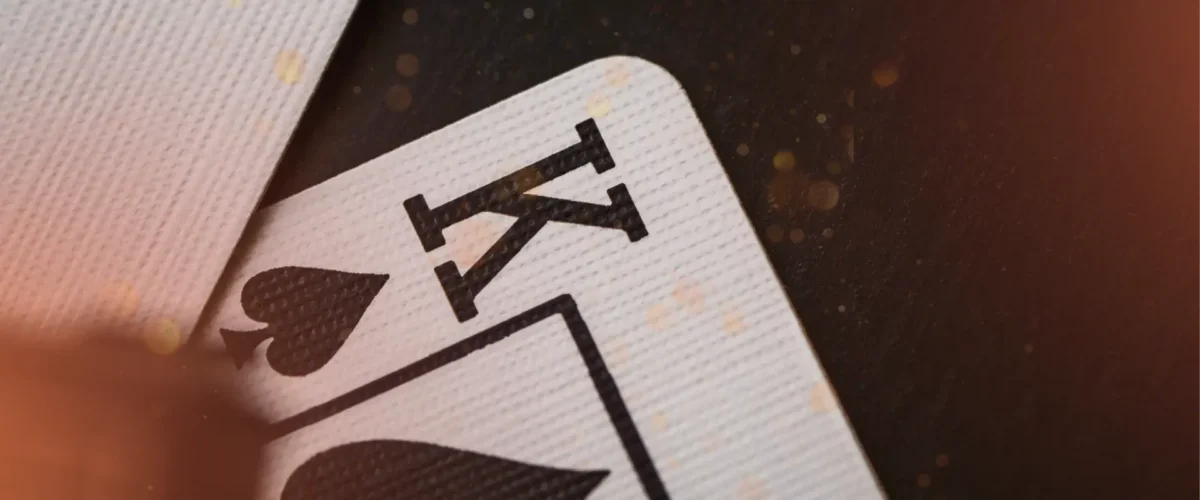
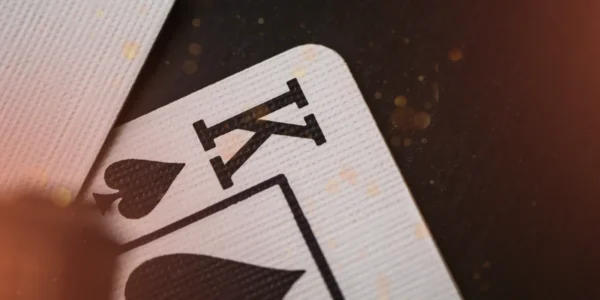
During this period there was a standardisation of ranks, suits, and design layout. Introduction of corner indices (e.g. “K” for King) made cards easier to hold and fan.
The Joker Arrives (Mid-1800s)
First introduced in the U.S. for the game of Euchre. Eventually became a standard wild card, usually featuring jesters or tricksters.
Modern Custom & Artistic Decks (20th Century–Present)
Artists and indie creators now use cards as canvases, while casinos use bold, high-contrast designs for surveillance clarity. Minimalist and themed decks are popular with collectors.
The Influence of French and English Design
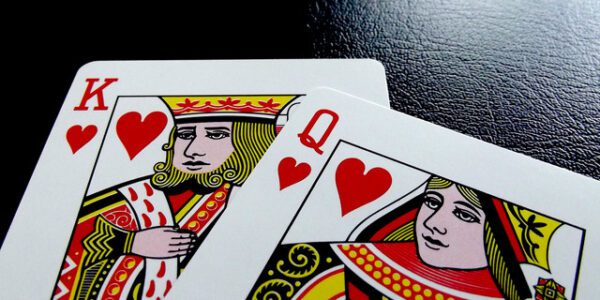
French printers revolutionised card design by developing easily reproducible suit icons and the now-familiar court cards: King, Queen, and Jack (originally the “Knave”).
The symmetrical artwork of face cards also became a hallmark during this time, allowing the cards to be viewed either way without the need to flip them.
When playing cards made their way to England, the designs were refined and standardised even further. The English school of design, during the 18th and 19th centuries, helped to define the aesthetic that’s still dominant in modern decks: bold red and black suits, numbered cards, and detailed illustrations for royalty.
Playing Card Design & Functionality
Card design is not purely aesthetic, it’s also functional.
For example, casinos use standardised, symmetrical face cards to prevent cheating or accidental marking. Many decks feature distinct back designs for branding and security, particularly in professional poker.
The specific design of the cards with the corner indices also makes gameplay easier, allowing players to fan cards and quickly see their hand. This keeps gameplay fast and exciting.
FAQs – Playing Card Design
Why do we use hearts, diamonds, clubs, and spades?
Why do some decks have different suits, like cups or swords?
Are modern custom decks used for actual games?

Top Content



Trending