The Fascination of Card Counting: Let’s Discover the Wong Halves System in Blackjack
Thanks to pop culture and popularity grown over centuries, blackjack has become synonymous with the card counting system. Once upon a time, it was a closely guarded secret among professional players hoping to get an edge over the house. But now, through books like Beat the Dealer, or movies like Rain Man, it’s become famous.
But while the Hi-Lo method became known through casinos, there is another, more advanced and lesser-known version, called Wong Halves, which introduces fraction values.

The Card Counting Fascination
Blackjack has a very unique position in both land-based and online casinos. Unlike slots, which work totally on chance, blackjack has a little more room to get strategic. Through practice, understanding of odds, and the luck of the draw, players can make decisions that have a chance of helping their play.
Among the most famous of casino strategies is card counting. It’s a method that’s sparked decades of debates, films, books, and even academic studies. At its core, card counting is about keeping a mental tally of high and low cards that have been dealt, allowing skilled players to predict what cards remain in the shoe.
That said, it’s not a guaranteed win but more of a tool for learning about the stats of a given game. Most importantly, it’s a skill that sits on the side of maths and memory, not just blind luck.
Advanced Card Counting – Wong Halves
What makes the Wong Halves system stand out? It uses fractional values rather than simple whole numbers to count cards. This more precise math makes it more appealing to advanced players wanting to make more tighter betting decisions. With that said, it also depends on focus, practice, and understanding, making it a strategy better suited to seasoned blackjack players rather than beginners.
Who Was Stanford Wong?
Stanford Wong may sound like an unusual name, and that’s because it’s actually a pseudonym of a real mathematician and professional blackjack player. He made his mark with the 1975 release of Professional Blackjack, a book that quickly became a go-to for serious players. Wong was also ahead of his time when he created the ‘Blackjack Analyzer’, a computer program he originally built for himself that ended up becoming one of the first analysis tools for blackjack.
The Card Values of Wong Halves
The Wong Halves system can look a little complicated at first, mainly because it uses fractions instead of the simpler +1 or -1 values found in other card counting methods. Here, 2s and 7s are worth +0.5, while 3s, 4s, and 6s have a value of +1. The 5 is given the highest value at +1.5, which shows how much benefit the dealer gets from it.
8 is considered a neutral card and has a value of 0. Also, 9s come in at -0.5, and the highest cards (10s, Jacks, Queens, Kings, and Aces) have a -1 value. This spread of values is designed to capture the effect each card can have on the house edge: the 5, for example, is given a higher value as it can strengthen the dealer’s hand, while the high cards are negative because they increase the chances of player blackjacks and dealer busts.
A Balanced System
The Wong Halves system is designed to give a balanced count. That means if every card in a standard deck were dealt, the total sum would return to zero. This balance is important because it lets the player convert a running count into a true count, in theory, which can help them make smarter betting decisions.
Balanced systems are usually preferred because there’s math behind them, although they do require a lot of focus and brain power to pull off.
Running Count vs True Count
To make the most of any card counting system, especially a balanced one like the Wong Halves, it’s important to understand two key concepts: the running count and the true count.
What Is the Running Count?
The running count is the player’s mental tally of all the cards that have been played so far in the game. Every time a card is dealt, a value is added or subtracted from this count based on the system being used. In Wong Halves, for instance, cards like 5s are worth +1.5, while 10s and face cards carry a value of -1.
This running total gives a rough idea of whether the deck still has plenty of high cards, which is great for players, or low cards, which help the dealer. With that being said, while the running count provides a snapshot of what cards could be lurking in the deck, there’s one thing that can seriously throw it off: knowing how many decks remain in play.
How to Estimate Deck Amounts
Of course, calculating the true count depends not just on the math, but on estimating how many decks are left in the shoe, which gets increasingly difficult the more cards that are played. Skilled players often use visual markers, such as the size of the discard tray, or simply use their experience to estimate, for example, if there’s 3.5 or 4 decks still in the shoe.
There’s always a strong chance that players won’t be 100% accurate, which can really affect the accuracy of the true count. That’s why many consider systems like Wong Halves to be better suited to those using simpler strategies combined with mental mathematics.
What Is the True Count?
The true count adjusts the running count by taking into consideration the number of undealt decks still left in the shoe.The true count is worked out by dividing the running count by the number of decks left. This step is crucial because the same running count can mean very different things depending on how many cards are left to be dealt. For example, a +4 count in a six-deck shoe isn’t the same as a +4 count in a single-deck game, since the advantage gets watered down the more decks being used.
If five cards are dealt from a six-deck shoe, with a 2 worth +0.5, a 5 worth +1.5, a 7 worth +0.5, a King worth -1, and a 9 worth -0.5, when these values are added together, the running count comes to +1. Now, if there are still around five decks left in the shoe, the true count is worked out by dividing the running count by the number of decks remaining. In this case, +1 divided by 5 results in a true count of +0.2 when using the Wong Halves system.
True Count in Practice
In blackjack strategy, especially when using systems like Wong Halves, it’s the true count that influences betting decisions. A true count below +1 usually shows there isn’t any real advantage to work with, while a true count of +2 or higher may justify increasing the bet. On the other hand, a negative true count may tell the player that the house has the edge, leading to smaller bets or even sitting out.
If the true count is +0.2, it’s too small to matter. Even if the running count was positive, it isn’t high enough to shift the odds or base betting decisions on it. This highlights one of the core lessons of card counting: it’s not about reacting to every little change but more about waiting for clear shifts in the true count before changing up bet amounts.

The Wong Halves Learning Curve
The level of difficulty in mastering Wong Halves is way higher than more beginner-level strategies. The player not only has to remember the fractional values but also needs to add and subtract them on the spot, often under pressure.
Also, they will need to convert them from running count to true count, which can get difficult, especially as it involves fractional values. In a noisy land-based casino, or even in a fast-paced online live dealer game, that’s not easy. Because of this, Wong Halves is usually seen as a system for players who have already mastered the simpler methods, like Hi-Lo or KO.
Wong Halves Compared to Other Card Counting Methods
With so many card counting systems developed over the years, players exploring advanced strategies often wonder how the Wong Halves system holds up against the rest. Well, that answer lies in understanding the balance between accuracy and usability. While Wong Halves is known for being precise, it’s also known for needing a lot of focus and a flair for maths. By comparing it to other well-known systems, the differences become clear.
Hi-Lo – The Most Popular Entry Point
The Hi-Lo system is probably the most popular entry-level card counting strategy. It works by giving cards values in a more simple way. Low cards from 2 through 6 are worth +1, high cards from 10 through Ace are worth -1, and the middle cards, 7, 8, and 9, are considered more neutral, having a value of 0. Because this system is balanced, the total of all the card values in a full deck adds up to zero. That balance makes converting the running count into a true count possible, just like with Wong Halves, but without the complicated fractions or multiple levels to keep track of. While Hi-Lo is less precise in tracking subtle changes in the deck, it’s way more accessible. It’s a great introduction to card counting and is seen as a stepping stone toward more advanced techniques like Wong Halves.
KO – An Unbalanced System
The KO system, short for Knock-Out, was created for players who prefer to skip the extra step of converting a running count into a true count. Unlike Hi-Lo or Wong Halves, KO is a more unbalanced strategy, meaning the total values of all cards in a full deck don’t add up to zero. Because of this, there’s no need to divide the running count by the number of estimated decks being used. The card values are simple: 2 through 7 are worth +1, 8s and 9s are neutral at 0, and 10s through Aces are scored at -1. Some players prefer to use the KO because it’s simple. By removing the need for true count conversion, it’s easier to follow during faster-paced games, works well for casual play, and can be useful when playing online blackjack, where keeping track of decks is designed to be impossible.
The KO system sacrifices accuracy for the ease of use. Wong Halves, on the other hand, needs more focus, brain power and an understanding of card values and estimating deck amounts.
Omega II and Zen Count
For players who want something more advanced than Hi-Lo but aren’t ready to jump into Wong Halves, systems like Omega II and Zen Count offer a solid middle ground. Both are multi-level, balanced systems that assign different values to cards, usually using whole numbers instead of fractions.
In Omega II, for example, 2s, 3s, and 7s are worth +1, while 4s, 5s, and 6s have a value of +2. The 9 is given -1, 10s through Aces are -2, and 8 is neutral at 0. Zen Count works in a pretty similar way, with 2s, 3s, and 7s at +1, 4s, 5s, and 6s at +2, 10s through Kings at -2, Aces at -1, and 8s and 9s being the neutral cards.
Omega II and Zen Count are the perfect middle ground, giving the players more accuracy than Hi-Lo, while still keeping the method more manageable by using whole numbers. While less precise than Wong Halves, they avoid the mental gymnastics needed to factor in fractional values, making them popular for players who want balance but aren’t confident in their math skills.
Which System Makes Sense Where?
When it comes to deciding which card counting system makes the most sense, it really depends on the player’s experience level, how good they’re with numbers, and the type of game being played.
Hi-Lo and KO are often the best entry points, particularly for those who are just starting out with card counting. Both systems keep things straightforward, with KO removing the need for true count conversion altogether and Hi-Lo offering a clean, balanced method. Because they’re simple, they are well-suited to faster-paced game formats, including some online blackjack games hosted on PokerStars, where there isn’t much time to do mental calculations.
For players who want a bit more accuracy but don’t want the headache of working out fractions, Zen Count and Omega II could be a good choice. These systems use whole number values to give the player an idea of what still remains in the deck. They offer a balance between accuracy and usability and are more precise than Hi-Lo.
At the more advanced end of the card counting scale sits Wong Halves, which is a system that needs both patience, practice and brain power to work. Because it uses fractions, it can feel overwhelming for beginners. However, for seasoned blackjack players, Wong Halves is considered a more detailed and accurate way to track a game and make decisions based on calculations.
Wong Halves and Online Blackjack
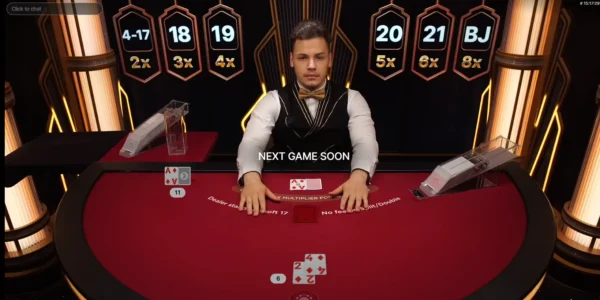
When thinking about using Wong Halves with online casinos like PokerStars, it’s important to keep in mind how the game format works. Traditional card counting relies on the deck not being reshuffled after every hand, since the system depends on tracking which cards have already been played. In many online blackjack games, the shoe is automatically reshuffled between rounds or designed with an RNG (Random Number Generator), which randomly selects the cards drawn, which means the count resets each time.
Live blackjack is a little different. Some live tables on PokerStars make use of continuous shuffling machines, which put cards back into the deck on an ongoing basis. In those games, card counting doesn’t really have any effect as the shoe never really empties. With that being said, certain live dealer formats may instead use multi-deck shoes that are only shuffled once they reach a certain cut card. In these settings, systems like Wong Halves could be used, in theory, but they may not be as accurate compared to a land-based casino.
Card Counting Doesn’t Guarantee Anything
So it’s important to remember that UK gambling regulations are clear: no strategy can ever remove the house edge completely, and there’s never a guarantee of wins. Let’s face it, if there were a concrete strategy to beat the system every time, casinos would go out of business. Card counting, especially systems like Wong Halves, can be seen as a way of improving betting decisions, but can never promise a win.
Most importantly, Wong Halves should always be used responsibly. This means setting clear bankroll limits, not letting overconfidence and emotions influence decisions, and enjoying the game as a pastime.
The Real Value of Wong Halves
At the end of the day, the Wong Halves system shouldn’t be seen as a way to snag a guaranteed win – there’s never a guarantee – but as an opportunity to make more educated bets determined by the odds of what cards are still waiting to be drawn.
Some players choose to use more complex strategies, whether through simple systems or advanced ones like Wong Halves, because they not only help make more potentially beneficial decisions during the game but also gives an extra layer of excitement to the game.
FAQs
Is card counting legal in the UK?
Why is the Wong Halves system considered advanced?
Can Wong Halves be used in online blackjack at PokerStars?
Does card counting guarantee wins in blackjack?
Is Wong Halves good for beginners in blackjack?

Top Content



Trending