Why is Maths so Important When Visiting the Casino?
Maths so often goes beyond the page and can be helpful in so many different and varied areas of life. One such area is understanding gambling.
Not only can maths help work out the odds of various sports games and competitions. For those who apply maths rules correctly, it can help with decision-making and systems in popular online casino games such as roulette, blackjack, and poker.
We know that not everyone reading this article will have a passion for number crunching! However, there are several different ways that maths can come into play when gambling, and we will explore some of these in further detail below.
Why are casinos and mathematics so closely linked?
Gambling has been present in society throughout the ages, and the role that maths can play in creating winning and effective gambling strategies dates all the way back to the 16th century.
Gerolamo Cardano is credited with creating the first gambling guide when he worked out there was only one way out of a possible thirty-six different combinations that two sixes could be the final outcome when two dice were rolled.
Cardano’s work gave birth to the ‘probability theory’, and it’s this theory that is used to help generate odds and helps bettors make decisions today.
How to work out your chances using maths – working out probability
Probability is often the determining factor behind the amount that bettors are willing to bet.
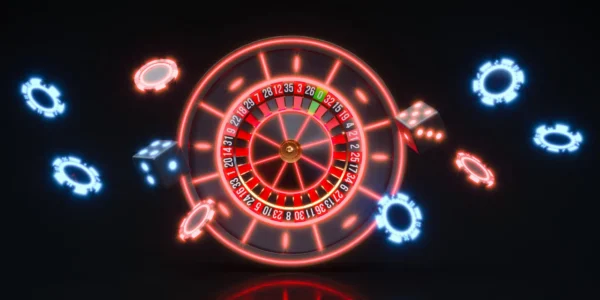
Take roulette, for example; bettors are more likely to place bigger amounts on either betting red or black than they would on an individual number. The odds of the ball landing on red or black is near 50:50, but those odds dramatically reduce to 37:1 when looking to score on the numbers.
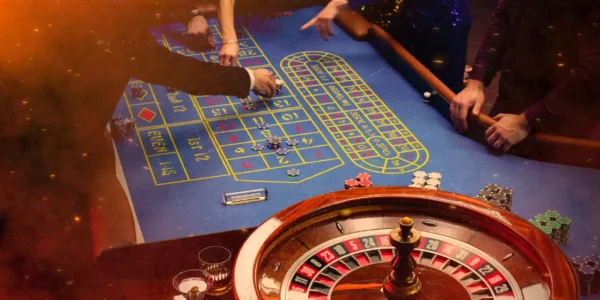
The beauty of gambling is that every casino game has a determined value, which means that maths can successfully be applied to every bet you place. Let’s explore this in more detail below.
How to work out your advantage using maths – the probability formula
The probability formula is a relatively simple formula that sees the probability of an outcome being determined by the total stake divided by the total payout.
Let’s put it into practice:
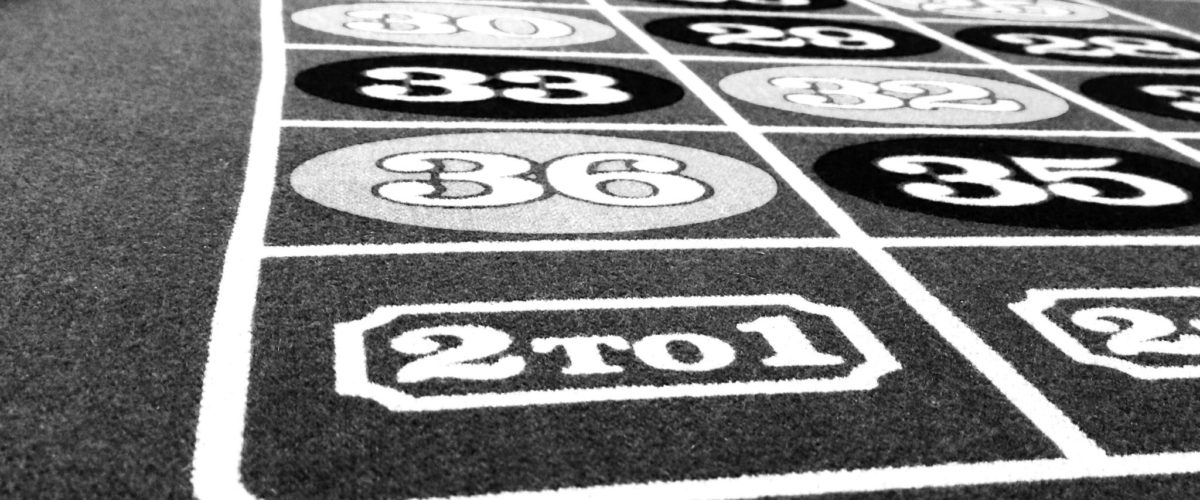
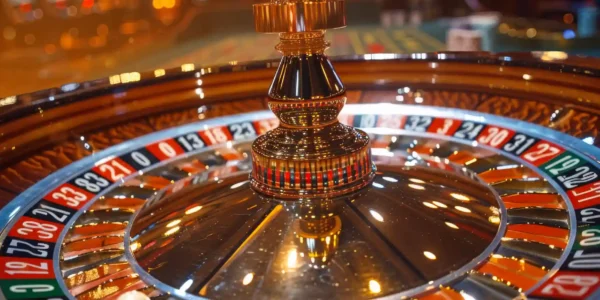
A roulette wheel has 37 different sections – this includes numbers 1-36 and the number 0. Let’s say we want to place a bet of £10 on the number 15. The probability formula would work out the odds of the ball landing on number 15 as follows:
1/37 x 100 = 2.7%
Using the probability formula – we know that each number on the wheel only has a 2.7% chance of hitting. Yes, you can choose to bet on multiple numbers to help reduce the risk, but hitting a specific number will need the odds to land greatly in your favour.

When applying the formula to red or black, there are eighteen red and eighteen black numbers and one green zero. Using the formula to bet on a black number, we would use the following:
18/37 x 100 = 48.6%
By betting on either red or black, you have a near 50% chance of your colour hitting. Betting red or black also showcases how casinos help skew games in their favour. With the addition of the green zero, the house always has an advantage with each spin of the wheel.
Using odds to place bets at a casino
Odds are what help bettors make better-informed decisions. There is a reason why, in a horse race, a heavily fancied horse will be given odds of 2/1, whereas a longer shot will have odds of 100/1.

Odds can help bettors determine what they want to bet on and how much they want to bet, it also offers vital protection for casinos and bookmakers to ensure that they don’t stand to lose too much money on an eventual outcome. Odds are the lifeblood for both bettors and casinos alike.
Using Maths in Other Casino Games
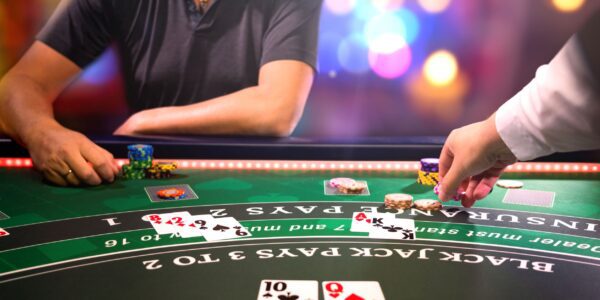
It’s not just roulette where maths plays a starring role. In blackjack, players can use basic strategy charts that show the statistically best decision for every hand, whether to hit, stand, double down, or split. These strategies are built entirely on probability and statistical modelling.
In poker, maths appears in the form of pot odds, expected value, and combinatorics (the study of possible hand combinations). Skilled players calculate whether a call or raise is profitable in the long term, based on the likelihood of completing a winning hand.
Even slot machines are governed by mathematics through a Return to Player (RTP). This percentage reflects how much of the money wagered is paid back to players over time. For example, a slot with a 96% RTP means that, theoretically, £96 is returned for every £100 wagered.
While these figures don’t predict individual outcomes, they reveal one universal truth. Over time, maths always wins.
The Psychology of Maths in the Casino
Understanding the numbers also helps players manage their emotions. Many gamblers fall prey to the gambler’s fallacy, which is the mistaken belief that if something happens more frequently than normal during a period, it will happen less frequently in the future (or vice versa).
For example, if red has landed five times in a row, many assume black is due. But in reality, each spin is independent, and the odds reset every time. Maths teaches us that there’s no hot streak built into the laws of probability, only random chance.
By grounding yourself in these facts, you can enjoy the excitement of the casino floor without letting superstition cloud your decisions.
Final Thoughts
Maths and casinos have been intertwined for centuries, from the birth of probability theory to today’s online gaming platforms. Whether you’re playing roulette, studying blackjack charts, or analysing poker hands, a little mathematical insight goes a long way.
While luck will always play its part, understanding the numbers behind the games gives you confidence, control, and perspective. After all, when it comes to the casino, knowledge really is the best bet you can make.
FAQs
Do I need to be good at maths to play in a casino?
Not necessarily! Many casino games are designed to be easy to play without advanced maths skills. However, understanding the basics of probability and odds can improve your decisions and help you manage your bankroll effectively.
What is the “house edge” and why does it matter?
The house edge is the casino’s mathematical advantage built into every game. It ensures that, over time, the casino earns a small profit. Knowing the house edge helps players understand which games offer better long-term value.
Can maths guarantee I’ll win at a casino?
Unfortunately, no system can guarantee a win. Casinos are designed to favour the house slightly. However, applying maths principles can minimise risk, stretch your playtime, and increase your chances of making smarter bets.
Which casino games involve the most maths?
Games like blackjack and poker rely heavily on mathematical strategy. Blackjack uses probability and expected value, while poker involves pot odds and combinatorial reasoning. Roulette and craps also depend on probability but require less calculation during play.

Top Content

Trending