
History of Casino Games in London
It’s no secret that London is one of the most remarkable capital cities in the world. Known for its rich history, cultural diversity, famous writers, and stunning architecture, London is one of the most-visited cities in Europe. While most tourists and online casino fans are familiar with these popular aspects of London Town, they might not know that the city has a great casino gaming history as well. Let’s dig into the history of casino games in London to give you a better understanding.
“Gambling in London’s early days was as much about socialising as it was about winning; it was a game of prestige, not just of luck.” – The Gentleman’s Magazine, 1820.
You’ll see as you read on through the below, in particular the earlier key milestones, how influential the royalty of England were in the implementation of the gambling culture. However, when it comes to George IV, he doesn’t feature as a regal influence of significance but his love for gambling became stuff of London legend, with plenty wanting to share a table with, unbeknownst to them, the future king.
Known as Prince Regent before taking over the throne on 29th January 1820, George IV gained his thirst of gambling through the high-stakes gambling at private clubs; the future king would’ve no doubt discovered a love for early versions of roulette.
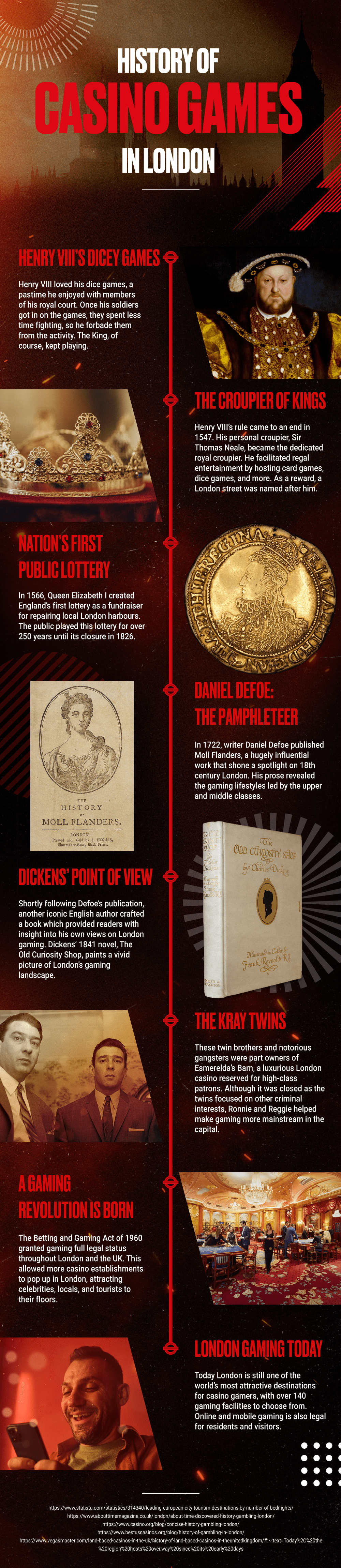
From London’s 16th century gaming beginnings to the thriving casino industry of today, the city has come a long way on its gaming journey. Here we uncover the fascinating history of casinos and casino games in London.
King’s Sign-Off
Keeping it royal, King Charles II gave gambling the royal seal of approval by passing a law allowing gambling houses in London to exist legally. That being said, they were still very much exclusive and private venues, rewarding society’s elite for, well, simply being deemed elite.
Gambling Act of 1710
The first attempt to regulate gambling arrived over 300 years ago, with the 1710 Gambling Act aiming to curtail certain gambling games and add some greater stipulations around gambling requirements and player safety. However, like when you tell a toddler they can’t do something, they want it more, and the 1710 Act was fairly redundant, and only served as a way to further enhance the popularity of private gambling clubs.
Crockford’s Club (1828)
Named after its founder Richard Crockford, it was one of the first, and arguably the most prestigious elite gentlemen’s clubs; catering to the elite and the wealth that came with it, it became a hub of high-end gambling. Almost 200 years later, the Crockford remains (although the venue has moved several times) with its roots still firmly in that high-society world.
Mayfair is the Fairest of Them All
Famous for being an affluent area, it is no surprise that Mayfair is deemed the heartbeat of high-end gaming and luxurious casinos in London. Home to the The Ritz Club and Les Ambassadeurs Club, two of the hottest destinations frequented by the world’s wealthiest players.
A New Era for Casino Games

The Gambling Act of 2005 is arguably the most recent key milestone in the history of gambling, as it added definitive regulations to the industry and held it accountable. In addition, it paved the way for super casinos to be formed with more gaming, glamour and entertainment, making them real destination places.
“The 2005 Gambling Act laid down the law in an increasingly digital age, aiming to control the online gambling boom while protecting players and ensuring the integrity of betting.” – The Guardian
Government Gambling Review on Casino Games
In December 2020, the UK government launched a gambling white paper which proposed further amends to the 2005 Gambling Act, making it better suited for the ever-evolving digital age. Amongst plenty of other things, the proposal’s toplines were to add further accountability to online gambling companies, add upfront affordability checks for all gamblers and add more stringent guidelines around marketing of gambling activities to shield vulnerable people, primarily those under the legal gambling age.

Top Content



Trending