Popular Blackjack Variants Around the World – Exploring Different Game Rules
Take away the 10 cards, hide both of the dealer’s cards or change Hit and Stand to Twist and Stick, and Blackjack starts to feel like a very different game. Spanish 21, Pontoon and Ban Luck all keep 21 at the centre, but each one changes the rules in its own way.
Some Blackjack Variants found on PokerStars only make a few changes to the familiar game, while others feel very different once the cards are dealt. Spanish 21 removes the 10-value cards, Pontoon uses its own terms and hidden dealer cards, and Asian versions such as Ban Luck can include special totals and hand combinations.
Why Are There So Many Blackjack Variants?
Even standard Blackjack doesn’t use exactly the same rules at every table. The natural blackjack payout can be 3:2 or 6:5, the dealer might Hit or Stand on Soft 17, and rules for splitting, doubling and surrender can change.
The differences become much bigger with Blackjack Variants that have developed in different countries or for different types of casino play. Spanish 21 changes the cards in the deck and adds several special payouts. Pontoon changes familiar terms such as Hit and Stand, while Ban Luck uses its own hand names and special totals.
Standard Blackjack as a Starting Point
Standard Blackjack is the easiest place to start when looking at the differences. A player begins with two cards and can Hit, Stand, Double or Split when the hand allows it. The dealer follows fixed rules instead of choosing how to play each hand. A natural blackjack normally means an Ace with a 10-value card and can pay 3:2 or 6:5, depending on the table. Equal totals between the player and dealer are usually treated as a Push, with the original bet returned.
Side bets such as Perfect Pairs and 21+3 can also show up at live Blackjack tables on PokerStars. Spanish 21, Pontoon and Asian Blackjack all keep parts of this familiar setup, but each one changes enough to give the game a different feel.
Spanish 21: Blackjack Without 10-Value Cards
Spanish 21 looks very similar to standard Blackjack, but the deck has one important change. It uses 48-card decks, with all four 10-value cards removed. Jacks, Queens and Kings stay in the deck and still count as 10 points.
Removing those cards changes the mix of high-value cards available. Spanish 21 then adds several other rules, including special payouts for particular 21s and conditions where a player total of 21 beats a dealer 21. It also tends to offer more flexibility around doubling and surrender than most standard Blackjack tables.
A Player 21 Beats a Dealer 21
A player total of 21 beats a dealer total of 21 in Spanish 21. That’s different from standard Blackjack, where equal totals would usually end in a Push unless one side has a natural blackjack that beats an ordinary 21. That rule sits alongside the missing 10-value cards, which also change the maths of the game. Spanish 21 changes several parts of Blackjack at once, so the missing 10 cards need to be looked at alongside the other rules.
Special Payouts in Spanish 21
Spanish 21 has a few different payouts for hands that finish on 21. A five-card 21 can pay 3:2, while a six-card 21 can pay 2:1 and seven or more cards can pay 3:1. Hands such as 6-7-8 and 7-7-7 can also have their own payouts. The payout can change again depending on whether those cards are mixed-suit or suited. Finishing on 21 doesn’t always mean the same payout.
Related Blackjack Articles
Doubling in Spanish 21
Spanish 21 can allow doubling later in the hand than some standard Blackjack tables. Certain versions allow a player to Double after receiving more than the original two cards. A hand can have several cards before the option is used. Spanish 21 can also include Double Down Rescue, which comes into play after a Double has already been made.
What Is Double Down Rescue?
Double Down Rescue allows the player to change what happens after doubling and getting another card, as long as the hand hasn’t gone over 21. The original bet is lost, but the extra amount added for the Double can be returned. It’s separate from normal surrender and only comes into play after a Double has already taken place. That extra decision can also make some Spanish 21 hands last longer.
Late Surrender in Spanish 21
Spanish 21 can also include Late Surrender. This lets the player end the hand and lose part of the original bet instead of continuing to play it. The conditions depend on the table, so the individual rules still need to be checked by the player. For someone moving from standard Blackjack to Spanish 21 at an online casino like PokerStars, surrender and Rescue are two of the bigger differences to look out for.
Match the Dealer Side Bet
Spanish 21 can also have a side bet known as Match the Dealer. The bet is based on whether either of the player’s first two cards matches the rank of the dealer’s visible card. Different payouts can apply depending on whether the cards match only by rank or also share the same suit.
Match the Dealer is separate from the normal Blackjack hand. The side bet can win while the main hand loses, or the player can beat the dealer while receiving nothing from Match the Dealer. Other Blackjack side bets work in a similar way, with their result kept separate from the main hand.
Pontoon: Familiar Cards with Different Rules
Pontoon shares plenty with Blackjack, but the terms alone can make the game sound unfamiliar. Hit becomes Twist, Stand becomes Stick, and Double can be known as Buy. A natural 21 is called a Pontoon. There are bigger differences once the cards are dealt. Both dealer cards can stay hidden, while special hands such as the Five-Card Trick have their own place in the hand rankings.
Both Dealer Cards Can Stay Hidden
Standard Blackjack normally gives the player at least one visible dealer card. Pontoon can keep both dealer cards face-down, leaving the player without the usual up-card to look at while playing the hand. That makes the table feel quite different from standard or live Blackjack, where the dealer’s visible card is normally an important part of the round. The aim of staying under 21 is still the same, but the player sees less of the dealer’s hand.
The Five-Card Trick
The Five-Card Trick is one of the best-known Pontoon rules. It’s made by reaching five cards without going over 21. Under the version covered here, the Five-Card Trick ranks above a normal hand totalling 21 but below a natural Pontoon. It can also pay 2:1. In Pontoon, the number of cards can matter just as much as the total. A five-card hand below 21 can outrank a shorter hand that has reached 21. There’s still a chance of going over 21 while taking extra cards, so the Five-Card Trick is only one possible outcome.
Ties Work Differently in Pontoon
Equal totals are another area where Pontoon can move away from standard Blackjack. A normal Blackjack tie usually ends in a Push. Under Pontoon rules where the dealer wins ties, both sides finishing on the same total results in the dealer taking the hand. If the player and dealer both finish on 20, for example, the bet is not simply returned. So the 2:1 payout attached to a Pontoon or Five-Card Trick needs to be looked at alongside the rest of the Pontoon rules.
Asian Blackjack and Ban Luck
Asian Blackjack Variants can really differ from the Blackjack normally found in land-based and online casinos. Ban Luck and Kampung Blackjack are two examples of Southeast Asian variants. Ban Luck in particular is traditionally played socially with friends and family, especially around Lunar New Year. Local versions can have different hand names, payouts and rules, so Ban Luck isn’t always one completely fixed game.
The 15-Point Free Hand
Some Ban Luck or Kampung Blackjack games include a rule for a total of 15, sometimes called a Free Hand. A player or dealer with 15 may be able to declare the hand and end it without the usual win or loss taking place. The hand ends there and the next one begins. That’s very different from standard Blackjack, where 15 is simply another total that has to be played.
Minimum Hand Totals in Ban Luck
Some Ban Luck versions also use a minimum total before a player can stop taking cards. Some versions don’t allow a player to Stand on a hand below 16 unless the 15-point Free Hand rule is being used. This creates another number to think about before reaching the familiar limit of 21.
Ban-Ban and Other Special Hands
Ban Luck can include several combinations with their own payouts. Ban-Ban is a starting hand made from two Aces and can pay 3:1. A Five Dragons hand, made from five cards without going over 21, can pay 2:1. A 7-7-7 combination can also have its own payout of 7:1. These hands put more focus on the exact cards and number of cards in front of the player.
How Blackjack Payouts Change Between Variants
Payouts are one of the easiest differences to notice across Blackjack Variants. Standard Blackjack commonly uses 3:2 or 6:5 for a natural blackjack. Spanish 21 can use 3:2 for a natural while adding separate payouts for special ways of reaching 21. Pontoon can pay 2:1 for a natural Pontoon while Ban Luck has its own special hands, including combinations such as Ban-Ban and Five Dragons.
Standard Blackjack vs Spanish 21
Spanish 21 keeps much of the familiar Blackjack setup but changes enough to feel different from the standard game. The 10-value cards are removed, a player 21 beats a dealer 21 and special multi-card totals of 21 can have their own payouts. Doubling can also stay available after extra cards have been taken, while Late Surrender and Rescue add other possible decisions. Standard Blackjack normally has less special hand payouts and keeps more focus on the final total against the dealer.
The Difference Between Blackjack and Pontoon
Pontoon changes the feel of the table in a different way. Both dealer cards can stay hidden, the familiar Blackjack terms change and a Five-Card Trick becomes an important hand. Dealer ties can also work differently from the usual Blackjack Push. A player used to live Blackjack on PokerStars might notice the lack of a visible dealer card most of all, as there’s no up-card sitting on the table during the hand.
Side Bets Across Blackjack Variants
Side bets are common across standard Blackjack and live Blackjack games. Perfect Pairs and 21+3 are good examples, while Spanish 21 can include Match the Dealer. These are separate bets from the main hand. A side bet winning doesn’t mean the player also beats the dealer, and losing the side bet doesn’t stop the main hand from winning.
Blackjack Variants on PokerStars
PokerStars offers several Blackjack Variants alongside more traditional tables, with different betting ranges, side bets and extra features changing how each game works. Some stay close to standard Blackjack, while others make bigger changes to the deck or add separate bonus features.
Fun Fun 21
Fun Fun 21 makes much bigger changes to the usual live Blackjack setup. The 10-value cards are removed from the deck, although Jacks, Queens and Kings are still worth 10. Player totals of 21 can also work differently. A player 21 can beat a dealer 21 instead of ending as the usual Push. The game still keeps familiar Blackjack decisions such as Hit, Stand, Split and Double.
Several optional side bets can also be offered, including Hot 3, 21+3, Match and Bust It. These are separate from the main Blackjack hand and have their own payouts and conditions. Removing the 10 cards gives Fun Fun 21 some similarities to Spanish 21, although the two games use different rules.
Mega Fire Blaze Blackjack
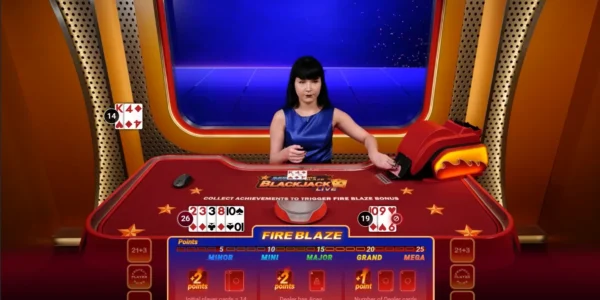
Mega Fire Blaze Blackjack keeps a more traditional main Blackjack hand while adding a separate Fire Blaze bonus alongside it. Certain results during the Blackjack round can add points to a Fire Blaze meter. Once the meter reaches the required level and the bonus bet is active, the game moves to a separate multiplier grid.
Multipliers can stay on the grid as more symbols drop in, with different prize levels running from Minor through to Mega. The bonus is separate from the main hand, which continues to use its normal Blackjack rules.
Lightning Blackjack
Lightning Blackjack keeps the familiar Blackjack rules but adds a multiplier feature that carries from one hand to the next. Number cards keep their usual values, face cards count as 10 and an Ace can count as 1 or 11.
Each round can generate a Lightning multiplier that can affect a winning hand. When one is awarded, the multiplier is banked and carried into the next hand. A Lightning fee is added to the initial bet to fund the multiplier mechanic, with the amount shown on screen. The Blackjack itself stays familiar, with the multipliers changing what can happen from one hand to the next.

How Live Blackjack Can Differ Between Tables
Live Blackjack uses a real dealer streamed from a studio, but not every table automatically use the same rules. Different live Blackjack games can change the number of decks, natural blackjack payout, Soft 17 rules and side bets. The dealer follows the rules set for that particular table. Moving from one live Blackjack game to another can change more than the person dealing the cards or the look of the table.
Soft 17 and Hard 17 Across Blackjack Variants
The way the dealer plays 17 can change between different Blackjack tables. A Soft 17 has an Ace being counted as 11, such as Ace-6. A Hard 17 has no Ace counted as 11, such as 10-7 or 9-8. Dealers will usually Stand on a Hard 17. Soft 17 can work differently, with some tables telling the dealer to Stand and others telling them to take another card. This can change between different Blackjack Variants and live Blackjack tables, even when the games look very similar. Soft 17 rules can affect the maths of the game, along with payouts and doubling rules.
Different Rules Can Change the Pace
The rules can also change how long a single hand plays. Spanish 21 can have several player decisions after the first two cards because doubling can remain available later with Rescue potentially showing up after a Double. Pontoon can feel slower in a different way because the dealer cards stay hidden. Ban Luck can sometimes settle more quickly when one of its special starting hands appears. This means that some rounds can last longer or include more decisions than others.
Special Hands Across Blackjack Variants
Standard Blackjack normally puts most of the focus on the point total and the dealer’s visible card. Other versions can make the exact combination or number of cards more important. Spanish 21 has extra payouts for five-card, six-card and seven-card 21s. Pontoon has the Five-Card Trick, while Ban Luck includes hands such as Ban-Ban and Five Dragons. A five-card hand that would be treated like any other hand at one Blackjack table can have its own ranking or payout somewhere else.
Blackjack Variants and Responsible Gaming
Understanding the rules helps explain how a particular game works, but it doesn’t make the outcome predictable. House edge figures are based on results across a very large number of hands instead of one session. A game with a lower house edge can still produce losses over a much shorter period. The same applies to large special payouts and side bets. A 2:1, 3:1 or larger payout doesn’t tell a player how often the hand will show up.
Whether playing standard Blackjack or live Blackjack, casino spending should be kept separate from money needed for bills and other everyday expenses. A separate budget can also make it easier to keep track of how much is being spent during a session.
Final Thoughts: Blackjack Rules Change Around the World
Blackjack Variants can change the deck, payouts and even the terms used at the table. Spanish 21 removes the 10-value cards, Pontoon adds hidden dealer cards and the Five-Card Trick, while Ban Luck has its own special totals and hands. The rules can also differ between standard Blackjack and live Blackjack tables. Checking them before playing makes it easier to see exactly how that particular game plays.
FAQs
What are the main Blackjack Variants?
What is the main difference between Spanish 21 and Blackjack?
What is a Five-Card Trick in Pontoon?
What is Ban Luck?
Do all live Blackjack tables on PokerStars use the same rules?
Can Blackjack Variants have different side bets?
Can Blackjack Variants be played on PokerStars?
Top Content

Trending