How Live Dealer Roulette Works: The Tech from Studio to Screen
PokerStars Live roulette titles are some of the most popular on the online casino platform. But behind the professional studios and the charm of the dealers, how does every aspect of live roulette come together to create an unrivalled casino game experience?
The reason Live roulette works is because there’s two main sides to the setup: the physical, which includes things like the equipment and results, and the digital, which takes care of the streaming, betting, instant payouts and much more.

What Is Live Dealer Roulette?
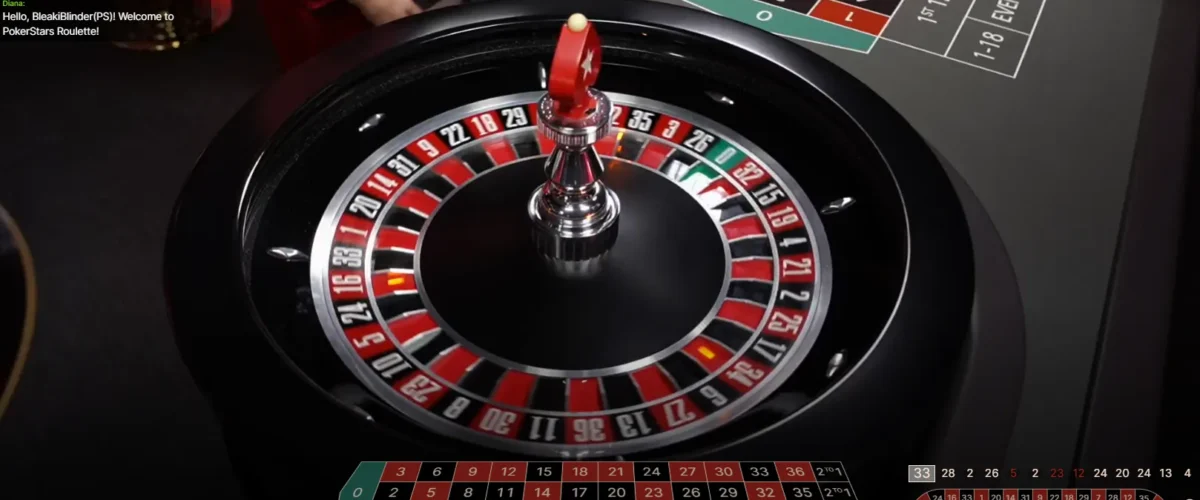
Live roulette games, like those hosted by PokerStars, are video live streams of real roulette tables, with digital overlays on the screen for betting and other useful information. The wheel and dealer are streamed from a physical studio, while the wagering, timing, and payouts are all handled digitally. This fusion of classic casino games and modern technology has become the next evolution of roulette, allowing players to enjoy sessions from anywhere, as long as they have an internet connection.
PokerStars Live roulette goes way beyond the single classic table most people picture. Alongside traditional live roulette, the lobby also has several other variants that add clever mechanics, such as multipliers, while keeping the spirit of the wheel intact. There’s also faster formats where dealers take more of a step back and allow the wheel to pump out results more rapidly, creating an exciting experience. Whatever the format, however, the foundations always stays the same; a real wheel reveals the outcome and any winnings are paid out instantly.
How Live Dealer Roulette Plays Out
A PokerStars Live roulette round tends to follow a steady order that becomes second nature. The dealer opens the round, and the betting window becomes active for players. The interface shows the layout, the chips, and gives a countdown showing how long people have to place their wager.
When that timer is up, the studio closes the window and bets can’t be changed or made until the next round comes to an end. After that, the action starts, with the dealer spinning the wheel, releasing the ball, and the result being announced and displayed on the screen. Then the round is settles and any balance changes are made before the next betting window opens.
Related Roulette Articles


Inside a Live Roulette Studio
A live dealer roulette studio focuses on fixed tables, controlled lighting, and camera angles that rival the quality of live TV. Because players are betting real money and want a fun experience, it’s important that every moment is captured clearly, from the spin of the wheel to where the ball eventually stops. This doesn’t only apply to the main action, either, with the layout needing to look the same every round and the dealer being visible to help build trust and ensure all calls are easy to understand.
It doesn’t just end with what’s on screen; the studios themselves are also monitored behind the scenes. There’s also supervisors and floor bosses watching the rooms, procedures, and any irregularities or glitches. While this doesn’t change the game of roulette in any way, it does mean that studios can run sessions for longer stretches without any disruption.It’s that reliability that makes live casino games, like those on PokerStars, feel like a premium experience.
Why the Studio Looks Like a Set
Land-based roulette wheels come with plenty of atmosphere created by the room full of noise, and the players celebrating or voicing their frustrations. When it comes to online, the table needs to carry the same mood, but through a screen instead. That’s why studios are heavily invested in, so they replicate the look of the casino floor as closely as possible.

The Dealer’s Job Is More Than Just Spinning a Wheel
A live roulette dealer is not only running the game but also managing the room and ensuring everything essential for the broadcast is done at the same time. The dealer keeps the pace consistent, signals the key moments, keeps the room calm, and makes sure everyone of all experience levels can follow what’s going on. With online roulette, that pacing matters even more because the dealer is the anchor of the entire session, and without them, the experience would be nowhere near as satisfying. The dealer also follows strict procedures and rules, and those things exist for a very important reason. Live roulette has to be consistent across hundreds or thousands of rounds, and understandable to a worldwide audience.
What It Takes to Be a Roulette Dealer
Roulette dealers can make their role look effortless when it’s done right, but that effortlessness is backed by a lot of training, experience, and repetition. A dealer has to have a feel for pacing, clear speech, confidence, and a calm demeanour, which goes way beyond just learning the rules and spinning the wheel.
There’s also a technical role dealers need to do. Live casino tables have overlays and prompts that carry all the important information. Being able to read that information in a flash, while keeping a focus on everything else going on, becomes an invaluable skill.
Some tables just feel nicer to sit at for a while, and the dealer’s personality plays a massive part in that. When the speed feels comfortable, and the other players are friendly, it can be worth remembering the table for future sessions. As dealers often work in shift patterns, there’s a good chance of catching the same one at a similar time on another day.
Cameras, Angles, and the Close-Ups That Matter
Live roulette relies heavily on the camera work, as that’s the view from the player’s seat. The live roulette tables on PokerStars shift between different viewpoints, focusing attention on the dealer, table, and wheel. The different shots not only give context but builds on the atmosphere. A close-up of the dealer lets their personality shine through, and the different wheel angles help build anticipation when the ball is yet to settle in a pocket.
Those camera choices aren’t just for aesthetics or helping players enjoy the round; they’re also part of how live roulette builds confidence. When the wheel is shown clearly, there’s no question of what just happened or if anything deceptive is going on. The player isn’t just expected to believe a result and move on; they can watch it happen in real time.
Utilising the Latest Streaming Tech
Another level down from the player experience and the studio production, there’s the tech perspective that builds the entire foundation for live casino games. The real roulette wheel is filmed, but then that video is processed and sent in a way that needs to be stable, consistent, and low-latency.
High-definition cameras capture the action, then the video is encoded so it can travel quickly across the internet. That step matters because raw video is enormous, so compressing it is the only way for it to be streamed for all the players without disruption. From there, the stream is distributed through server infrastructure designed to make the video run smoothly to many players across multiple regions.
Land-Based Casinos Don’t Freeze
Routing, bandwidth, redundancy, and fail-safes may sound like the boring part of online casino, but they’re just as important as any other aspect of the genre. Without efficient broadcasting tech, live-streamed roulette just wouldn’t be possible.
Latency is just a delay, but it changes the mood of a live table instantly, as roulette runs on timing. The betting window opens, then locks, then the wheel spins, then the outcome lands, then the next round begins. If the stream feels laggy or freezes, the illusion of being seated at a table is shattered. That’s why stability can matter more than anything else. A table that is responsive keeps all the focus on where it belongs and not on the tech.
The Digital Interface Is the Player’s Best Tool
The other half of the software aspect of online casino is the interface, which handles bet placement, accepts wagers, and runs the countdown timer. It also controls the lock moment, preventing late bet changes and keeping everything structured.
This also means that studios can make live roulette scalable, because a physical table can’t hold thousands of people placing chips, but games like those hosted on the PokerStars Casino easily can. Each player’s bet exists as recorded data, not as a physical pile of chips, that needs to be managed in real time.
The interface also brings quality-of-life features that can’t be replicated at real-life tables easily. It provides clarity, recent results of all players, table rules, and bet options that never get in the way of the stream but can be checked at a glance. It can’t be used to change the game’s odds, but does make the whole experience easier to follow.
How Results Are Converted from the Table to Screen
In live roulette, the wheel determines the outcome physically. The platform then records that outcome accurately and feeds the information into the interface. Studios use recognition and verification systems that are designed to quickly record the winning pocket and confirm the result.
One Table with Many Players
PokerStars Live roulette titles are often described as a real-life table, but with a TV show flair. The dealer hosts one physical table, and the other players can interact through the interface. Each player places bets privately on their own screen, but then is free to chat with the dealer or other players while the round plays out.
PokerStars Live Roulette Games and Variants
PokerStars Live roulette category hosts several versions of the classic casino game, some variants modernised with digital mechanics while keeping the wheel physical. That variety makes the live section perfect for all types of players: those who like to keep things
traditional and those who enjoy quirky features that can only exist through using software.
Classic live roulette is straightforward and the closest to the land-based version, focusing on the wheel, the layout, and the familiar pace. Then there’s the twist formats that add extra features without changing the fundamentals of the game. Multipliers are the most common style, where certain numbers can get boosted payouts on straight-up bets.
PokerStars also has much faster versions where the wheel stays physical, but the dealer’s role is reduced, or removed altogether. These tables are all about speed and consistency, suiting players who prefer no-nonsense play and quicker loops.
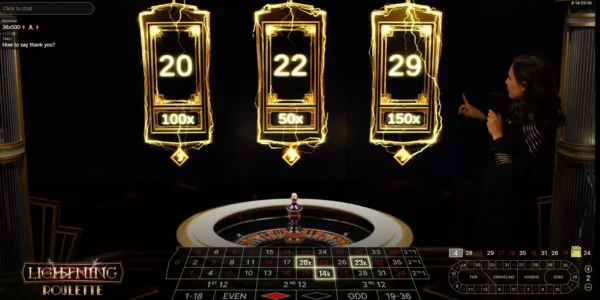
Lightning Roulette
Lightning Roulette starts with the European wheel most players already recognise, so it doesn’t feel like learning a new game. It’s 37 pockets, 1–36 split between red and black, plus the single green zero. All the usual bets are there too, from Straight Ups and splits to the outside favourites like Red or Black, Odd or Even, and Dozens and Columns.
Where it completely changes gear is after bets close. The game reveals between one and five lucky numbers, and each of those gets a multiplier that can land anywhere from 50x up to 500x. That adds a second spike of anticipation before the wheel even spins.
The multiplier is only added if the ball lands on a lucky number and if there was a Straight Up bet on that exact number. Everything else plays just like standard roulette, but the Straight Up payout is adjusted to fund the lightning feature. Visually, Lightning Roulette goes all in with the studio decor, with black and gold detailing and lightning overlays.

Quantum Roulette
Quantum Roulette goes in a completely different direction with bright neon and futuristic tables that look like they belong in Star Trek. The feature revolves around multipliers on Straight Up numbers, with values ranging from 50x to 500x. Then there’s the Quantum Boost bonus, which can kick in during a session and push certain multipliers even higher than the 500x.
That boost moment is what gives Quantum Roulette its identity. The interface lights up, the boosted numbers are highlighted, and the round suddenly feels like it has switched into a higher gear right before the spin locks in.
Fireball Roulette
Fireball Roulette feels like roulette, online slots and game shows have been merged to create a quirky mashup. It’s still a single-zero setup, but there’s a feature moment that decides which numbers become the main focus. Each round starts with the dealer pulling a lever that triggers a virtual slot-style reel. That selection creates between three and seven Fireball Bonus Numbers, which then light up on the grid, sometimes having multipliers that range from 2x to 20x. If the ball lands on one of those bonus numbers and there is a Straight Up bet on it, the Fireball Bonus Game is triggered.
The bonus round is the main event. The screen switches to a 149-pocket grid filled with multipliers and “Double” tiles. A physical ball is dropped into that grid and bounces until it settles. Whatever it lands on becomes the bonus multiplier, and if it hits a Double, the grid doubles and the ball drops again. That can keep escalating until it hits the cap of 2,500x, which is why Fireball is one of the more dramatic roulette titles in the PokerStars line-up.
The Part That Never Changes
While there are many moving parts that make live dealer roulette work, it still comes back to the same basic idea. A bet is placed on a number or a group of numbers, then the result is left to chance. Bet types stay familiar, and payouts depend on how specific the wager is.
A straight-up bet on a single number pays 35:1. A split across two adjacent numbers pays 17:1. A street covering three numbers pays 11:1. A corner covering four numbers pays 8:1. A six line covering two rows pays 5:1. Outside bets cover larger groupings, so they pay less but do tend to land more often, with dozens and columns paying 2:1, and even-money bets like red or black, odd or even, and high or low paying 1:1.
Not all wheels are the same, however, with European roulette having one zero pocket. American roulette adds a double zero, and that extra pocket increases the house edge. French roulette uses a single zero as well, and it can include rule features on even-money bets that sometimes lower the house edge on those specific wagers, depending on table rules.

How PokerStars Live Dealer Roulette Protects Players
Live roulette is designed to be watched as well as played, and it’s that visual appeal that draws many players. Seeing the wheel physically spin creates a trust that an RNG animation can’t capture, regardless of the strict compliance that gambling titles have to abide by. But even with live dealer roulette, there’s background systems that build trust when it comes to security and logging.
Betting traffic and account handling rely on secure systems designed to protect balances and prevent tampering. Studios have very strict procedures designed to keep tables constantly monitored. Platforms keep records of rounds and settlements from thousands of games, which are used in audits or for any dispute resolutions. All of that background structure helps live roulette feel controlled rather than chaotic, even though those aspects are mainly unseen by the player.
Responsible Play in a Live Roulette World
PokerStars takes responsible gaming seriously, so the platform provides several gaming tools and resources to help players stay in control, including options like limits, time-outs, as well as self-exclusion features. For example, PokerStars supports UK-wide self-exclusion schemes, such as GAMSTOP, for players who are serious about stepping away. Treating online casino as a form of entertainment, and not a way to make a profit, keeps titles like roulette in the right lane, especially as they will always remain a game of chance with the edge resting in the house’s corner.
Final Thoughts: More Than Meets the Eye
PokerStars Live roulette works because it’s built on a simple, tried-and-true foundation. A real wheel is filmed, and a trained dealer runs the table as professionally as those found in the top land-based casinos from around the world. Streaming infrastructure optimises the experience in the background, while secure software layers handle bets, timing, and settlements in real time.
Live formats are the natural evolution of casino play, but studios never try to reinvent the wheel, or in this case, the roulette wheel. This is why the format has become so popular on PokerStars, as the game has stood the test of time for decades; any additions to the format only serve to make it run smoother and improve the player experience.

FAQs
What is live dealer roulette on the PokerStars casino?
Is the wheel real in PokerStars Live roulette?
How does the result appear on screen so quickly?
Why does live roulette feel different from RNG roulette?
What helps keep live roulette safe and responsible?

Top Content



Trending