How to play Kalooki 40: Rules, Scores and Closing
Kalooki 40 is a popular European card game, and in recent times, the format has become one of the most played variants of Standard Rummy.
From family gatherings to live and online tournaments, Kalooki 40 has proven a big hit with online casino players. The success of the game lies in its simplicity. Read on to find out more.
THE CARDS AND THE PLAYERS
To play Kalooki 40, you need two decks of classic French cards, including the two Jokers on each side, so a total of 108 cards are available.
The dealer on duty will have to distribute 13 cards to each player, from a minimum of two up to a maximum of six participants. Players can play individually or as part of a team. Before starting the game, one card should be turned over which will form the first of the “discard pile”.
The player to the dealer’s left will be first in turn and will have to draw from the remaining deck or collect the card from the well. However, this is conditioned only on whether the player “opens” with at least 40 combination points.
SCORE IN KALOOKI 40
As its name would suggest, 40 is the target number in Kalooki 40. To achieve the 40 points or more necessary to open the game, players must first learn the scores of various cards. It’s worth noting that these scores will also be used to count the points left in hand at the end of the game.
- All cards from 2 to 10 have their number value (e.g., 2 is worth 2 points, 3 is worth 3 and so on).
- All court cards are worth 10 points.
- The Ace is worth 1 if used in the position within a low scale. However, if used at the end of a high scale (after the King), in a set or at the end of the round, the Ace will be worth 11 points.
- The Joker is worth 25 when in hand and will take the value of the card it replaces within a meld.
Opening Strategies and Player Tactics
Understanding when and how to open is essential for success in Kalooki 40. While the game revolves around achieving a minimum of 40 points before you can lay your cards on the table, knowing how to reach that target efficiently requires more than just luck.
A smart player observes discarded cards, keeps track of which suits are appearing, and plans several moves ahead.
In the early rounds, it’s important not to rush into opening unless you’re confident your hand can hold up.
Holding back might give you the opportunity to improve your sets (or melds) or eliminate weaker cards. At the same time, waiting too long could allow an opponent to open and bind their cards to yours, potentially beating you to the finish line.
Another key decision is whether to draw from the main deck or pick from the discard pile. While the discard pile reveals its contents and might seem appealing, taking a discarded card also gives your opponents clues about your hand. Picking from the main deck keeps your strategy concealed for longer, allowing more freedom in future rounds.
THE CALCULATION OF THE OPENING
“Opening” is defined as the moment in which a player decides to place some of his combinations on the table. It is mandatory to draw from the discard pile as well as to be able to “bind” some cards to the combinations of the other opponents in the game.
To be able to “open”, the player must have a series of combinations to obtain a total of at least 40 points.
For example, with a three of a kind, we have 30 points (10 x 3 court cards), so it could be sufficient to join a straight from 3 to 5 (3 + 4 + 5 = 12), this would therefore give a total of 42 points for the opening.
THE COMBINATIONS IN KALOOKI 40
There are several types of melds in the game, of which they can be divided into a “series” or “straight”.
A “series” is a meld of at least three cards of the same value but of different suits. For example, a King of hearts, a King of spades and a King of diamonds.
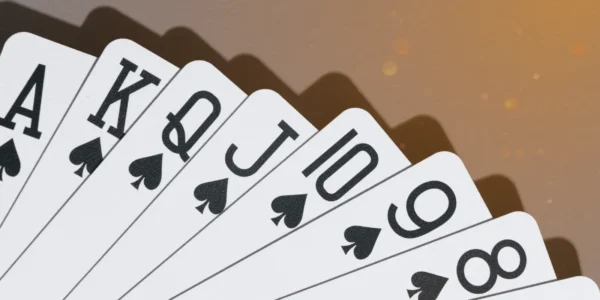
A “scale” is a combination of cards in sequence of the same suit. In this scenario, there is a minimum of three cards up to a maximum of 13, plus the possibility of a wild card.
Binding and Strategic Melds
Once a player has opened, they can start binding, i.e, adding their cards to existing combinations on the table. This mechanic offers a way to reduce the cards in your hand without having to form entirely new combinations yourself.
However, there’s an art to binding effectively.
Adding a single card might remove a high-point value from your hand, but it could also reduce your flexibility in forming your own future melds.
Good players wait for the right opportunity to bind.
It might be tempting to immediately offload high-value cards, such as a face card or Joker, but doing so too early can signal your intentions or lock you into a losing strategy.
A better approach is to assess the whole table and make sure you’re not inadvertently helping an opponent by extending their scale or series with your bind.
HOW TO WIN AT KALOOKI 40
The ultimate goal of Kalooki 40 is to “go out” (run out of cards first). At the point the last card is discarded into the pile, the winning player then counts the number of points left in the hands of remaining players. Depending on the number decided at the start of the game, the winning player is either awarded a score of 0 or -20. The other players total up the scores of their remaining hand.
Usually an “exit score” is agreed before the game, e.g. the maximum number of points after which that player is eliminated from the game. The maximum is usually 101 or 201, but these limits can be raised to allow everyone to play for longer. As a general rule, the only player left in the game after all others have surpassed the decided maximum score, wins.
Quick Tips For Kalooki 40
When to Open
Opening too early might limit your ability to build stronger melds later, but waiting too long could mean another player opens first and dominates the table. Look for combinations that get you over 40 points without using your most versatile cards.
Use Jokers Wisely
Jokers are powerful, but risky if left unused. Try to include them in melds early in the round to avoid the 25-point penalty. Don’t waste them on low-value combinations unless it helps you open quickly.
Keep an Eye on Opponents
Watch the discard pile and note what your opponents are picking up or throwing away. This can give you insight into their potential melds and help you decide what to hold or discard.
Manage Your Hand Efficiently
Avoid holding on to high-value cards unnecessarily. If your hand is heavy with face cards and you can’t use them in a meld soon, consider discarding them early to reduce your end-of-game penalty.
Take Breaks Strategically
If you find yourself in a losing streak, it’s okay to step away for a few rounds. Returning with a fresh perspective can help you reset your strategy and focus.
FAQs
What’s the difference between Kalooki 40 and other Rummy variants?
Can you play Kalooki 40 online?
How many Jokers are used in Kalooki 40?
What happens if two players go out at the same time?
Can you win without opening first?

Top Content



Trending