Soft 17 vs Hard Hands in Blackjack: What They Mean and How to Play Them
Blackjack is known for being one of the most straightforward card games found in both land-based and online casinos like PokerStars. Add up the cards, get as close to 21 as possible, and try to beat the dealer. Simple enough, right? Well, that’s until factoring in soft hands, and in particular, the elusive soft 17.
Soft 17 is a type of hand in blackjack, and is used by both the player and the dealer to try and get an edge during games. It may be difficult to see the difference between a soft and hard 17 at first glance, but each one is different and has the possibility of changing up the way a hand can be played.

What Is Soft 17 in blackjack?
A soft 17 is any hand that totals 17 and includes an Ace counted as 11, for example, an Ace with a 6. This hand is considered “soft” because it offers a lot of flexibility. If the player chooses to hit and gets a high-value card, like a 10, the Ace doesn’t cause the hand to bust, as it can shift to being worth a 1, and the total becomes a hard 17 instead. It’s kind of a safety net, something hard hands just don’t have.
Soft Hands vs. Hard Hands – Knowing the Difference
Before getting into the strategy aspect, it helps to fully understand the two types of hands that have a huge impact on many blackjack decisions. While they might share the same number, soft and hard hands play very differently at the table.
The difference becomes especially important with totals like 17, where soft hands offer a lot more wiggle room, while players need to be much more careful with a hard hand. Without knowing what hand they have, it’s easy to make the wrong call at the worst time.
To beginners, it may sound strange that two hands, both totalling 17, can be used in totally different strategies. Soft hands give players the freedom to take more cards without the risk of busting at the beginning of a session. Hard hands, especially with cards in the mid-to-high teens, such as 17, 18, 19, put way more pressure with every card drawn. Hold on too long, and it could result in a bust. In fact, with hard hands, the main part of the strategy is playing cautiously.
What Is Ace Worth in Blackjack?
The value of an Ace depends totally on the situation. It starts out in a hand as 11, unless that value pushes the total over 21, in which case it drops to 1. When playing live blackjack or the RNG Classic Blackjack game on PokerStars, this is done automatically to keep things running smoothly.
Because the ace can adapt depending on what the dealer draws, it makes it a strategic card. With a soft hand, the possible risk of taking another card is lower, which can take a lot of pressure off.
Playing Soft 17 in Blackjack
Despite what the total is, soft 17 isn’t a strong hand. In fact, against most dealer upcards, it can be pretty weak and will lose to 18, 19, 20, and 21. That’s why a basic strategy favoured by many blackjack players is to hit on soft 17 in nearly every case. The logic behind it is simple: the Ace acts as a buffer. If the next card helps, great. If not, the hand shifts into hard mode, and the strategy can be changed up to accommodate it.
Some variations go even further. Against a dealer’s 4, 5, or 6, some seasoned players will double down. While the dealer is in a vulnerable position, a soft 17 gives a potentially safe opportunity to increase the bet and draw another card in hopes of reaching between 18 and 21. In PokerStars blackjack games, the option to double on soft totals can be seen on the interface of each table, allowing people to make the same choices as those sitting in a brick-and-mortar casino.
Examples of Soft 17 in Action
- Soft 17 vs. dealer’s 10? Some players prefer to hit, as the dealer’s strong upcard will need a better total to come out on top.
- Soft 17 vs. dealer’s 6? Some would double down (if allowed). This is because there’s a good chance the dealer will bust, offering a better chance to maximise the payout.
- Soft 17 vs. the dealer’s 7 or 8? Some may hit again. With this setup, it’s all about hoping the dealer doesn’t do well, although it’s a riskier move.
Locking Things In with Hard 17
Hard 17 is a hand that’s pretty much out of options. Any hit risks a bust, and even when facing a dealer with a 10, standing is usually what many players would recommend.
They might feel tempted to take a shot and hope for a 2, 3, or 4 — but the odds might not be great. Taking a moment to think things through is always a good strategy.

Dealer Rules on Soft 17 – Hit or Stand?
Not all blackjack tables follow the same rule when it comes to soft 17, and the difference really comes down to what the dealer is required to do. Some tables require the dealer to hit on soft 17, while others require the dealer to stand.
This single rule might seem small, but it can slightly shift the house edge. When the dealer hits on soft 17, they’re more likely to try to make their hands stronger, like turning Ace and a 6 into 21 with a 4.
That extra draw opportunity can give the house an advantage, typically around 0.2%. It’s not a massive edge on a single hand, but over time, it adds up. At PokerStars, every blackjack table, whether Classic Blackjack or a Live Blackjack Game, shows whether the dealer hits or stands on soft 17. Understanding this can really help decide whether to keep pushing or play a bit more cautiously.
Common Misconceptions About Soft 17
Soft 17 looks like a middle-range hand, and players often assume that standing is safe and smart. But in most situations, standing on soft 17 can be weak play depending on the situation.
It’s also common for people to confuse soft 17 with hard 17 and treat them the same way. But they couldn’t be more different, and a hard 17 is dangerous to hit. A soft 17, thanks to the Ace, lets players get a little more aggressive if that’s their style.
Another widespread myth? The dealer hitting on soft 17 is good. In truth, it slightly increases the house’s win rate. The dealer doesn’t bust more often and can gain an advantage over time.
Classic vs. Live Blackjack on PokerStars
Blackjack at PokerStars comes in more than one variation. Whether it’s the clean, traditional structure of Classic Blackjack or the fast-paced and authentic feeling of Live Blackjack, the core game that everyone knows and loves stays the same. With that being said, the experience can be very different and comes down to personal preference.
What Is Classic Blackjack?
Classic Blackjack is one of the most popular versions of the game, and it’s a key title in the PokerStars blackjack lineup. This version uses eight standard 52-card decks, reshuffled before every hand. Unlike some formats, the dealer doesn’t receive a hole card and has to hit on all totals of 16 or less, as well as on soft 17.
Blackjack pays out at the traditional 3:2 odds, and only the initial bet is lost if the dealer wins with a blackjack; any extra bets, like splits or doubles, are returned if they haven’t busted. Players can double down on any two-card hand, even after a non-Ace split, and they have the choice to split up to three times for a total of four hands, except when splitting Aces, which may only be split once with one extra card per hand.
While users can’t surrender, insurance is available when the dealer shows an Ace, paying 2:1 odds if they hit blackjack. With both single and multi-player tables available, and a return-to-player (RTP) of 99.41%, Classic Blackjack remains one of the most popular blackjack game formats on PokerStars.
Playing Live Casino Blackjack
For those who want the excitement of a physical table with an actual dealer, there’s always Live Blackjack on PokerStars. Real dealers, real-time play, and high-quality live-streamed action create an authentic casino experience, only from the comfort of home.
Each table displays house rules up front. Whether the dealer hits or stands on soft 17 is shown clearly, which helps players decide what strategy they’re going to go in with. Live Blackjack is a lot faster-paced. There’s a time window to hit, stand, or double, which means that understanding hands like soft 17 before the cards are dealt is key to making decisions in the moment.
Live games also include bet histories, side bets, a straightforward interface and professional hosts who chat with guests during the game. These games are designed for those who enjoy the energy of a real casino and also want to implement strategies into their gameplay. Soft and hard 17 scenarios come up regularly during live play, and knowing how to respond in the moment could be the difference between a win and a bust.
Live Blackjack With a Twist
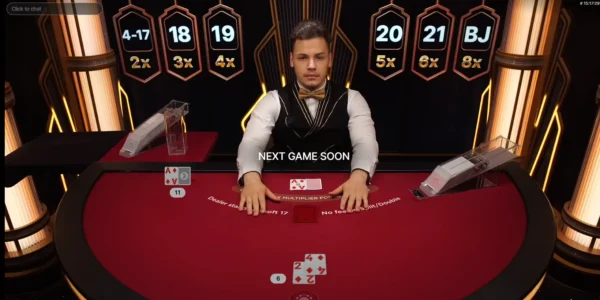
While Classic Blackjack keeps things traditional, PokerStars also has a whole variety of Live Blackjack games that spice up the familiar format. These versions keep the traditional gameplay (beat the dealer without going over 21) but layer on new mechanics, side bets, and flashy visuals that modernise the game.
Take Lightning Blackjack, for example, which offers multiplier payouts on winning hands, adding an extra layer of unpredictability. Quantum Blackjack Plus plays with tweaked odds and boosted payouts on certain outcomes, while Premium Blackjack turns up the production value with really sleek visuals and a more immersive experience.
For those who prefer to play solo, there’s Highroller Blackjack, offering play with higher stakes. And for those who enjoy a good theme, there are games like Christmas Blackjack, which wraps the game in festive visuals while keeping the traditional blackjack rules at the forefront.
Do Soft and Hard 17 Matter in Online Casino?
Even in feature-heavy versions like Lightning Blackjack or Quantum Blackjack Plus, the difference between soft and hard 17 still matters. While these games introduce extras like multipliers or boosted payouts, the core blackjack logic, such as when to hit, stand, or double, is still important.
People can still benefit from knowing whether their 17 includes an Ace counted as 11 (a soft 17) or is a fixed total (a hard 17), because that could influence the best move in different situations. The dealer rules don’t change either: in most of these variants, the dealer is still required to hit on soft 17, unless the table states otherwise. So even with all the added excitement of flashing lights and big potential multipliers, strategies like soft vs hard hands still sit at the heart of every play.

Beyond Soft 17 – Blackjack Strategies
Soft 17 might be one of the most discussed hands in blackjack, but it’s far from the only situation that calls for careful decisions. Many other moments in the game can depend on the player’s decision, where one rule or one choice can shift the odds. Whether it’s deciding when to double down or whether to split a pair, certain strategies, can increase the fun of the game.
Doubling Down –
Doubling down can be one of the most powerful tools in a player’s arsenal. It allows for the original bet to be doubled in exchange for receiving just one more card, after which they have to stand. It’s commonly used when holding a 9, 10, or 11, especially against a dealer with a weaker upcard like a 4, 5, or 6.
But why does it matter? Like soft hands, doubling down is a decision based on risk management. The player gives up getting any extra cards, but gains the opportunity to capitalise on their apparent upper hand. The rules on doubling down also vary slightly between tables. In most PokerStars blackjack games, guests can double on any two-card hand, including after splits, offering up a little more freedom.
Splitting Pairs –
Pair splitting might seem simple: two identical cards become two hands, but it can be a seriously strategic decision. Some pairs, like a couple of 8s or Aces, are usually split by more seasoned blackjack fans. Others, like 10s or 5s, typically aren’t, but it all depends on what the dealer is showing and how likely the split hands will help them out.
In the PokerStars Classic Blackjack game, players can split up to three times, creating four hands, except with Aces, which can only be split once and receive just one card per hand. They can also double down after a split, except after splitting Aces. Understanding when to split or when to hold the pair together can be just as essential as knowing what to do with a soft 17.
FAQs
What is a soft 17 in blackjack?
What’s the difference between soft and hard hands?
Does the dealer hit on soft 17?
What should the player do with a soft 17?
Where can players try blackjack online?

Top Content



Trending