The Mathematics of Roulette – Understanding Probability and Outcomes
Roulette is often described as one of the simplest casino games to learn. There are no complicated hand rankings to memorise, no strategic decisions to make after every card is dealt and no opponents whose actions directly influence your own. Instead, the game revolves around a spinning wheel, a bouncing ball and a wide range of betting options that allow every player to experience roulette in their own way.
Every spin of the wheel is governed by probability. Every payout has been carefully calculated to reflect the likelihood of a particular outcome occurring, and every betting option from backing a single number to covering half the wheel with an even-money wager fits neatly into the same mathematical system.
For many players, the word probability immediately brings back memories of school maths lessons. In reality, the probability used in roulette is far more accessible than many people realise. It’s simply a way of describing how likely something is to happen. Once you understand this basic concept, the roulette table suddenly becomes much easier to read, and many of the myths that have surrounded the game for generations begin to disappear.
In this guide, we’ll explore the mathematics that powers roulette in straightforward language. We’ll explain why every spin is independent, why streaks naturally occur, how probability relates to different betting options and why the house edge remains constant regardless of which wagers you choose. Most importantly, we’ll show that understanding the numbers doesn’t make roulette less exciting. It simply allows you to appreciate the game with greater confidence and realistic expectations.
Every Roulette Spin Starts with the Same Odds
At its heart, roulette is built on one beautifully simple principle: every numbered pocket on the wheel has an equal chance of being selected each time the ball is released.
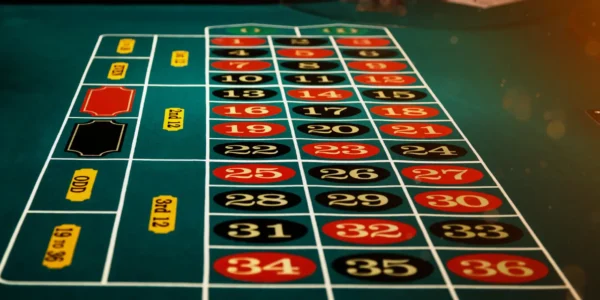
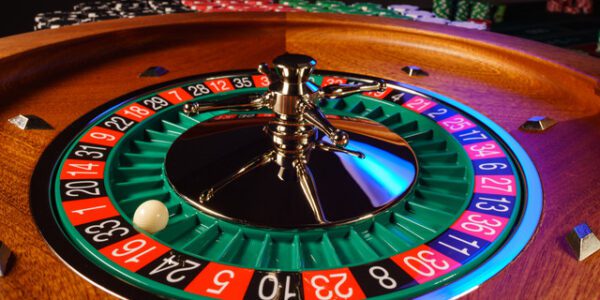
On a standard European roulette wheel there are 37 pockets in total. Thirty-six are numbered from 1 to 36 and coloured either red or black, while the remaining pocket is the familiar green zero. Before every spin begins, each of those 37 pockets has exactly the same probability of receiving the ball.
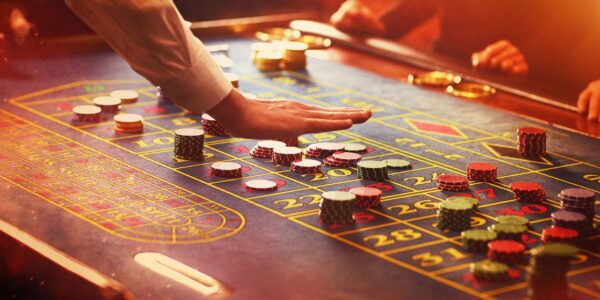
This equal probability forms the foundation of every wager available on the betting layout. A straight-up bet on a single number covers just one pocket, giving it a probability of one in thirty-seven, or approximately 2.7%. By comparison, a split bet covers two numbers, a corner bet covers four, while a dozen covers twelve numbers. Outside bets such as Red or Black each cover eighteen numbered pockets, making them far more likely to succeed than a straight-up wager.
As the number of covered outcomes increases, the payout decreases. This isn’t because some bets offer better value than others, but because the rewards are carefully balanced against the probability of winning. A bet that is more likely to succeed simply pays less, while one with a lower chance of success offers a larger reward when it does land.
Understanding the Roulette Wheel
To appreciate why roulette behaves the way it does, it’s worth taking a closer look at the wheel itself.
Although the betting layout may appear complex at first glance, the wheel is remarkably straightforward. Every numbered pocket occupies an equal amount of space, and the sequence of numbers has been arranged to distribute colours, odd and even numbers, and high and low values around the wheel. This design helps ensure that no section becomes naturally favoured over another.
One of the most important features of the wheel is the green zero. While it occupies just a single pocket, it plays a vital role in the mathematics of the game.
Imagine, for a moment, a roulette wheel without a zero. A bet on Red would then cover exactly half of the available pockets, creating a genuine fifty-fifty proposition. The same would apply to Black, Odd, Even, High and Low. If payouts remained at even money, the casino would have no long-term advantage.
The inclusion of the zero changes this balance. Because zero is neither red nor black, odd nor even, or high nor low, it sits outside these popular betting categories. A Red bet therefore covers 18 of the 37 pockets rather than half of the wheel. The probability of winning becomes approximately 48.65%, while the payout remains even money.
This small mathematical adjustment creates the house edge that allows roulette to operate sustainably while still offering players fair and transparent odds.
Why Previous Results Never Affect the Next Spin
If there’s one idea that defines roulette mathematics more than any other, it’s the concept of independence. Every spin of the wheel is completely independent of every spin that came before it. This means previous outcomes have absolutely no influence over future ones.
It can be difficult to accept because it feels counterintuitive. Imagine watching a roulette table where Red has appeared six times in succession. Many people instinctively feel that Black must now be “due”. After all, six Reds in a row seems unusual, so surely the next result is more likely to balance things out.
Mathematics tells a different story. When the dealer launches the ball for the next spin, the wheel still contains exactly the same 18 red pockets, 18 black pockets and one green zero. Nothing about the physical wheel has changed. The probability of Red remains exactly the same as it was before the previous six spins occurred. The wheel has no memory.
This principle explains why roulette remains impossible to predict over the short term. While players are naturally drawn to recent results, those results provide no information about what will happen next.
The Gambler’s Fallacy
The belief that previous outcomes influence future ones is so common that it has its own name: the Gambler’s Fallacy. This is the mistaken belief that random events somehow compensate for previous results.
A classic example occurs when Black has failed to appear for an extended period. Many players convince themselves that Black is now overdue because Red has appeared repeatedly. Others believe a particular number becomes more likely simply because it hasn’t landed for fifty or a hundred spins.
A useful comparison is flipping a coin. If you toss a fair coin five times and it lands on heads every single time, the sixth toss is still just as likely to produce heads as tails. The previous results don’t change the physical properties of the coin. Roulette works in the same way, only with more possible outcomes.
Understanding the Gambler’s Fallacy helps explain why betting strategies based purely on recent results don’t alter the mathematics of the game. Whether a number has just appeared or hasn’t appeared all evening, its probability on the next spin remains exactly the same.
Why Randomness Doesn’t Always Look Random
One of the most fascinating aspects of probability is that genuine randomness often appears surprisingly uneven.
When people imagine random results, they often picture perfect alternation. Red followed by Black, Odd followed by Even, high numbers followed by low numbers. In reality, that’s not how randomness behaves.
Random events naturally create clusters, streaks and coincidences. A particular number might appear twice within a handful of spins before disappearing for an hour. Red may dominate one section of a session, while Black dominates another. None of these outcomes contradicts probability. They are simply examples of how random events behave over relatively small samples.
This is one reason roulette continues to intrigue players. Every session tells its own story, filled with unexpected runs, surprising coincidences and memorable moments that feel extraordinary while remaining entirely consistent with the mathematics behind the game.
Understanding Expected Outcomes
One of the most useful concepts in probability is the idea of an expected outcome. This doesn’t mean predicting exactly what will happen during your next roulette session. Instead, it describes what mathematics suggests should happen over a very large number of spins.
A simple way to think about this is by imagining a standard six-sided die. If you roll it six times, there’s no guarantee you’ll see every number once. You may roll three sixes, never see a two, or experience any number of unusual combinations. However, if you rolled that same die hundreds of thousands of times, each number would gradually appear close to one-sixth of the total rolls.
Roulette behaves in exactly the same way. Although every number on a European wheel has a one-in-37 chance of appearing on each spin, that doesn’t mean every number will appear once every 37 spins. Randomness simply doesn’t work like that. One number may appear twice within ten spins, while another might not appear for over a hundred. Both outcomes are perfectly consistent with probability because short-term results naturally fluctuate.
Understanding expected outcomes helps players avoid one of the most common misconceptions in roulette: the belief that the wheel somehow “owes” certain numbers or colours because they haven’t appeared recently. The mathematics doesn’t work on a schedule. Instead, probabilities reveal themselves only across very large samples, not during individual sessions.
This is one of the reasons roulette remains so exciting. Every spin is capable of producing a completely unexpected result, even though the long-term probabilities remain unchanged. The balance between short-term unpredictability and long-term consistency is what makes the game so compelling.
The Law of Large Numbers
Closely linked to expected outcomes is a mathematical principle known as the Law of Large Numbers. While the name sounds technical, the idea behind it is remarkably simple.
The law states that as the number of observations increases, the overall results tend to move closer to the expected probabilities. Notice that it doesn’t say outcomes will balance themselves quickly, or that a colour that has been absent for several spins is suddenly more likely to appear. Instead, it describes what happens across thousands or even millions of spins.
Imagine recording every result from a roulette wheel over the course of a year. During some sessions, Red may dominate. During others, Black may enjoy a lengthy run. Certain numbers will appear more frequently than expected for a while, while others seem unusually elusive. Yet as more and more spins are added to the record, those fluctuations begin to smooth out. The overall percentages gradually move closer to the theoretical probabilities built into the wheel.
This is why casinos, game designers and independent testing laboratories rely on enormous amounts of data when evaluating roulette equipment and online random number generators. A handful of spins tells us very little, but hundreds of thousands provide a clear picture of whether outcomes match the expected mathematical distribution.
For players, the key takeaway is that short-term sessions can produce almost any sequence of results. That’s not evidence that probability has failed. It’s simply how randomness behaves before the long-term averages emerge.
The House Edge Explained
Every casino game includes a mathematical advantage for the operator, commonly known as the house edge, and roulette is no exception. In European Roulette, this advantage comes entirely from the presence of the single green zero.
If the wheel consisted only of the numbers 1 to 36, bets such as Red or Black would truly be fifty-fifty propositions. The addition of the zero changes those probabilities slightly while leaving the payouts unchanged. That small difference is enough to create a house edge of approximately 2.7% on European Roulette.
American Roulette introduces an additional green pocket, the double zero, which increases the total number of pockets from 37 to 38. As a result, the house edge rises to 5.26%, making the European version the preferred choice for many players who have the option.
One point that’s often misunderstood is that the house edge remains the same regardless of which standard betting option you choose. Some players assume a straight-up bet must offer better value because of its larger payout, while others believe even-money bets are somehow safer in mathematical terms. In reality, both types of wager carry the same house edge. The only difference lies in how often they win and how much they pay when they do.
Understanding this allows players to choose betting options based on enjoyment rather than misconceptions about value. Whether you prefer backing a favourite number or sticking with outside bets, you’re participating in the same carefully balanced mathematical system.
Related Roulette Articles

Can Betting Systems Beat the Mathematics?
Over the years, roulette has inspired countless betting systems, from the famous Martingale to Fibonacci, D’Alembert and many others. While these systems all approach bankroll management differently, they have one important characteristic in common: none of them changes the probability of the next spin.
Increasing your stake after a loss doesn’t make a win more likely. Likewise, reducing your stake after a win doesn’t influence where the ball will land. Betting systems can change the pattern of wins and losses during a session, but they cannot alter the mathematics built into the wheel or remove the house edge.
For many players, these systems are simply a way of adding structure to a session. That’s perfectly reasonable, provided they’re viewed as methods of organising bets rather than predicting outcomes. The roulette wheel responds only to chance, not to the size or sequence of the wagers being placed.
Final Thoughts
Roulette has remained one of the world’s most popular casino games because it combines elegant simplicity with fascinating mathematics. Every spin is governed by the same principles of probability, every betting option reflects a balance between risk and reward, and every outcome is independent of what came before.
Understanding these ideas doesn’t reduce the excitement of the game, it enhances it. Instead of searching for patterns that don’t exist or believing certain numbers are “due,” players can appreciate roulette for what it truly is: a game of genuine randomness supported by transparent mathematics.
Approached with realistic expectations and a good understanding of probability, roulette becomes not just entertaining but also one of the clearest demonstrations of chance in action. You can play many versions of roulette at PokerStars Casino.
FAQ
Why isn’t a Red or Black bet exactly 50/50?
Does a number become more likely if it hasn’t appeared for a long time?
What is the Gambler’s Fallacy?
Why do long streaks happen?
Which roulette version has the lower house edge?
Can betting systems overcome the house edge?
Top Content

Trending