What is the Difference Between Hard and Soft 17
Whether playing at a land-based casino or an online casino, knowing the difference between how to handle a soft hand and a hard hand in Blackjack can make all the difference, and so knowing how to act in such cases really is key to building a well-rounded Blackjack strategy.
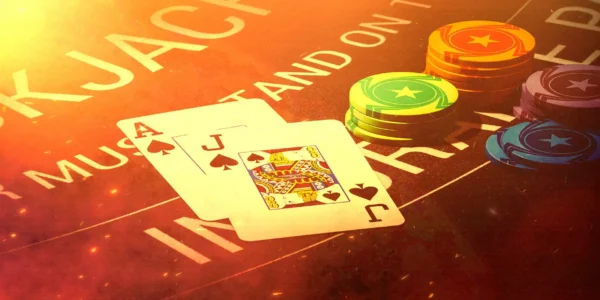
A soft hand is one that features an ace. For example, an ace and 7, therefore being a hand that can be played as a total of 8 or as a total of 18, depending on whether the player wishes to hit or stand. Were a face card then dealt to the player they would have a hard 18.
It is this flexibility and additional choice, which soft hands give Blackjack players, that can lead to some players making sub-optimal decisions. This is particularly true of soft and hard 17s, a topic that is explored in more detail below.
Hard vs. Soft: The Basics
Soft 17
A soft 17 contains an ace counted as 11 plus other cards totaling 6 (for example, Ace-6). Because the ace can be counted as 1 if needed, a soft total is flexible—if you draw a high card, the ace simply shifts to 1. This safety net allows more aggressive play.
Hard 17
A hard 17 lacks that flexibility—either there is no ace, or the ace counts as 1 due to the rest of the hand totaling ten or more (e.g. 10-7 or Ace-6-10). Drawing on a hard 17 risks busting, making it a much safer stopping point.
Should You Stand or Hit on a Soft 17?
A soft 17 comprises of an ace and a 6 in the player’s initial holding, meaning they have the option of sticking with the total of 17 they already have or asking for another card to see if they can better their total. Of course, because this is a soft hand, there is no initial danger of the player going bust.
The correct course of action in this scenario is usually for the player to hit, because this gives them the best mathematical chance of defeating the dealer. However, this all depends on what the dealer’s initial visible card is. If it is a 3, 4, 5, or 6, then a player with a soft 17 should stand, because probabilities dictate that it is unlikely for the dealer to improve enough to be victorious.
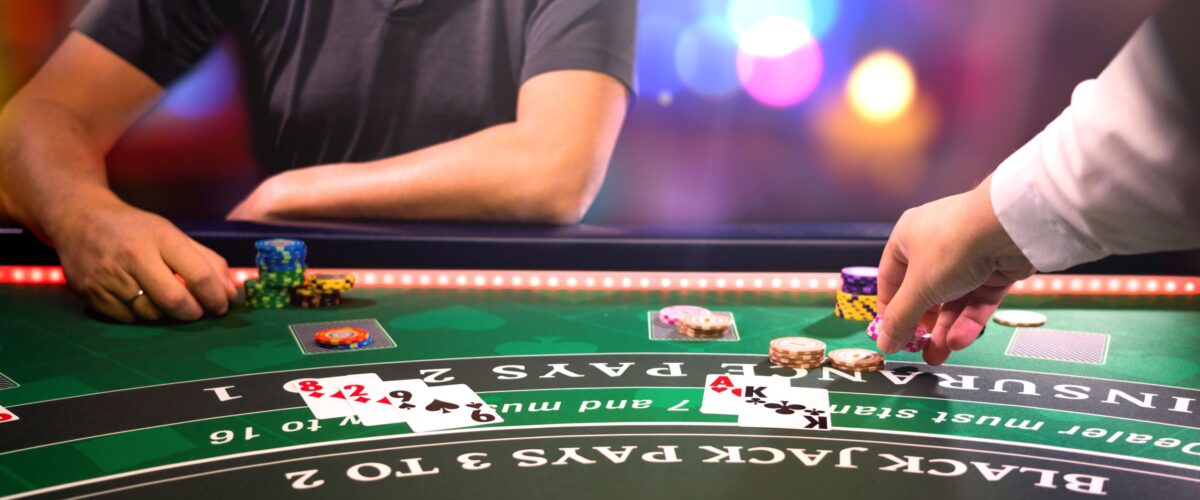
Additional factors that players should be aware of include the number of decks being used at a Blackjack table, as well as whether a dealer is required to stand or hit when on soft 17 himself. The latter is usually well-displayed on the table’s felt, so that there can be no doubt about whether the dealer or player has come out on top in a given scenario.
How to Play a Hard 17
Whereas it is usually expected that an experienced player will hit when on soft 17, the opposite is true of a hard 17, with there being no scenario at all in which a player should ask for an additional card on top of the 17 total they’ve already amassed. This is because the likelihood of going bust is just too high, especially when the dealer will struggle to beat your 17 anyway.
Doubling Down on Soft 17
Doubling down is where a Blackjack player takes advantage of the dealer being in a weak situation, to wager double their initial bet on a given hand. This is particularly advantageous for players who find themselves with a soft 17 while the dealer only holds a 6. Standing in this situation will only give you a return of £1.20 per £100, whereas doubling down will garner £26 per £100.
Why Do Casinos Care About Soft 17 Rules?
You’ve probably seen the phrase “Dealer Hits on Soft 17” written on blackjack table felt, but why does this rule exist, and why does it matter?
Casinos use the soft 17 rule to slightly increase the house edge, particularly in games where other rules are more favourable to the player (like 3:2 payouts for blackjack or doubling after a split).
When the dealer is allowed to hit on a soft 17, it gives them one extra opportunity to improve a relatively weak hand into something stronger—such as reaching a hard 18, 19 or even 21. While the increase in house edge is only around 0.2–0.3%, over time and across thousands of hands, this adds up significantly for the casino.
From the player’s perspective, tables where the dealer stands on soft 17 (abbreviated as S17) are more favourable. When choosing between two tables or online games, always try to play the version where the dealer stands on soft 17—this gives you a better statistical chance of winning in the long run.
Pro Tip: If you’re using a basic strategy chart, make sure it’s designed for the specific rule set of the table you’re playing on—S17 and H17 (Hit on Soft 17) strategies differ in several key places.
Strategy Table For Hard vs. Soft 17
| Hand Type | Dealer’s Weak Card (3–6) | Dealer’s Strong Card (7–Ace) | Rationale |
| Soft 17 | Stand or double down | Hit | Low bust risk, potential improvement |
| Hard 17 | Always stand | Always stand | High bust risk, low upside |
FAQs
What makes a soft 17 more “playable” than a hard 17?
Should I always hit a soft 17?
Why should I never hit a hard 17?
What’s the impact of the dealer hitting on soft 17?
Can I double down on a soft 17?
How does deck count affect soft 17 decisions?

Top Content



Trending