
Purposes of Betting in Poker
A bet in poker is to make a wager by putting chips in the pot. It is the first aggressive action in the betting round. And it sets the price for other players who want to remain in the hand.
Knowing why and when to bet is one of the key skills in poker. It’s also crucial to know how much you should wager once you have decided to enter a pot.
To figure out the right time to bet, it is important to understand why we do it. Broadly speaking, there are three different reasons to bet:
- Value bet – To build a pot and gain value for a strong hand. Generally, you’ll make a value bet when your hand is ahead of your opponent’s range, and when you can identify hands they could pay you off with. The aim of a value bet is to build the pot so you can win more chips with the best hand.
- Bluff – To force other people to fold so your weak hand can win. Bluffing is a key skill in any poker game, allowing you to gain chips without having to win at showdown. Bluffing also helps to balance your value betting range.
- Merge bet – Merged pots, sometimes referred to as protection bets, protect a hand and force opponents to pay more to continue. Merged bets are often made with a range including medium strength hands ahead of some of your opponent’s range, but behind others.
This page will take you through every aspect of these. It will show you the purpose of each type of bet. And also outline examples to help you to understand when and how much to make each bet.
We’re also going to be discussing the continuation bet in poker. This flop bet made by the preflop aggressor falls under any of the above three categories. We’ll also talk about other subtle purposes of betting, like betting to induce a bluff.
The Fundamentals of Poker Betting
In live poker, you’ll need to place the chips in the middle to make a bet. Unless you announce your bet size, the dealer will count the chips you’ve placed as being the amount you want to bet.
In online poker, you can make bets by moving the bet slider or typing in the amount you want to bet. You can also set pre-determined bets so you can select bet sizing you often use.
Betting can be a way to gain value from strong hands and also a way to win the pot with a bluff.
Here’s how betting compares to your other available options:
- Betting versus checking – If you are the first player to act, or the action has checked to you, your option is to check or bet. If you check, you won’t put any more chips in the pot. If you bet, you can choose how much to put in the pot. Other players will have to match your bet, or fold their hand. The poker betting rules state you can also fold here. But a check accomplishes the same goal without having to give up the hand.
- Calling, raising or folding – If someone has already made a bet, your options change. You’ll no longer have the option to bet yourself. Instead, you can call the bet by putting in the same amount of chips. You can raise by putting in more than the required amount. Or choose not to call and fold your hand.

Overview of betting rounds
Each hand takes place over the course of up to four betting rounds; preflop, flop, turn and river. The flow of each hand is as follows:
- Players receive two hole cards each; first betting round
- First three community cards dealt on flop; second betting round
- One more community card dealt on turn; third betting round
- Final community card dealt on river; final betting round
Preflop, betting is not an option, as the small and big blind serve as the opening bets in the hand. Instead, you’ll have the option to call the big blind, known as limping, fold your hand, or raise the pot.
When you enter the pot preflop, you’ll always want to do so by raising with your entire range. This sets you up to make effective bets during the postflop betting rounds, whether you’re bluffing or value betting.
You can bet during any of the three postflop betting rounds. Whoever wants to continue in the hand will need to at least match the current bet. If there are two or more players in the pot after the final betting round, the hand goes to showdown. Whoever has the best hand wins.
Betting for Value
When you have a stronger hand than your opponent, or believe you are ahead of their range, your aim is to get paid. You do this by value betting. You’re looking to get called by a weaker hand.
Value betting helps you to maximize your return from a winning hands. It’s an essential part of poker strategy. Value betting over multiple streets builds huge pots and potential play for stacks with an all in.
Example of a value bet:
You have A♥K♥ and the flop has come A♠5♥10♥, giving you top pair, a pair of aces, with top kicker. Your hand can also improve to the nut flush if a heart comes on the turn or river. In most circumstances, you should bet for value here to build the pot and maximize your return from your strong holding. You’ll always be able to value bet again on the turn, whether you hit a flush or not.
When and how to value bet
Although value betting with the nuts seems obvious, knowing when and how much to value bet is not easy. You’ll need to consider your hand strength relative to your opponent’s hand range. While at the same time thinking about board texture, stack sizes and other factors.
Generally, you can value bet whenever your hand is ahead of the middle of your opponent’s range. In other words, when you’re ahead of more hands than you are behind, and you believe you can get paid, it’s worth value betting.
- Relative hand strength – Unless you have the nuts, your hand strength is always relative to your opponent. To make a value bet, you’ll first have to work out whether you are ahead more often than you are behind. And also whether opponents have hands in their range that pay you off.
- Board texture – If the board texture favors your hand, you can go ahead and value bet. But if it favors your opponent’s hand, consider controlling the pot by checking or check-calling.
- Opponent’s tendencies – Other players have their tendencies and own approach to strategy. Some may call too often, others not enough. Tougher opponents might raise with a higher frequency to put the pressure back on you. It’s important to adapt, which we’ll cover in more detail later on.
- Bet sizing – There’s two ways to approach bet sizing. One is to use GTO as closely as possible, finding the optimal sizing that’s perfect to balance your range of value bets and bluffs. The other is to use an exploitative bet sizing to gain the most chips possible out of weaker opponents. For example, you can bet bigger against calling stations to extract most value.
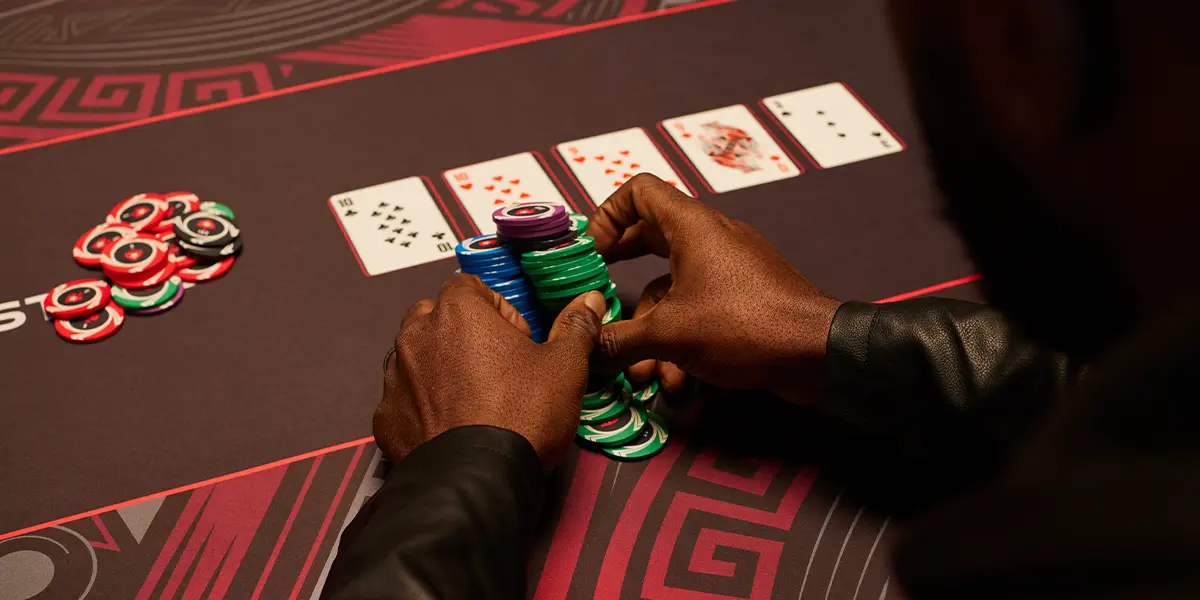
Moving all in
According to the betting rules of no limit Texas Hold’em the most you can bet is your entire stack. You can do this by moving all in during any of the four betting rounds.
You’ll be looking to move all in for value when you have a hand well ahead of your opponent’s range. And when the stack to pot ratio is high enough that the sizing of the all in bet is reasonable compared to the size of the pot.
This may take several streets of betting to achieve. For example, you bet the flop and turn, then have a pot sized all in bet left on the river. All in bets can be made preflop and on the flop if stacks are short.
The purpose of moving all in for value is to double up your stack against a weaker hand. It’s a risky play, but gives you the maximum reward when it pays off.
Extracting thin value
As mentioned, hand strength is relative. If you’ve got the nuts, or something close to it, then it’s easy enough to play for value. You’ll usually be looking to stack off as soon as possible against a range consisting of weaker hands.
But value betting with weaker hands still ahead is more challenging. In this case, you’ll need to strike a fine balance. One between checking and flat calling bets for pot control, versus betting and raising to build a pot and get paid.
An example is top pair when a higher pair comes or a flush falls on the board. It’s tempting to completely shut down and check the hand to showdown. However, doing so without much thought, is a sure way to lose value.
Expert poker players can find thin value. To do this you need a good gauge of your opponent’s range. And then narrow it down as the hand progresses based on the action. This way you have a fair idea of where you’re up to by later streets.
Mistakes to Avoid when Value Betting
Poker is an easy game when you have the best hand, as it’s quite difficult to lose chips. But value betting is all about how much you can gain and that’s crucial to your long term win rate. Here are the mistakes to avoid when value betting:
- Missing value – Failing to value bet with strong hands because you’re worried opponents have something better.
- Betting for value when you’re behind – The aim of a value bet is to get weaker hands to call. If no weaker hands can call your bet, or it’s too likely you’re behind, you shouldn’t try to bet for value. Check-folding or check-calling will be the better options.
- Betting too small or big – Finding the right sizing is crucial when making value bets. Bet too big and you could scare opponents who would have called out of the pot. Bet too small and you won’t be able to get paid the maximum or build the pot for future streets.
Betting as a Bluff
For many people who don’t know very much about poker, “bluffing” is a central element of the game. Bluffing plays a big part in poker, but you should only consider it if there is a chance you’ll force an opponent to fold.
Bluffing is the process of making a bet with the intention of getting other players to fold better hands. The second part of that process is as important as the first – your opponents need to fold or your bluff won’t work.
If your bluff works, you’ll take down the pot there and then without having to go to showdown with the losing hand. Bluffing is a way to win more chips by utilizing fold equity – the equity you can gain by making other players fold.
It also balances your value betting ranges. By bluffing with the correct frequency, you’ll make it impossible for opponents to know whether you have a strong or weak hand.
Example of a bluff:
You hold J♣10♣ in late position and raise before the flop. The player in the big blind calls. The flop is K♠6♦4♦ and your opponent checks. You have only king high, with a jack kicker, which is a very weak hand and has very slim chances of improving. But there is also a decent chance your opponent also has nothing.
If your opponent checks, you could make a bet here as a bluff to represent a pair of kings. Even if your opponents have a stronger hand than you, such as ace-high, they will be persuaded to fold.
Bluffing can get very elaborate. It’s not as simple as continuation betting a flop. Proficient players bet as a bluff over multiple betting rounds, building the pot to take it down later. This takes a lot of skill, hand reading and courage to pull off.

How and when to bluff
You can’t throw chips into the pot and expect to win pots. There’s a couple of reasons why this won’t work. First of all, your story won’t make sense. Thinking players will see your bets don’t line up with your hand range or the action so far. Second, sometimes opponents will have a very strong hand and call you down no matter what.
In order for a bluff to be successful then, it needs to represent a hand you could be holding. For example, let’s say you raised preflop and checked after missing the flop. The turn comes an Ace. As the preflop raiser, you have a lot of pair of aces in your range. A bet here can represent the hand.
When a bluff is well timed and planned, it’s impossible to distinguish from a value bet. Opponents will have a hard time knowing whether to call or fold.
Apart from represent a hand, you’ll also need to get opponents to fold. This works in some situations more than others:
- Board texture – A dry board is easier to bluff than a draw-heavy board. On a dry board, other players either have something to call with or they don’t. On a draw-heavy board, opponents have more combinations of hands they can call or raise with.
- Opponent’s tendencies – Tight players make ideal bluff targets. They will fold too often and will be reluctant to call a bet with anything less than top pair. Bluff much less against calling stations or bad players. They tend to call regardless of how well thought out the bluff is or how weak their hand.
- Position – It’s easier to bet as a bluff when in position. You’ll be able to see your opponent’s actions before making your move. If they check one or two streets, you’ll get a sense they could be weak. If your bluff is called on the flop or turn and you’re in position, you’ll also have a chance to re-evaluate and fire again.
- Action so far – The action so far in the hand should tell you a lot about what’s going on. And whether your opponent has a hand they want to play. Even if you’re out of position, prepare to pounce on weakness if the other factors mentioned here line up.
- Blockers – Blockers are cards that reduce the value combinations other players could have. For example, if you hold the ace of clubs on a king-high board with three clubs, you block flush combinations as well as combinations like ace-king. If you have blockers, there’s less chance other players have the hand you are representing.
Pure Bluff versus Semi-Bluffing
When you bet with a hand without equity in the pot, this is a pure bluff. For example, if you’ve hit nothing by the river and make a bet, this is a pure bluff. You’re relying on your opponent folding as your only way to win the pot.
You can also make a semi-bluff by betting when you have a hand that is behind but has some equity in the pot. When semi-bluffing, you can win the pot by getting your opponent to fold. Or by hitting and improving your hand on the next street.
An example of this is betting with straight draws or flush draws. If your opponent folds, you win the pot. If they call, you have a chance to complete your hand and then bet for value.
Example semi-bluff:
Player A: 9♣8♣
Player B: A♣J♠
Flop: 10♣7♠3♠
Player B raised from late position and Player A called on the button. Player B has missed the flop and checks. Player A opts to bet as a semi-bluff with their straight draw. Player B decides to fold. Note if Player B had called the bet, Player A can still win the pot on the turn by improving their hand or even by firing another bet to continue the bluff.
Bluffing across multiple streets
Sometimes, it’s going to take more than one street to get opponents to fold. You’ll need to bet as a bluff over the course of multiple streets to tell a good story. Then apply enough pressure to get other players to fold. This is known as double or triple barrel bluffs.
Firing bets for the second or third barrel is risky as each bluff becomes more costly than the last. But, the same is true for your opponents. They’ll be forced into making even more costly decisions.
Few players have the skill or courage to bet as a bluff across several streets. This can work in your favor. Opponents are more likely to believe you have a value hand by the time you bet the turn or river.
Let’s continue with a similar example to above, looking at a semi-bluff across multiple streets.
Example double-barrel semi-bluff:
Player A: 9♣8♣
Player B: A♣J♠
Board: 10♣7♠3♠10♥
Player B checks the flop after raising preflop. Player A bets as a semi-bluff, but this time Player B calls the bet with ace-high. The turn is the 10♥ and Player B checks again. Player A has missed their straight and now has nine high with one card to come. However, it seems unlikely Player B has trip tens. If they did, they would likely have c-bet the flop with a pair. Player A fires out the second barrel, betting two-thirds of the pot. Player B folds their hand.

Common Mistakes When Bluffing
Bluffing is an essential skill in poker, but it’s important to get it right more often than you get it wrong. When bluffing, there needs to be a decent chance opponents will fold so the bet is profitable. Avoid these common mistakes when betting as a bluff:
- Not having a plan or representing a hand
- Bluffing when opponents have a strong range
- Not paying attention to board texture
- Ignoring blockers
- Bluffing against calling stations
- Bluffing too often in multiway pots.
The final point is one we haven’t yet covered, so it’s worth a mention here. In multiway pots, it’s more likely one or more players will have hit their hands. You’ll need stronger hands to make profitable value bets and you’ll bluff much less often in multiway pots.
Other Types of Betting in Poker
Not every bet falls into the category of either value betting or bluffing. Although when you break it down, most do. Here, we’ll take a look at continuation betting, betting for protection, and betting with a merged range.
Continuation betting
A continuation bet, also known as a c-bet, is a bet made by the preflop raiser regardless of whether they improve on the flop. It’s a way of continuing the preflop aggression with an uncapped range. This is known as having the initiative.
For example, Player A raises from middle position and Player B calls in the big blind. Player B’s range is capped, because they called rather than raised the bet. Player A’s range is uncapped because they could have any strength hand up to pocket aces. Player A can make a continuation bet on lots of flops based on their range advantage and initiative.
A continuation bet can be either a value bet or bluff, depending on whether you actually have a strong hand. But it’s also an example of a merged range bet, because you’ll include lots of medium hands in your c-bet range.
Merged range bet
Up until now, we’ve been talking about betting either to get value for a strong hand or winning the pot with a bluff. This is known as a polarized betting strategy. You either have it or you don’t.
When betting with a merged range, you also bet with medium strength hands. These are sometimes ahead and sometimes behind your opponent’s range. This can help to balance your strategy and make life more difficult for other players. They now have an even tougher job when it comes to working out what you have.
Betting For Protection
The manner in which a poker hand progresses means the lead in a hand can change with each new card. It is possible for one hand to be ahead pre-flop, another to overtake it after the flop, and a third or fourth still to overtake them on the turn and river.
When a favoured hand is beaten by a weaker hand, it is “out-drawn”. The aim of a “protection” bet is to safeguard against this. A protection bet is a value bet made to make opponents pay for their draws.
If you have a big hand but it is vulnerable to being out-drawn, you might want to make a protection bet. It forces your opponent to pay even more to hit a draw, or else fold their cards and yield the pot at the stage your hand is still ahead.
Example of a protection bet:
Player A: J♣J♠
Player B: A♥10♥
Player C: 5♥6♥
Flop: J♥7♥3♣
Player A is ahead on the flop with a set of jacks. But the board is very draw heavy with potential straights and flushes that could come on the turn or river. Player A cannot check back or flat call with their hand and risk giving two other players a free card to draw. They make a large bet to protect their hand.

Understanding betting limits – no limit, pot limit, fixed limit
Poker games vary in their betting rules and betting structures. The main types are pot limit, fixed limit and no limit games:
- No limit games – In no limit poker games, you can bet an unlimited amount, even moving all in at any moment for your entire stack. You can use your chips like a weapon to get more chips and more money, building huge pots with value bets or applying pressure by bluffing.
- Pot limit games – In pot limit games, the maximum bet you can make is a pot size bet worth the amount of the current pot. This betting structure still allows you to make aggressive bets. But the cap limits the amount you can yield, resulting in less spots to push all in.
- Fixed limit games – In fixed limit games, the amount you can bet or raise is predetermined. It’s usually a small bet worth one big blind on the first two betting rounds and a big bet worth two big blinds on the final two betting rounds. This makes it more difficult to build a huge pot or to apply pressure with bluffs.
Betting still has the same purpose in pot limit and fixed limit games as it does in no limit games. You’ll still be betting for value or bluffing, as well as betting with a merged range.
But, poker betting rules definitely impact how how you should approach a game. Here’s a comparison of betting in no limit and fixed limit games:
Value betting
- No limit games: Flexible bet sizing, ability to extract maximum value from strong hands.
- Fixed limit games: More difficult to extract huge value from strongest hands, but easier to make thin value bets to extract chips.
Bluffing
- No limit games: Can apply greatest pressure with big bets or by moving all in. Bluffing is a big part of no limit poker strategy.
- Fixed limit games: More difficult to bluff as bets are fixed limit and opponents will often have favorable odds to call. Bluffing still used, but timing is important.
Pot odds and protection
- No limit games: Can protect made hands against draws by betting enough to give opponents the wrong pot odds to call.
- Fixed limit games: More difficult to protect made hands. Less expensive to draw in limit games.
Pot control
- No limit games: Can control pot with checks and calls but can be difficult as opponents can make large bets in no limit games.
- Fixed limit games: Pot control is built into fixed limit games and there’s less risk of losing huge amounts of chips.
Accomplishing your goals with bet sizing
The purpose of betting in poker is to either get value and grow the pot, or to win the pot with a bluff bet. But choosing to bet is only half of the decision. You’ll also have to decide how much to bet.
Bet sizing will help you to accomplish your goals in poker. It should not reveal the strength of your hand. Rather, your value bets and bluffs should have the same sizing so other players struggle to tell the difference.
Against very weak opponents, you can change up your bet sizing to exploit their tendencies. For example, if someone is a calling station, it makes sense to bet bigger for value.
Bet sizing should vary according to other factors. Things like board texture, position, hand ranges, stack to pot ratio, and so on. See our bet sizing guide.
