Can You Outsmart the Roulette Wheel?
Roulette has been one of the most iconic casino games for centuries. The first form of the game was believed to have originated in France in the 18th Century, developed by Blaise Pascal. Pascal was actually trying to invent a perpetual motion machine, and his failure accidentally created one of the most popular games on the planet.
The excitement of roulette has been known by many players, but can it be predicted? It’s a question asked by punters and mathematicians alike ever since its inception.
The Roulette Wheel Rules
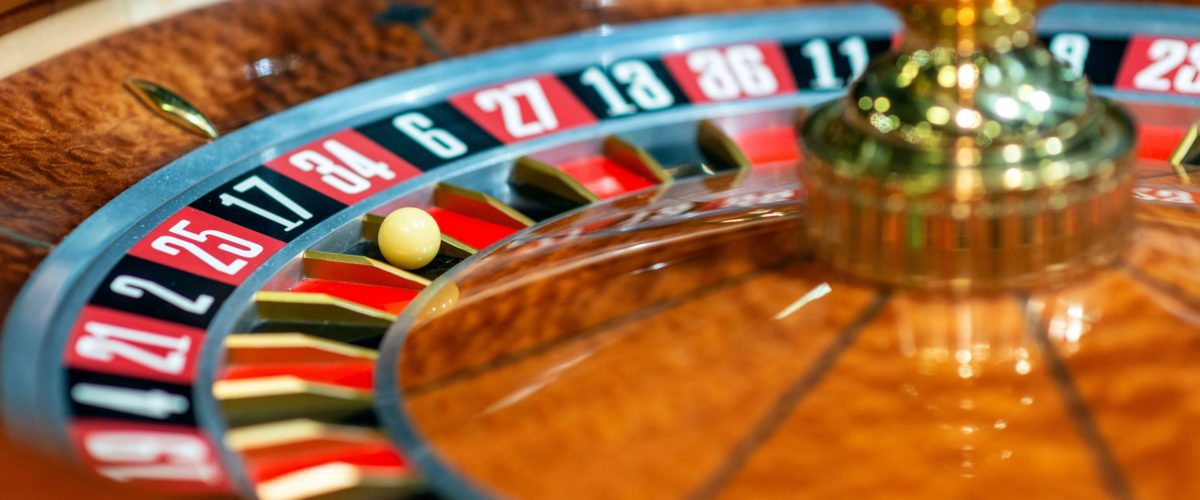
To understand whether roulette can be predicted, we first need to understand the way the game works. It is essentially a game of chance. The wheel is divided into numbered pockets, typically 38 in the USA. The numbers range from 00 to 36, all coloured red or black apart from 00 and 0, which are green. Players place their bets on where they believe the ball will land, and the payout is determined by the odds of that outcome if the bet lands.
Players do not just have to bet on which individual number they believe it will land on. They can bet on a certain colour, adjacent numbers, or rows of numbers. Each of these will have different odds, depending on how many numbers have been bet on.
Gambler’s Fallacy
The key factor for roulette that makes predicting so difficult is that each spin is independent of the previous one. This leads to a phenomenon known as the gambler’s fallacy, where players mistakenly believe that past results can influence future outcomes of the game.
For example, a single bet on the number 1 would probably pay odds of around 35 to 1. If the wheel spins and the ball lands on 1, anybody who has bet on that number will win. The fallacy is that it makes it feel as if, on the next spin, the ball will be less likely to land on 1. In fact, the odds of it landing on 1 again are exactly the same as it landing on any other number. Just because a number appears once, it does not mean that it will not appear again.
Physics and Prediction
Because of the randomness of roulette, some have attempted to apply physics principles to predict the outcome of a spin. The idea is that if a physicist could analyse factors such as the speed of the wheel, the velocity of the ball or its release point, it might be possible to calculate where the ball will land.
While this is theoretically possible, real-world variables make this nearly impossible to predict. Even slight changes to the speed of the wheel, its condition or the user can significantly affect the result. Casinos are also well aware of this theoretical possibility and ensure roulette wheels are maintained properly to ensure randomization of any spins.
Computer-Assisted Prediction
With the advancement of modern technology, some have attempted to use computers with sensors and algorithms to predict where a ball will land. In laboratory settings, these have sometimes had success. However, they are banned in most casinos and will probably lead to a severe penalty, such as being removed and permanently banned from the casino and possibly even legal action.
Even then, this technology can only provide a rough guide to where the ball will land. Even then, bets will often have closed for that spin by the time the technology can predict where it is going to land. Roulette is inherently random and ensures there is always an element of unpredictability. This is what makes the game so enticing.
The mystery of roulette’s randomness has fascinated players for centuries, but sadly, the reality is that the game is largely unpredictable. The combination of variables and rigorous measures by casinos ensures fairness, making it impossible to accurately predict where the ball will land.

Top Content



Trending