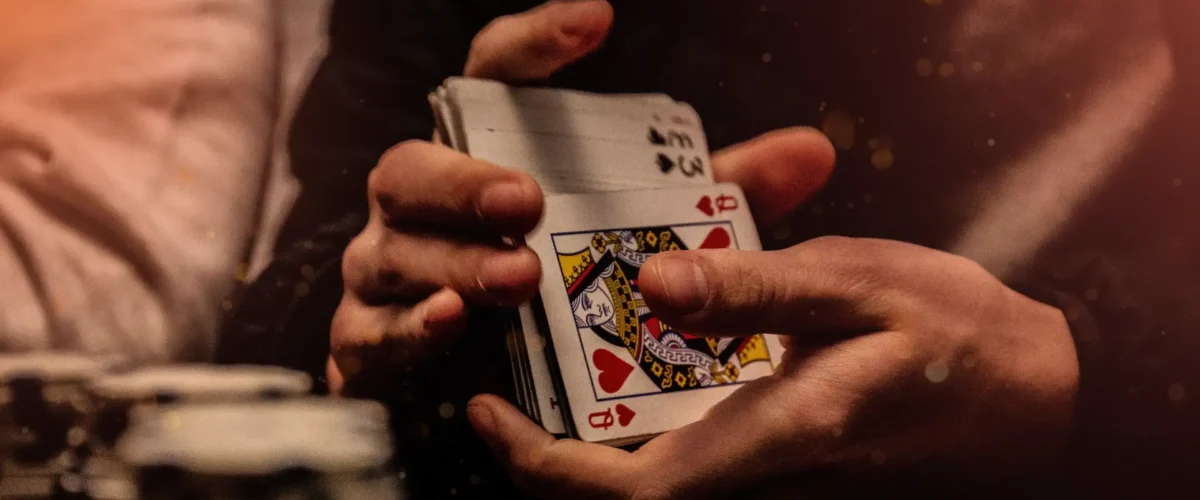
From Saloon Tables to Vegas: The Journey of Blackjack
When asked about what games come to mind when thinking about an online casino like PokerStars, it’s likely that online blackjack will be in the top three.
But it’s hard to imagine that the origins of this timeless classic, once played on dusty wooden tables in frontier saloons, have become a gambling icon all around the world. While its rules are still some of the easiest to learn, blackjack’s incredible journey is anything but simple. From early versions played in Spain and France to the digital revolution on platforms like PokerStars, let’s take a closer look at its history.
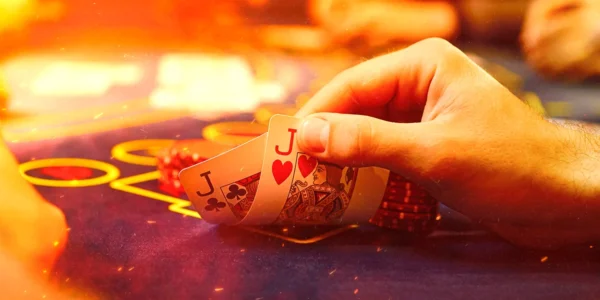
Early History – The Origins in Spain and France
Blackjack, as it’s known today, didn’t appear overnight. In fact, it was a result of a patchwork of early card games which were popular across Europe from the 1600s onwards. Among the most influential was the Spanish game Veintiuna, which means “twenty-one”, and is regarded as one of the main ancestors.
Southern Spain – 400 Years of Blackjack
It was first recorded in writing thanks to the celebrated writer Miguel de Cervantes, in his short story collection, Rinconete y Cortadillo. In it, Cervantes writes about two young gamblers dealing in the underworld of 17th-century Seville, southern Spain. In the story, the men are playing Veintiuna, stating that the goal is to reach 21 without going over. It’s also mentioned that the dealer held a fixed advantage, and the game involved bluffing and strategic thinking, traits still seen at blackjack tables.
Veintiuna was played using Spanish decks, which didn’t include 10s. This massively controlled the odds for the player, forcing them to adapt during games, unlike the modern versions, such as Spanish 21. Most importantly, the basic rules of this 400-year-old game planted the seeds of the blackjack played today.
France – Refining the Rules
Over in France, a similar but more polished version called Vingt-et-Un began growing popular with the aristocrats in the 18th century. The name also translates to “twenty-one”, but its gameplay came with a lot of rules that aren’t used anymore. The dealer would usually have a lot more control over the game, and bets could be placed at different stages of a session, sometimes even between card draws. Back then, it wasn’t just luck; there was an aspect of speedy decision making, suspense and a lot of emotion that went into the games played in the salons of Versailles or Paris.
Vingt-et-Un gained a lot of popularity during the reign of Louis XV, and due to its simple rules and flexible wagering, it allowed all people, from the poor to the rich, to enjoy the game.
Blackjack Fun Fact
The first versions of blackjack, such as Veintiuna and Vingt-et-Un, were often played with handmade paper cards or decks printed from woodblocks or early letterpress tools. There were no plastic coatings or precision-cut edges—just good old-fashioned ink and paper. Because of this, cards could be easily bent or marked, which made cheating more common. Some decks were reused for months and only replaced once they had fallen apart—quite different from the quality decks used in casinos today.
Atlantic Crossings and Evolution in America
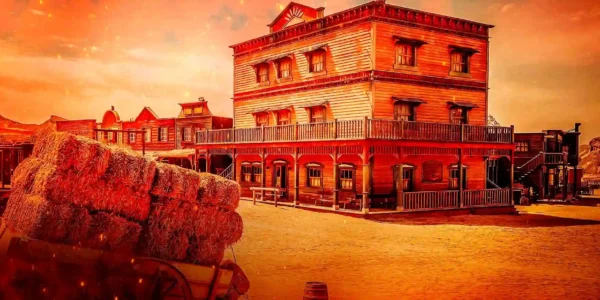
As these European games made their way across the Atlantic with immigrants looking for a better life, the games started to evolve again. In the busy port towns of the American colonies and later the frontier saloons of the West, new versions of Twenty-One were adapted to fit with the fast-paced, high-stakes atmosphere of early American gambling houses.
The problem was that there wasn’t a fixed rulebook, and some versions paid out different amounts based on the hand or local house rules, which weren’t always fair. But while the European games split and evolved separately, the core of the game stayed the same – get close to 21 and beat the dealer.
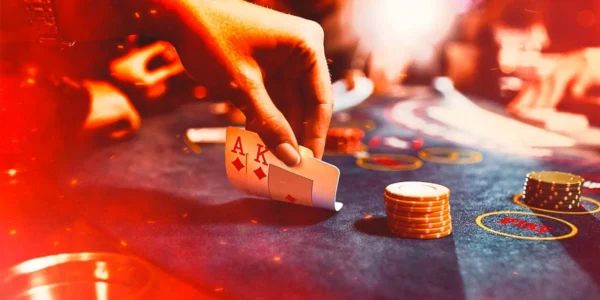
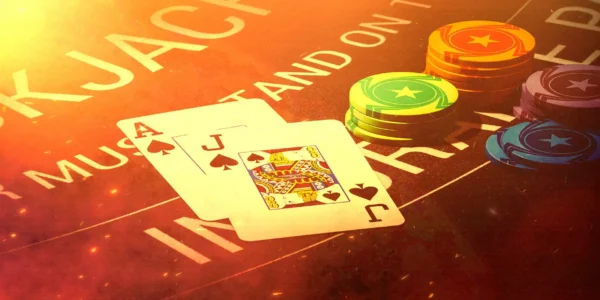
The biggest turning point that shaped blackjack happened within American casinos during the early 20th century. In an effort to make the game more exciting and set it apart from all other card games, casinos began offering a bonus payout for a specific hand: an ace of spades paired with a black jack, either from clubs or spades. This hand was given a 10-to-1 payout, much higher than any standard winning hand. Although the promotion didn’t last long, it coined the term “blackjack”, a name that stuck around. Now it was no longer a mishmash of the European card games; it became its own American version.
The Foundation for the Modern Game
By the early 1900s, blackjack had spread all across the United States. With each decade that passed, it was slowly moulded into the structured, strategy-driven format played in modern casinos and online blackjack platforms. Rules like the dealer having to stand on 17, the concept of splitting pairs, and the option to double down became the new standard. Eventually, gambling was legalised in Nevada in 1931, which is when the game well and truly took off.
Blackjack Rises in Las Vegas
Around the time of the legalisation, the United States was struggling through the Great Depression, and the decision to make some games legal was more about boosting the economy rather than allowing card players to have fun without having to look over their shoulder.
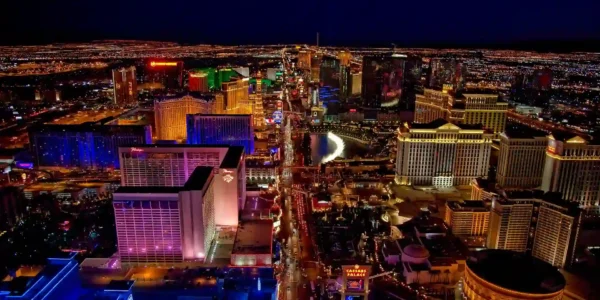
Las Vegas, which was nothing more than a little stopover town for travellers on the railroad connecting Salt Lake City and Los Angeles, took advantage of the gambling boom during the difficult financial period. Casinos opened along Fremont Street, offering everything from roulette to blackjack.
As seems to be the story throughout its history, blackjack stood out for how quickly the rules could be picked up and how fast-paced the action was. Unlike roulette or slot machines, where the outcomes come down to chance, blackjack offered players more choices: to hit, to stand, to split, or to double down. These decisions, while still heavily dependent on luck, added a layer of strategy that not many other games had at the time.
Vegas Takes Shape
The first licensed casino in Vegas was the Northern Club, which opened on Fremont Street in 1931—a street that would become the heart of old-school Vegas. Early casinos were nothing like their modern counterparts. They were small, smoky, and often connected to bars or hotels. Guests could play blackjack, poker, and clunky slot machines, with little regulations and plenty of mob influence. In fact, many venues were financed or run by figures in organised crime, especially along the Las Vegas Strip. The Flamingo, opened in 1946 by mobster Bugsy Siegel, was the first casino designed to feel truly luxurious—a turning point on the road to the Vegas of today.
The Accepted Format
By the 40s and 50s, as Las Vegas was growing into a neon-clad gambling hotspot, blackjack began to cement itself as a casino staple. Rules that changed depending on the location started to become more standardised. Payouts for a natural blackjack (an ace and a ten-value card) became fixed at 3:2, which was attractive to players.
The physical tables also evolved with the game, and casinos started using semi-circular tables, with the dealer at the centre and players sitting or standing in the arch. This maximised space, added to the player-versus-dealer aspect, and let players feel like it was a head-to-head challenge.
Dealers eventually became trained to follow strict rules, like hitting on 16 or less, or standing on 17 or more, and handling payouts correctly. While these changes were great for consistency and helped manage the house’s edge somewhat, they also provided transparency for players and built trust with them. Casinos understood that to keep people playing, blackjack had to feel fair and beatable.
The Thorp Effect and the Card Counting Craze
One of blackjack’s pivotal moments wasn’t due to the casinos it was being played in, but through clever players who realised they could break it down with stats and probability. In 1962, a professor of mathematics, Edward O. Thorp, published a book called Beat the Dealer, which shared different theories about stats and how they could be used in the casino. It explained how high and low cards dealt from the shoe could determine which cards remained in the deck, helping players decide on their next move. This became known as card counting.
Thorp wasn’t selling the gambling equivalent of snake oil; his book was backed by calculations and probability, which was also tested using one of the world’s earliest computers at MIT. This strategy didn’t guarantee a win, but over time, it could shift the odds very slightly in the player’s favour – and that’s not good for business. With the card counting craze spreading, Vegas took notice, and within a few years, casinos started taking precautions to stop them. Six or eight-deck shoes replaced the traditional single-deck games, decks were shuffled more often, and dealers were trained to spot suspicious bets and play patterns.
Instead of muddying blackjack’s reputation, however, the card counting craze actually made it even more popular. The overoptimistic belief that someone could gain an edge over the house by using a little brain power intrigued people.
Blackjack in Pop Culture
Beyond the casino floor, blackjack began to seep into pop culture, with writers, filmmakers, musicians and artists drawing inspiration from it. Hollywood took blackjack even further into the spotlight with classic 80s films like Rain Man, which introduced audiences to the concept of card counting, and 21, based on the real-life MIT Blackjack Team, who used probability theory in Vegas. These films didn’t just feature blackjack; the entire story was based around it, further adding to the public fascination with the game.
The world of gaming has also embraced blackjack, with titles like Grand Theft Auto V and Red Dead Redemption II, allowing players to play it in the casino or saloon. Even in these virtual sandbox worlds, players can sit down at a table, place their bets, and wait for the dealer to start drawing cards.
Global Blackjack Variants
While the now-classic format is favoured by many casinos, blackjack has spread far beyond North America, with different variations that have tweaked the 21-value formula to mirror local playing styles and preferences. These variants offer new ways for people to play, while staying loyal to the classic mechanics.
Pontoon – A British Classic with a Twist
In the UK and parts of Australia, Pontoon remains a popular blackjack variation that goes back centuries. It has the tried-and-true goal of reaching 21 without going over, only with several differences. First of all, the terminology is the first thing that stands out: players “twist” instead of hitting and “stick” instead of standing.
Pontoon also includes the “Five Card Trick”, which is a hand of five cards that add up to 21 or less. This hand beats anything except a natural pontoon (an ace plus a face card), adding a bit of suspense to those longer hands. Sometimes, the dealer’s cards stay face down until the very end, further adding to the tension.
The house edge in Pontoon can be slightly higher than in standard blackjack, especially since tied games often go straight to the dealer. But for many players, the rule tweaks and quick pace all add to the fun, which is why it has remained a favourite in UK casinos.
Spanish 21 – Playing without a Full Deck
Spanish 21 is another variation of blackjack that’s popular in North America, thanks to one rule that speeds up the action. This defining feature is the removal of all 10-value cards (not face cards) from the deck. This changes the odds massively—fewer 10s means fewer natural blackjacks. That may not sound fun for some people, but the game is balanced out with other rules and special payouts.
For example, depending on casino rules, players in Spanish 21 can double down after hitting, double down multiple times, and split aces up to four times—all of which give players much more flexibility compared to standard blackjack. There are also bonus payouts for specific hands, such as a 21 made with 5, 6, or 7 cards, or with three 7s against a dealer’s 7. The pace of Spanish 21 is quick, and its mix of risk and reward allows for plenty of strategy and adapting on the fly.
Super Fun 21 – Fast and Flexible
The name may give this one away, but Super Fun 21 updates the blackjack format, reflecting the Vegas style. Created for players who enjoy non-stop action and a lot of flexible decision-making, this Vegas favourite shakes up the formula and offers one of the most exciting blackjack experiences yet.
The biggest feature is the automatic win condition with a six-card hand that totals 21 or less. This is called the “Six-Card Charlie rule” and allows players to twist/hit much longer than they typically would with classic blackjack.
In Super Fun 21, players can surrender at any time,even after doubling down,and split any pair several times (depending on casino limits). A natural blackjack always wins, regardless of what the dealer has, which is a major difference from traditional rules.
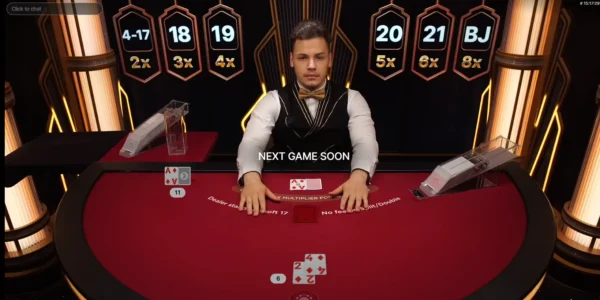
Technology and the Digital Blackjack Revolution
Early computer-based versions of blackjack hit the internet fairly early on, but it wasn’t until high-speed connections and secure payment services became more reliable that blackjack casino sites, such as PokerStars, became more popular.
Where in the early days it was only RNG-designed games that players could enjoy from the comfort of their home, now they can join live blackjack sessions with real dealers who interact with players to create a more social atmosphere. These games are live-streamed from professional studios that capture the energy of a casino floor. Sessions are filmed from multiple angles and in HD, adding to the production value. More importantly, it gives players reassurance that the platform is fair, as every move is shared in real time.
This digital transition doesn’t exactly replicate a land-based experience, but brings its own features to the table. Interfaces and chat functions are easy to use, results and play history are shared, and digital elements are added to the table or beside the dealer to offer full transparency.
From Saloon to Screen
Despite the many versions of blackjack around the world, the core format, such as PokerStars Live Blackjack, remains the most popular title. Those who prefer to play alone (with the choice of multiplayer tables) or at their own pace can jump into Classic Blackjack, which sticks to the familiar 3:2 payout for a natural blackjack, keeping things traditional.
The Role of Dealers — Then and Now
Dealers have always played a huge role in the blackjack experience. In land-based casinos, their job is to make sure the game runs smoothly, fairly, and that payouts are managed correctly, as well as spotting anything suspicious.
When it comes to the rise of live blackjack formats, the dealer’s role has evolved even further. Live-streamed dealers on PokerStars blend traditional skills with showmanship and let their personalities shine through, much like popular streamers on social media platforms.
What the Future Holds
So, from the 17th-century gambling houses of Europe to the dusty saloons of the Wild West, and then the glitz of Vegas, blackjack has remained an icon. But where does it go from here?
With the advancements in VR and AI technology, it’s not hard to imagine a future where virtual reality blackjack tables allow players to be immersed in the atmosphere of Las Vegas-style casinos, only digitised. Ambient casino noise and music could play in surround sound, other players could appear as avatars walking around the pit, and real-time holographic dealers could bridge the gap between visiting a land-based casino and experiencing it through a screen. The only thing missing would be drinks and snacks between games, though at home, at least the fridge is never far away.
FAQs
When was blackjack first invented?
Why is it called “blackjack”?
What’s the difference between classic blackjack and other versions?
Does card counting work online?
What’s a “natural blackjack”?
Is blackjack all about luck?

Top Content


Trending