
Roulette Touch and Go – Everything Players Need to Know
Roulette betting systems come in all shapes and sizes. Some tell players when to increase or decrease their wagers, while others focus on which numbers to choose. The Touch and Go system falls firmly into the latter category.
Rather than following a progression such as Martingale or Fibonacci, Touch and Go asks players to look at recent results and identify numbers that sit next to each other on the roulette wheel. These so-called ‘wheel neighbours’ then form the basis of the player’s next bets.
Created by American gaming writer Frank Scoblete, the system offers an unusual way to approach roulette because it requires players to pay attention to the physical layout of the wheel as well as the numbers appearing in the game.
So, what exactly are wheel neighbours, how do you spot them, and can previous results really tell you anything about what might happen next? Let’s take a closer look at how the Touch and Go roulette system works.
What Is the Touch and Go Betting System?

The Touch and Go roulette system is predominantly based upon the roulette wheel itsself, and players should familiarise themselves with it before putting the system into practice.
Scoblete tailor-made his system for the American roulette wheel, with 38 differently numbered pockets in a particular sequence, the numbers on the wheel are:
0 28 09 26 30 11 07 20 32 17 05 22 34 15 03 24 36 13 1 00 27 10 25 29 12 08 19 31 18 06 21 33 16 04 23 35 14 02
Players should note that for the European roulette version, the wheel is made up of 37 numbers, so they will have to adapt their strategy.
Why Doesn't the Roulette Wheel Follow Numerical Order?
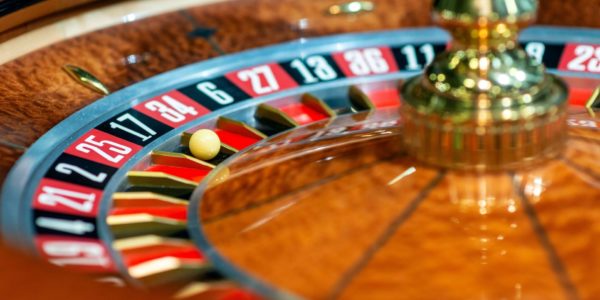
Roulette numbers aren’t arranged sequentially around the wheel. Instead, they’re deliberately distributed so that high and low numbers, odd and even numbers and red and black pockets are spread around the wheel.
American and European roulette also use different sequences, which is particularly important for a system such as Touch and Go. The strategy is based on physical wheel neighbours, so players can’t simply look at the numerical value of two numbers to determine whether they’re a pair.
Touch and Go Roulette in Simple Terms
The Touch and Go system sounds more complicated than it actually is. Essentially, it is a method for choosing which roulette numbers to bet on based on where recent winning numbers sit on the physical roulette wheel.
The important thing to understand is that numbers on a roulette wheel aren’t arranged in numerical order. For example, on an American roulette wheel, 12 sits directly next to 8. These are known as wheel neighbours.
To use Touch and Go, a player looks at the recent results from the roulette table, usually the previous 20 spins. They are looking for two results that appeared one after another and also happen to be neighbours on the wheel.
For example, imagine part of the recent results looked like this:
34 → 12 → 8 → 18
The 12 and 8 appeared consecutively. If you look at an American roulette wheel, you’ll also find 12 and 8 directly beside each other. Under the Touch and Go system, this makes them a qualifying pair.
The player would then place bets based on that pair and continue monitoring the rolling list of recent results. As new spins are added, old results eventually disappear from the 20-spin history, meaning qualifying pairs can also drop out and new ones can appear.
In other words, Touch and Go isn’t about increasing your bet after every loss, as you would with systems such as Martingale or Fibonacci. It’s essentially a set of rules for deciding when to bet and which numbers to select based on recent results and their positions on the wheel.
However, identifying a pair doesn’t mean those numbers are more likely to appear on the next spin. Every spin of a fair roulette wheel remains independent. Touch and Go simply provides a structured method for selecting bets; it doesn’t predict where the ball will land.
Keeping Track of Wheel Neighbours

The biggest practical challenge when using Touch and Go is keeping track of the numbers themselves.
Unlike betting systems based on red or black, odd or even, players need to understand where individual numbers sit on the physical roulette wheel. Two numbers that appear close together on the betting layout may be nowhere near each other on the wheel.
Fortunately, online roulette makes tracking previous results considerably easier. Most games display a history of recent winning numbers, allowing players to review the last 20 results without recording every spin manually.
Beginners may also want to keep a roulette wheel layout nearby while learning the system. With enough familiarity, recognising combinations of neighbouring numbers becomes quicker.
It’s also important to remember that American and European wheels have different layouts. A pair of wheel neighbours on an American wheel won’t necessarily be neighbours on a European wheel, so players need to use the correct sequence for the version they’re playing.
Does It Work?
This might initially seem counterintuitive, but this method is mathematically sound.
If you want to geek out about that side of things, you can, of course, check out probability theory and statistics, but the ‘Birthday paradox’ is the best way we know to illustrate this method.
This principle demonstrates how, in reality, the probability of something happening is so often very different from what you intuitively think. In a group of 23 people, the probability that at least two of them have the same birthday is more than 50 per cent, and this rises rapidly as the group size increases, and so the odds of the ‘neighbours’ reappearing are much higher than many people might think. Players should note that this is just a strategy, not an infallible winning system.
Related Roulette Articles

Conclusion
Touch and Go offers an unusual alternative to many of the better-known roulette betting systems.
Rather than increasing stakes following losses, it asks players to study the roulette wheel, monitor recent results and identify numbers that sit beside one another. This makes understanding the wheel itself particularly important.
The system can also make roulette more interactive for players who enjoy following results and looking for patterns. However, those patterns shouldn’t be interpreted as predictions.
Every spin of a fair roulette wheel remains independent, meaning a number isn’t more likely to appear simply because its neighbour has recently landed.
Touch and Go is therefore best understood as a structured way of choosing wagers rather than a method for beating roulette. Players who decide to try it should understand the wheel layout, establish a sensible budget and remember that no betting system can guarantee what happens when the ball starts spinning.
FAQs
Who invented the Touch and Go roulette system?
What are wheel neighbours in roulette?
Can Touch and Go be used with European Roulette?
How many previous results does Touch and Go use?
Does Touch and Go predict winning roulette numbers?
Is Touch and Go similar to Martingale?

Top Content



Trending