Spinning for Success: Pro Roulette Players
Professional roulette playing is a niche that fascinates many, but only a few ever truly entertain.
People such as Carol Jarecki, Pedro Grendene Bartelle and Chris Boyd, against the odds, have proved the case that not only is a professional career in roulette possible but it can also be fun and lucrative, depending on your luck of course.
This article seeks to investigate their methods, the lure and pitfalls of professional roulette playing, and also the never-ending role of luck.
Can Roulette Players Really Gain an Advantage?
One important distinction between famous professional roulette players and ordinary casino play is the idea of advantage play.
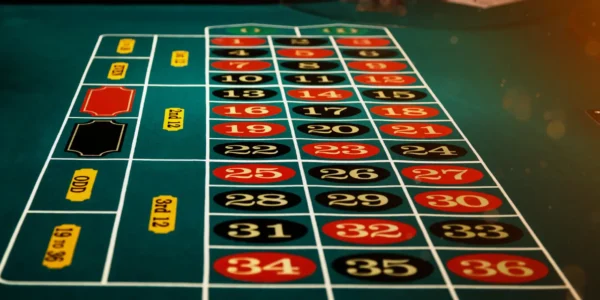
Roulette is designed with a mathematical house edge, meaning that simply developing a betting pattern cannot change the underlying probabilities of the game. On a standard European roulette wheel, for example, there are 37 possible outcomes, including the zero that gives the casino its advantage.
Historically, however, some players have attempted to find physical imperfections in roulette wheels. An ageing or poorly maintained wheel could potentially develop a bias that caused certain sections or numbers to appear more frequently than expected.

The Jareckis and the Search for Biased Wheels
One of roulette’s most famous advantage-playing stories involves Richard and Carol Jarecki, who became known for studying roulette wheels and identifying potential biases.
Rather than believing that previous random results could reveal the next winning number, their approach focused on physical equipment. If imperfections caused particular sections of a wheel to perform differently over a large number of spins, they hoped to identify and exploit that bias.
It’s a fascinating piece of roulette history, but also one that belongs largely to an earlier era of casino technology. Modern surveillance, maintenance and statistical monitoring make defective wheels much easier for casinos to identify.
Comparing and Contrasting Approaches
Whereas Carol Jarecki gained a reputation for her ability to pick out unbalanced wheels and cash in on these flaws, Pedro Grendene Bartelle preferred to play with a little more flair. The internet is full of famous stories of him betting millions on a sheer whim. Chris Boyd however is mostly known for his money management, having saved a large bankroll to play on one final spin of the roulette wheel.
However, as disparate as their styles were, they had two things in common: iron confidence in the methods they used and a good understanding of the maths behind risk management.
Challenges of Professional Roulette Playing
Because of the natural unpredictability of the game and the built-in house advantage, making money as a roulette player in a professional capacity is notoriously difficult.
You have to have a super-human ability to remain composed and handle losses while maintaining a large enough bankroll to weather the long periods of losing in your attempts to beat the odds.
The Allure and Potential Drawbacks
The prospect of winning huge amounts of money on a single turn of the wheel is one of the main attractions of being a professional roulette player.
This, together with the excitement of the high-stakes entertainment industry, can lure people into playing roulette professionally.
Playing roulette as a professional can destroy probabilities in the same way that 0 destroys the number line.
But the game of roulette is purely a game of chance, and is just as likely to lead to catastrophic losses, which could lead to psychological stresses and strains, as well as a shifting and unsafe income.
Role of Probability and Chance
At its core, roulette is a game of chance; each spin is independent of the last.
The professional roulette player tots up the probabilities in his head and knows that strategies can give him an edge that occasionally puts the odds in his favour.
However, even with the best strategies in the world, roulette players can never remove the persistent logical defect better known as the house edge.
Skill in this line of business involves respect for the role of chance and taking charge of one’s bankroll so as to minimise bad losses.

Bankroll Management and Professional Roulette
Stories about enormous roulette wagers naturally attract attention, but bankroll management is arguably more important to anyone attempting to approach roulette seriously.
Because every spin can result in a loss, players need to decide in advance how much they are prepared to wager and how much they can afford to lose. Increasing stakes simply because previous spins have been unsuccessful does not make a winning result more likely.
This is particularly relevant to systems such as the Martingale, where players progressively increase their wagers following losses. While the theory suggests that an eventual win could recover previous losses, a long losing sequence can cause stakes to increase extremely quickly. Casino table limits and finite bankrolls also prevent players from increasing their wagers indefinitely.
Professional or highly experienced players therefore tend to understand probability and risk rather than assuming they can predict the next result. Roulette remains unpredictable regardless of how carefully previous spins have been analysed.
Related Roulette Articles


Conclusion
Professional roulette is a difficult way to make a living.
It takes discipline and mathematical judgement. It also requires a way to curb the uncertainties of both chance and risk.
The stories of Carol Jarecki, Pedro Grendene Bartelle and Chris Boyd are picaresque and daring; they nevertheless demonstrate how tricky it can be to get ahead, even with a winning formula, unless you also have a way of managing yourself and keeping your cool.
If you fancy your chances at playing roulette for yourself, most online casinos have roulette available in their casino games section, and some even let you play in demo mode so players can get a feel for the game without having to stake any money.
FAQs
Can you really become a professional roulette player?
Can professional roulette players predict where the ball will land?
What is a biased roulette wheel?
Can betting systems beat roulette?
Is online roulette different for professional players?
Why is bankroll management important in roulette?

Top Content



Trending