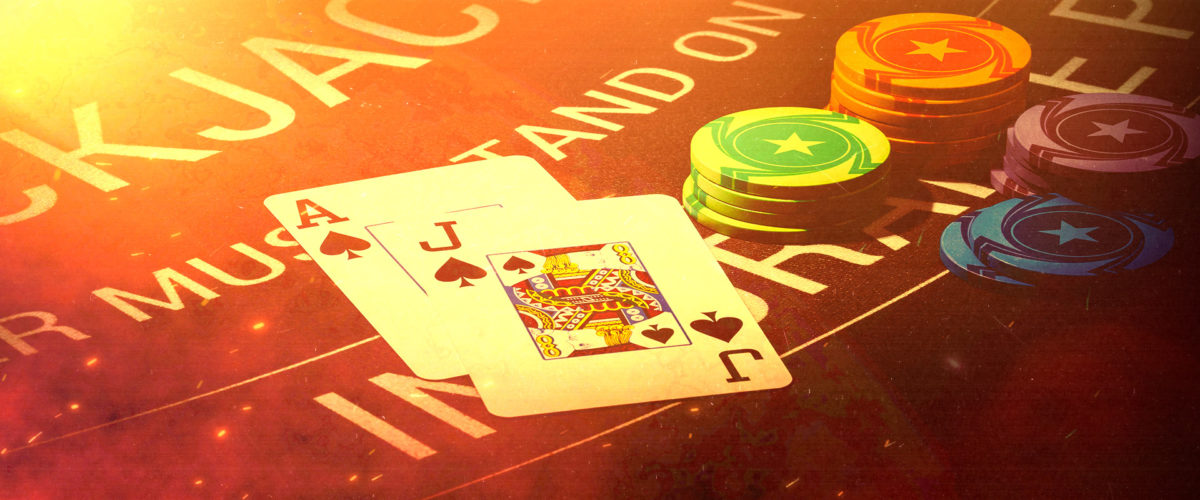
How Hand Signals Work at Blackjack Tables
Have you ever sat in an airport terminal watching the workers on the tarmac using a special set of hand signals to direct planes to the right place?
Well, something similar exists in blackjack too. Of course, you can verbally communicate with the dealer to tell them what you want to do, but experienced players prefer to use their digits to do the talking.
Hand signals are also a good way to create a record of your choices as if there’s any ever confusion, the casino can review the security tapes and check.
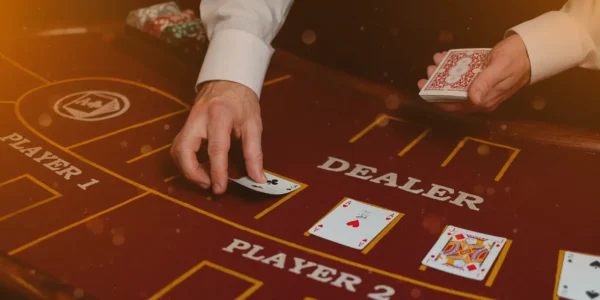
It’s important to remember that when playing blackjack in a casino, you should never touch the cards – that’s the dealer’s job. So whatever hand signal you use, always do it over or next to the cards and not on them.
To let the dealer know you’d like to hit your hand, simply tap the felt. He or she will then add an additional one to your set.
When you’re happy with the cards you have, wave your hand over them to signal that you want to stand.
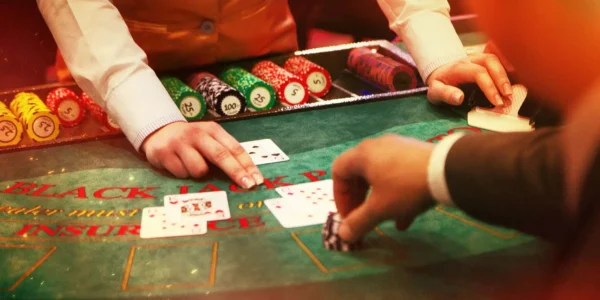
To double your bet, place another chip(s) on the table (outside of the betting box) and point at it with one finger.
Similarly, if you want to split, add another chip(s) and show two fingers.
Why Hand Signals Matter
You may wonder why casinos are so concerned about hand signals. The answer comes down to clarity and security.
When there are many players at a busy casino table, the dealers need an unmistakable, non-verbal way to know each player’s decision.
A spoken “hit” may be drowned out by the background noise of the slot chimes and player chatter. However, a clear tap of the finger is impossible to misinterpret.
The cameras record every movement on the tables. The hand signals give the casino an exact record of your choices in case there’s a dispute over any payouts or if a card is dealt incorrectly.
This protects both the player and the house. It can be considered a built-in safety net, as your gestures are your proof of intent.
Face-Up vs Face-Down Games
The way you signal depends on how the cards are dealt. In most casinos, blackjack cards are dealt “face-up,” so your cards are placed on the felt for everyone to see.
In this case, the signals are simple. You tap the table for a hit, wave your hand horizontally to stand, and use the appropriate gestures for doubling or splitting.
However, in some traditional or high-limit games where the cards are dealt face down and players are allowed to hold them, the etiquette changes. To request another card, you lightly scrape the bottom corner of your cards against the table toward yourself. To stand, you tuck the cards under your chips.
These old-school games are less common, but if you encounter one, be sure to watch a few hands or ask the dealer about the signals before you play.
Other Common Hand Gestures
Beyond the basic hit, stand, double, and split, there are a few more moves you can exhibit at the blackjack tables:
Surrender: Not every blackjack table offers this option, but when it’s allowed, you can forfeit your hand by sacrificing half your bet amount. This bet is usually made if you think the dealer has a strong advantage. To signal surrender, draw an imaginary line across the felt with your finger as if you’re cutting your bet in half.
Insurance: When the dealer shows an Ace, they will ask if you’d like insurance. This is a side bet only offered when the dealer has a chance of landing blackjack. This is not a favourable side bet and should be avoided. However, if you want to take it, place half your bet on the insurance line and tap the table. If you decline, just wave your hand over your cards to say “no”.
Even Money: If you have blackjack and the dealer is showing an Ace, you may be offered the even money option, which is essentially insurance that guarantees a 1:1 payout regardless of the dealer’s hand. To accept the side bet, you can place an equal side bet or nod and tap. The dealer will clarify the preferred signal at that table.
Tips for Hand Signals
While the gestures are simple, a little etiquette can go a long way at the blackjack tables:
Keep Your Hands Visible: Rest your hands above the table edge when you’re not signalling. The casino dealers will appreciate the transparency.
Avoid Touching the Cards: Unless you’re playing in a face-down game where it’s expected, never pick up or move your cards.
Stack Your Chips: When doubling or splitting, place your extra chips next to your original bet so the dealer can see them clearly.
Wait Your Turn: Don’t give a signal while the dealer is still handling another player’s betting action.
Final Thoughts
If you’re new to blackjack, it can feel a bit intimidating to use hand signals. But like any skill, it becomes second nature faster than you think. Many casinos are happy to explain the rules to beginners, but usually during slower hours. The dealers are expected to be patient with newcomers.
It’s worth mastering the silent signals of blackjack as you’ll speed up the game and blend in with experienced players. The next time you sit down at a blackjack table, you’ll be able to communicate with the dealer like a pro, without saying a word.

Top Content



Trending