Blackjack: Origins of the Name
Blackjack is one of the world’s most popular casino games. Played in glitzy Las Vegas casinos, smoky backroom card games, and now on global online casino platforms, it has become synonymous with strategy, suspense, and the allure of beating the dealer.
But while millions of players know how to play, far fewer know where the name “Blackjack” actually came from.
The story of blackjack’s name is an intriguing journey through history. From its European roots as a game simply called “21”, through its arrival in America, and finally to the marketing tricks that gave it its modern identity, the game’s title reflects a fascinating blend of cultural evolution, casino promotion, and even a dash of myth-making.
The History of Blackjack
Early Card Games Before Blackjack
To understand the origins of blackjack’s name, we first need to explore the games that inspired it. The earliest ancestor was Vingt-et-Un (French for “21”), which emerged in France during the 17th century. This game revolved around achieving a hand value of 21 without going over, and it quickly became a staple in European gambling houses.
The French Game Vingt-et-Un
Vingt-et-Un had more flexible rules than modern blackjack. For example, the dealer could decide when to draw, and players sometimes bet against each other rather than only the house. These early variations laid the groundwork for the more structured version of the game.
Vingt-et-Un shared similarities with other regional games. In Italy, players enjoyed Sette e Mezzo (“Seven and a Half”), while in Spain, the game Trente-et-Un (“Thirty-One”) carried overlapping mechanics. These games involved strategic decision-making, drawing cards cautiously to reach a target number, and sometimes incorporating betting rounds.
By the 18th century, Vingt-et-Un had spread across Europe, appearing in private salons, aristocratic clubs, and eventually in more public gambling establishments. Its blend of luck and skill made it an attractive pastime. However, it was still most often referred to by its simple target number: 21.
When French colonists carried the game to the Americas, it maintained the name “21.” Only later, under the influence of American casino marketing, would it earn the enduring name we know today.
Arrival in America
When French settlers brought Vingt-et-Un to America in the 18th and 19th centuries, it spread through riverboats, saloons, and gambling halls. The rules varied widely, and in many cases, local adaptations shaped how the game was played. Dealers might change how aces were valued, whether doubling was allowed, or even when they themselves had to stand.
By the 19th century, “21” had become a fixture in American gambling culture. It was popular in New Orleans, a hub of French influence, and from there it spread north and west during the great migration of settlers and prospectors.
Despite its popularity, however, the game was not always considered exciting enough to compete with poker or faro, which dominated gambling halls. This challenge created an opportunity for casinos to experiment with bonus rules and promotions which became an important step in shaping its new identity.
Where the Name “Blackjack” Came From
The name “Blackjack” didn’t appear until the early 20th century, when casinos in Nevada began legalising and promoting gambling.
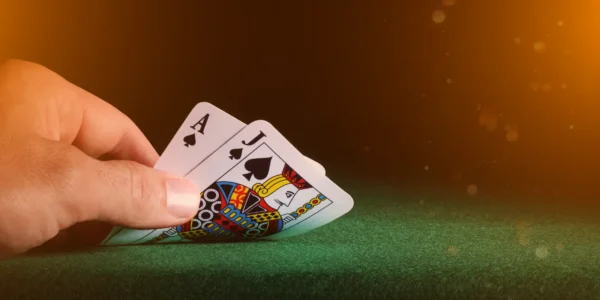
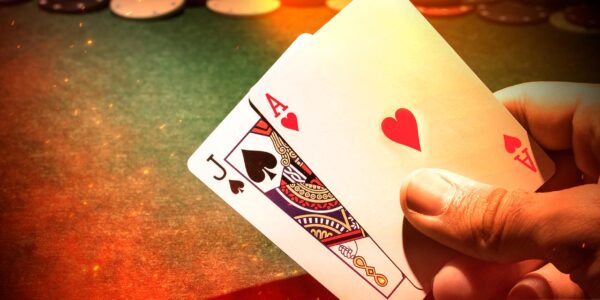
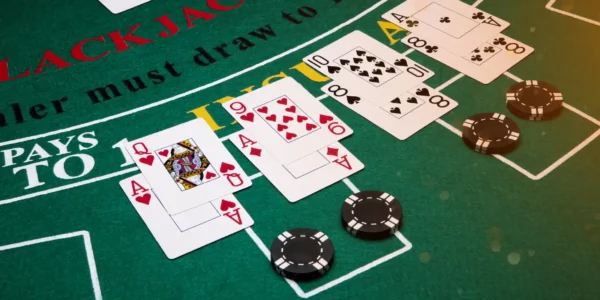
To attract more players to “21,” they introduced a special bonus: if a player’s opening hand contained the ace of spades and a black jack (specifically the jack of clubs or jack of spades), they would receive a special 10-to-1 payout.
This rare but dramatic hand became the casino’s selling point, and players began associating the game with the “black jack” bonus.
Even after the bonus itself was phased out (partly because it was too generous for casinos to sustain) the catchy nickname stuck. From then on, “21” was more widely known as “Blackjack.”
The transition shows how much casino marketing can influence the success of a game. “21” was descriptive but bland; “Blackjack” felt bold, intriguing, and distinctly American. It didn’t just describe a rule, it gave the game an identity.
Related Blackjack Articles

Blackjack in Early Casino Marketing
When Nevada legalised gambling in 1931, casinos faced a challenge: how could they draw players into their establishments when most people were already familiar with poker and roulette? The answer was clever marketing, and blackjack was at the centre of it.
Posters and adverts from the 1930s and 40s promoted blackjack as a “game of skill and fortune”, contrasting it with the pure chance of roulette or the slow pace of poker. The name itself, “Blackjack,” gave casinos an easy hook — sharp, memorable, and just a little bit mysterious.
The original 10-to-1 bonus hand may have disappeared, but casinos kept pushing the name. Dealers encouraged newcomers to try their luck at the “blackjack table,” and the term spread by word of mouth. Within just a decade or two, the branding was so effective that most players forgot the game had ever been called “21.”
The Evolution of Blackjack Rules Alongside the Name
Once “Blackjack” took hold as the standard name, the rules of the game also began to stabilise. Casinos could no longer afford to give away large 10-to-1 payouts for the ace-and-jack combination, but they understood that consistency was crucial to keeping players engaged.
By the mid-20th century, blackjack had become the most refined version of “21.”
The main changes included:
- Fixed payouts for natural blackjacks (usually 3:2).
- Dealer rules requiring them to hit on 16 and stand on 17.
- Options for players to double down and split pairs.
- Insurance bets introduced to soften the impact of a dealer’s blackjack.
These standardisations allowed blackjack to flourish in Las Vegas casinos after the state legalised gambling in 1931. By offering a fair balance of luck and strategy, blackjack began to attract a broader audience than most other table games.
Importantly, the name “Blackjack” helped unify these rules across the industry. Players knew what to expect, and casinos benefitted from the consistency of marketing a single, recognisable game.
Blackjack’s Future
While the story of blackjack’s name is rooted in history, its future looks just as intriguing. The game has proven remarkably adaptable over centuries, and the name itself continues to be a powerful brand in both land-based and online casinos.
One area where blackjack is evolving is through technology. Virtual reality (VR) casinos are already experimenting with immersive blackjack online tables, allowing players to sit across from lifelike dealers and interact with other players in real time. The familiar name “Blackjack” provides continuity in these new environments, bridging the gap between tradition and innovation.
Artificial intelligence is also likely to shape blackjack’s future. Casinos already use AI to personalise online platforms, suggesting variants like “Infinite Blackjack” or “Quantum Blackjack” based on player preferences. The core name ties all of these innovations together, ensuring players know they are engaging with a trusted, recognisable game.
Blackjack in Popular Culture
By the second half of the 20th century, blackjack had become more than just a casino staple, it had entered popular culture.
Its mix of mathematics, suspense, and glamour made it a natural fit for films, books, and TV shows.
Classic films such as Rain Man (1988) and 21 (2008) made blackjack synonymous with card counting and intellectual gamesmanship. Meanwhile, television shows and documentaries explored the exploits of legendary players and teams who used strategy to beat the house.
In literature, blackjack appeared in novels about Las Vegas, organised crime, and high-stakes gambling. The game’s association with intelligence and daring helped elevate it above other casino games in terms of public perception.
In music, artists as varied as Ray Charles, Elvis Presley, and Motörhead have referenced blackjack in their lyrics, often using it as a metaphor for risk, love, or living life on the edge. The game’s imagery, cards turning, stakes rising, fortunes swinging, resonates perfectly with themes of chance and rebellion in popular songs.
The name itself played a role in this cultural dominance. “Blackjack” sounded sharper and more dramatic than “21,” and it carried a mystique that lent itself to storytelling. Whether the hero of the tale was a cool professional or an amateur taking a wild gamble, blackjack was the game that symbolised the thrill of going up against the odds.
Blackjack Around the World
Although “Blackjack” is the dominant name today, not every region adopted it immediately.
In some European casinos, the game is still referred to as “21” or its older French title, Vingt-et-Un. The rules are similar, but the terminology reflects local tradition.
In Spain, the game evolved into a variation called “Veintiuna”, while in Italy, players sometimes draw comparisons to Sette e Mezzo. These regional versions all share the central idea of aiming for 21, though they may include unique twists, such as the use of different decks, jokers, or alternative payout structures.
Online casinos have further globalised blackjack. Today, a player in the UK, the US, or Japan can all sit at the same virtual table under the same name. Localisation still matters, but “Blackjack” has become the universal brand, supported by decades of international marketing and pop culture references.
Blackjack and Language: A Global Perspective
Although “Blackjack” became the universal name in America, its spread worldwide was not immediate. Different regions held on to their own traditions, and in some cases still do today.
In France, the game remained tied to its origins as Vingt-et-Un. In Spain, the word Veintiuna carried on as a local equivalent. Italian players often connected the game to Sette e Mezzo or simply referred to it as Ventuno. Even in the UK, “21” was a common term well into the 20th century.
The rise of globalised casinos and online platforms gradually standardised the “Blackjack” name. English dominated gambling vocabulary, particularly as Las Vegas and Atlantic City became the world’s casino capitals. International travellers carried the name home, reinforcing it across Europe, Asia, and beyond.
Still, interesting linguistic quirks remain. In Germany, players sometimes call the game Siebzehn und Vier (“Seventeen and Four”), a reference to a common dealer rule rather than the total of 21. In Japan, katakana is used to phonetically write Burakkujakku, while in China it is most often translated directly as “21点” (Twenty-One Points).
Online casinos face a delicate balance: they must localise their platforms for different markets while still using “Blackjack” as the anchor term recognised globally. As a result, it’s common to see “Blackjack (21)” or hybrid names that blend both.
The persistence of the name “Blackjack” across languages shows its branding strength. While translations exist, most international players recognise “Blackjack” instantly, ensuring that the game retains a consistent identity across borders.
Etymology vs Symbolism
The name “Blackjack” is rooted in the ace-and-black-jack bonus promotion, but its endurance also comes from its symbolic weight. The word “black” in gambling has long been associated with mystery, sophistication, and high stakes, while “jack” is a court card that represents daring and action.
Together, the phrase feels powerful and memorable, much more so than the straightforward “21.” This is part of why the name survived long after the original rule disappeared. It didn’t just describe a hand; it told a story.
🃏 Why the Word ‘Jack’ Resonated
In card games, the jack often symbolises a clever underdog or trickster figure, not as powerful as a king, but full of potential. Coupled with the dark allure of the word “black,” it gave the game a name that sounded both stylish and dangerous.
Comparisons with other casino games highlight this point. Roulette means “little wheel” in French — accurate but not dramatic. Baccarat comes from the Italian for “zero,” referencing its scoring system. Craps is derived from an old dice game called “crapaud,” or “toad.” None of these names evoke the same sense of intrigue that “Blackjack” does.
For players, the name became part of the experience. Saying “I’m going to play blackjack” carried more excitement than “I’m going to play 21.” Over time, the symbolism reinforced the game’s prestige and its role as the thinking person’s casino choice.
Myths and Misconceptions
Like many gambling traditions, the story of blackjack’s name has been retold and reshaped over time, leading to a number of myths. One common misconception is that the name comes from the jack of spades alone, rather than both the jack of spades and jack of clubs. In truth, either black jack card could trigger the original bonus when paired with the ace of spades.
Another myth is that blackjack was always called by this name. In reality, it was known simply as “21” for centuries, and “Blackjack” only took over after Nevada casinos began marketing it with the special payout rule in the 20th century.
Some also believe the name stuck because the bonus hand itself was somehow especially lucky or significant. In fact, the bonus was more of a promotional gimmick than a reflection of gameplay importance. Once casinos phased it out, the name remained simply because players had already embraced it.
Related Blackjack Articles

Blackjack’s Legacy as a Name
Today, blackjack is more than just a game, it is a brand in itself.
The name is used by casinos worldwide, featured in films, books, and TV shows, and even borrowed for non-casino uses to evoke a sense of daring or sophistication.
Casinos rely heavily on the name recognition of blackjack. Online platforms, in particular, showcase dozens of online blackjack variants, from Blackjack Switch to Progressive Blackjack, all trading on the strength of the original name.
Even when the rules change dramatically, the word “blackjack” ensures instant familiarity with players.
This legacy is also tied to the game’s reputation as one of the few casino activities where skill can influence outcomes. Card counting teams, professional strategies, and stories of players beating the house have reinforced the game’s aura of intelligence and boldness.
Ultimately, the endurance of the name “Blackjack” demonstrates how a catchy piece of marketing can evolve into a cultural icon. It’s not just the rules that made the game last, it’s the identity that came with the name.
The Basics of Blackjack
At its core, blackjack is a simple but strategic card game. Players compete against the dealer, not against each other, and the goal is always the same: to have a hand total closer to 21 than the dealer’s, without going over.
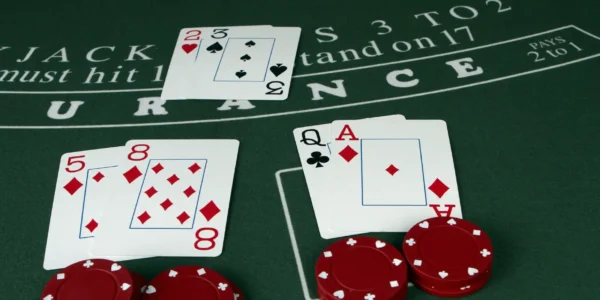
Each round begins with players placing their bets. The dealer then gives two cards to every player and two to themselves. In standard blackjack, one of the dealer’s cards is dealt face up (the “upcard”), while the other remains hidden (the “hole card”). Players then decide how to play their hands by choosing from a series of options:
- Hit: Take another card to increase your total.
- Stand: Keep your current total and end your turn.
- Double Down: Double your bet in exchange for one more card (usually allowed only on totals of 9, 10, or 11).
- Split: If dealt a pair, split the cards into two separate hands with an additional bet.
- Surrender (in some versions): Give up half your bet and end your hand early.
Card values are straightforward: number cards equal their face value, face cards (king, queen, jack) count as 10, and aces can be worth either 1 or 11.
A natural blackjack occurs when a player’s first two cards total 21 — typically an ace paired with a 10, jack, queen, or king. This hand usually pays out at 3:2 odds, making it the most desirable outcome in the game.
The dealer follows fixed rules, usually hitting until they reach at least 17. Once the dealer stands, remaining players’ totals are compared against the dealer’s to determine wins or losses.
What makes blackjack so enduring is this balance of simplicity and strategy. The rules are easy for newcomers to learn, but experienced players can employ complex strategies, from basic decision charts to advanced card counting techniques, to improve their odds.
FAQs
Why was the game originally called “21”?
What is the original “blackjack” hand?
Do any casinos still pay extra for the blackjack hand?
Is blackjack still called “21” anywhere?
Did the name “Blackjack” help the game’s popularity?
Are there other casino games with changed names?
Conclusion
The origins of blackjack’s name tell a story of transformation. What began in France as a simple game called “21” evolved into a global casino icon thanks to American innovation, casino promotions, and the enduring power of branding.
The “black jack” bonus hand may have been short-lived, but it gave the game something more valuable than a payout: a memorable identity.
From smoky saloons to glittering Las Vegas floors and now online platforms, the name “Blackjack” has travelled the world, carrying with it an aura of sophistication, daring, and strategy.
In the end, the story of blackjack’s name is as much about culture and marketing as it is about cards. A clever promotion turned into a legend, and that legend became the foundation for one of the most recognisable names in gambling history.

Top Content

Trending