The Optimum Strategy in Blackjack
Blackjack online has held a special place in the world of online casino gaming. Unlike games of pure chance such as roulette or slot machines, blackjack allows players to influence outcomes through decisions. Every choice, whether to hit, stand, double down, or split, changes the probabilities that shape the hand. This blend is what makes the game so enduring and so popular.
For centuries, players have debated the “right way” to approach blackjack. Should you trust your instincts, or is there a more reliable method? The answer lies in mathematics. Decades of statistical analysis, computer simulations, and academic studies have shown that there is indeed an optimum strategy: a way of playing that consistently delivers the best possible results.
The concept of optimum strategy doesn’t mean you will win every hand. Blackjack still carries an element of chance, and the house retains an edge. What it does mean is that by following mathematically proven decisions, players can reduce that edge to its smallest possible value, often less than 1%. That difference may seem small, but over hundreds or thousands of hands it is the key factor separating casual play from disciplined, sustainable blackjack.
We’ll explore exactly what optimum strategy in blackjack looks like, where it comes from, and how players can use it both in land-based and online casinos.
Understanding the Basics of Blackjack
Before diving into charts, probabilities, and advanced strategies, it’s important to establish what blackjack actually is and how it’s played. The game’s apparent simplicity is deceptive: although the rules are easy to learn, the decisions players make can carry real mathematical weight.
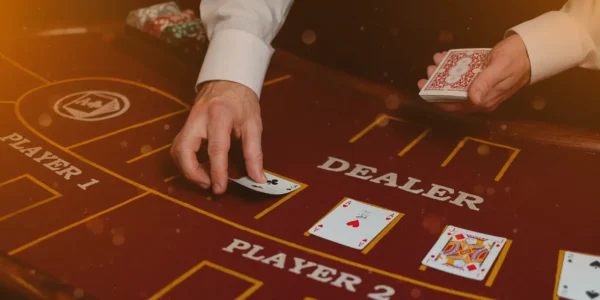
At its core, blackjack is a contest between the player and the dealer. Each hand begins with two cards dealt to every player and two to the dealer. Player cards are usually dealt face up, while the dealer receives one face-up card (the “upcard”) and one face-down card (the “hole card”). The aim is straightforward: build a hand total closer to 21 than the dealer without exceeding it, which is called “busting.”
Card Values
- Number cards (2–10) count at face value.
- Face cards (jack, queen, king) count as 10.
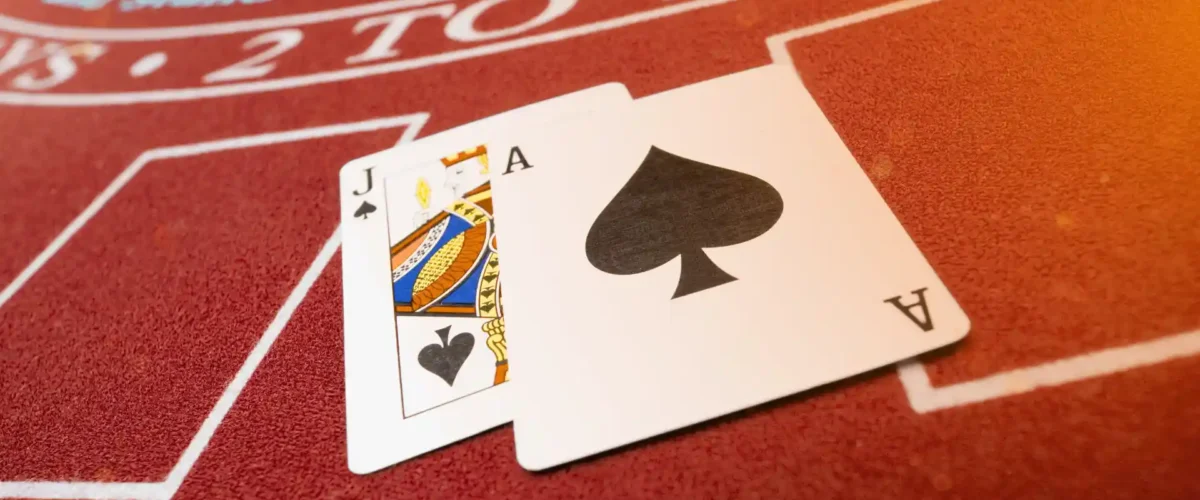
- Aces are versatile: they can be worth either 1 or 11, depending on which value benefits the hand most. This flexibility creates “soft” hands, such as Ace-6 (soft 17), which differ from “hard” hands like 10-7 where the Ace cannot adjust value.
Player Options
Once the cards are dealt, players choose from several options:
- Hit: Take another card to try to improve the total.
- Stand: Keep the current total and end the turn.
- Double Down: Double the original bet in exchange for exactly one more card.
- Split: If the two cards are a pair, players can split them into two separate hands, adding a second bet equal to the first.
- Surrender (in some games): Give up half the bet and fold the hand early.
The dealer, by contrast, does not make decisions. They must follow strict house rules, usually hitting until reaching 17 or higher. This difference, the free choice of the player and fixed rules for the dealer, is what makes strategy possible.
Related Blackjack Articles
Why the Basics Matter
Understanding these mechanics is vital because every recommendation in an optimum strategy chart depends on the interaction between the player’s hand and the dealer’s upcard. Without a grasp of the basics, the logic of the strategy can be confusing. With them, it becomes clear that strategy is not guesswork but the rational application of probability.
What Do We Mean by “Optimum Strategy”?
The idea of an optimum strategy in blackjack can sound intimidating at first, as though it requires advanced mathematics or years of casino experience. In reality, the concept is straightforward: it is simply the set of decisions that gives a player the highest expected value (EV) in every possible situation.
Expected value is a statistical principle. Every time you make a decision in blackjack that decision has multiple possible outcomes. Some improve your position, some make it worse, and each comes with a probability of occurring.
By adding these probabilities together, you can calculate the long-term value of each option. The choice with the highest expected return is the optimum one.
Example:
Imagine holding a hard 16 against the dealer’s 10. Intuition might suggest standing, in the hope that the dealer busts. But probability analysis shows that hitting, while risky, actually loses less money on average than standing. Over one hand, the result is uncertain. Over thousands of hands, consistently making the “least bad” choice preserves your bankroll and trims the casino’s edge.
This is the heart of optimum strategy. It’s not guaranteeing a win for each hand, but it ensures that, over time, you lose less and win more compared to random play or instinctive choices.
It’s important to note that optimum strategy depends on rule variations. The number of decks in use, whether the dealer hits on soft 17, and whether doubling after splitting is allowed can all change the exact chart. For that reason, players will sometimes see slightly different versions of the basic strategy chart. But while the details may vary, the underlying principle remains constant: use probability to guide decisions, not hunches.
This approach was first formalised in the 1950s, when Roger Baldwin and colleagues published the first mathematical analysis of blackjack decisions. Their work, later expanded by computer simulations, proved beyond doubt that there is a mathematically correct way to play the game.
Core Elements of the Optimum Strategy
Optimum blackjack strategy is often shown in a chart, but the logic behind it follows simple, consistent principles. Every choice depends on how your hand interacts with the dealer’s upcard.
Playing Hard Hands
Hard hands are totals without an Ace counted as 11 (or where the Ace must count as 1).
- Always hit on 8 or less.
- Hit on 12–16 when the dealer shows 7–Ace, because the dealer is favoured.
- Stand on 13–16 if the dealer shows 2–6, since they’re more likely to bust.
- Double down on 9–11 when facing weak dealer cards (2–6).
- Always stand on 17 or more.
Why 16 Is Tricky
Hard 16 is notorious as the toughest hand in blackjack. Standing usually loses to the dealer, but hitting risks busting. The maths shows that hitting is the “least bad” choice in most cases.
Playing Soft Hands
Soft hands include an Ace counted as 11. These hands are flexible, so optimum play is often more aggressive.
- Soft 13–14 (Ace+2 or Ace+3): Hit, but double against dealer 5–6.
- Soft 15–16: Hit, unless the dealer shows 4–6 (then double).
- Soft 17 (Ace+6): Double if the dealer has 3–6, otherwise hit.
- Soft 18 (Ace+7): Stand against dealer 2–8, but hit against 9–Ace. Double against 3–6.
- Soft 19+ (Ace+8 or higher): Always stand.
What Is a Soft Hand?
A soft hand contains an Ace that can count as 11 without busting. For example, Ace+6 can be treated as 17 or as 7 if you draw a high card. This flexibility means you can take more risks, like doubling down.
Splitting Pairs
Splitting pairs is another cornerstone of optimum play.
- Always split Aces and 8s.
- Never split 10s — 20 is already strong.
- Treat a pair of 5s as 10 and double instead of splitting.
- Split 2s, 3s, or 7s if the dealer shows 2–7.
- Split 4s only against 5–6.
- Split 6s against 2–6.
- Split 9s against 2–6 and 8–9, but stand against 7, 10, or Ace.
Special Situations
Some decisions fall outside the usual hit/stand/split categories:
- Surrender (if available): best on hard 16 vs 9–Ace, or 15 vs 10.
- Insurance: generally a losing bet, even when the dealer shows an Ace.
The Mathematics Behind the Strategy
The optimum blackjack strategy exists because the game can be broken down into probabilities. Every decision a player makes has a measurable outcome, and comparing those outcomes reveals which choice is best over the long run.
Expected Value in Action
The foundation of blackjack strategy is expected value (EV). EV calculates the average amount you will win or lose by making a specific choice repeatedly. For example, if hitting a hard 16 against a dealer 10 loses £0.50 on average per £1 bet, while standing loses £0.55, hitting is mathematically the better play, even if it feels uncomfortable.
Probabilities and Dealer Rules
The dealer’s actions are fixed, and this predictability allows strategy to be modelled. Dealers must usually hit until reaching 17 or higher. When you compare possible player outcomes against these fixed rules, the math shows which moves maximise your chance of ending ahead.
For instance, dealers showing a 5 or 6 are statistically the weakest, with the highest chance of busting. That’s why players stand more often against these upcards, even with weaker totals. Conversely, a dealer showing a 10 or Ace is heavily favoured, so hitting, even with risky totals like 16, is often the better mathematical play.
The Baldwin Breakthrough
In the 1950s, Roger Baldwin and three fellow analysts conducted the first systematic probability study of blackjack. Without the aid of modern computers, they used calculators and extensive statistical tables to evaluate thousands of hand combinations. Their landmark paper demonstrated that blackjack was solvable through mathematics, and that players could cut the house edge to around 0.5% by following a precise decision chart.
This research paved the way for later simulations in the computer age, which confirmed and refined the optimum strategy. Today, every basic strategy chart stems from the same principle Baldwin proved: blackjack rewards players who let mathematics guide their choices.
Related Blackjack Articles


Common Mistakes Players Make
Even with a strategy chart in hand, many blackjack players still slip into habits that erode their edge. Understanding the most common errors is just as important as learning the correct moves.
Trusting Instinct Over Probability
One of the biggest pitfalls is letting “gut feeling” override maths. For instance, many players refuse to hit on a hard 16 against a dealer 10, believing it’s too risky. In reality, the numbers show hitting is the smarter option. Emotional decisions like this slowly add percentage points back to the house’s advantage.
Misusing Insurance
Insurance is often misunderstood. When the dealer shows an Ace, casinos offer players the option to insure against the dealer having blackjack. It sounds sensible, but in practice it’s a losing bet in the long run. Unless you’re card counting and know the deck is rich in 10-value cards, insurance simply increases the house edge.
Ignoring Rule Variations
Not all blackjack tables are the same. Some pay only 6:5 on blackjack instead of 3:2, which significantly raises the house edge. Others may restrict doubling down or change whether the dealer hits on soft 17. Failing to adapt your strategy to these variations is a costly oversight.
Chasing Losses
Another mistake is chasing losses with bigger and bigger bets. Optimum strategy is designed for consistent play, not emotional swings. Increasing bets in frustration rarely ends well and usually accelerates bankroll depletion.
Forgetting Bankroll Discipline
Finally, many players underestimate the importance of bankroll management. Even with perfect strategy, blackjack includes variance and losing streaks are inevitable. Without a plan for bet sizing and session limits, players risk burning through funds before the maths has time to balance out.
Advanced Variations and Adjustments
The optimum strategy in blackjack is sometimes referred to as “basic strategy.” It outlines the mathematically correct play for every possible hand. However, some players go beyond this foundation, exploring advanced methods designed to tip the scales further in their favour.
While these techniques can be effective, they are also more complex and not always practical.
Card Counting
Perhaps the most famous advanced technique is card counting. This system involves tracking the ratio of high-value cards (10s, face cards, Aces) to low-value cards (2–6) left in the deck. When the deck is rich in high-value cards, players gain an edge, since blackjacks become more frequent and dealers are more likely to bust.
Card counting is not illegal, but casinos strongly discourage it and will often remove players they suspect are using the method. It also requires enormous focus and discipline, making it far less glamorous than Hollywood films suggest.
Shuffle Tracking and Dealer Tells
Some skilled players have attempted more subtle methods such as shuffle tracking, where patterns in the shuffle are exploited, or spotting dealer tells, physical cues that might reveal hidden cards. These strategies are controversial and extremely difficult to apply consistently.

Rule-Based Adjustments
Even within standard play, adjustments are necessary depending on table rules. For example, in games where the dealer hits on soft 17, optimum strategy shifts slightly to account for the dealer’s increased winning potential. Likewise, doubling after splitting may or may not be allowed, altering the best decisions for paired hands.
The Reality of Advanced Play
While advanced systems can offer an edge in theory, they demand practice, mental stamina, and ideal conditions. For most players, the best long-term approach is still to master and stick with basic strategy, paired with sound bankroll management. These advanced tactics are fascinating from a mathematical perspective but not practical for the average casino visitor.
The Role of Bankroll Management
No discussion of optimum blackjack strategy is complete without addressing bankroll management. Even the best mathematical decisions cannot eliminate variance. Players will inevitably experience both winning streaks and losing streaks. Managing funds wisely ensures that you can weather the swings and continue to apply strategy consistently.
Setting a Budget
The first step is to decide how much you are comfortable losing in a session. This isn’t pessimistic thinking, it’s practical. Blackjack is designed with a house edge, so losses are always a possibility. A budget creates boundaries, keeping the game enjoyable rather than stressful.
Bet Sizing
Optimum strategy assumes flat betting, meaning you place the same bet each round. This avoids the trap of increasing stakes to chase losses. For casual players, betting 1–2% of the total bankroll per hand is a sensible guideline. That way, even a losing streak of 20 hands won’t wipe you out.
Recognising Variance
Blackjack has relatively low variance compared to some casino games, but streaks can still be extreme. A player using perfect strategy might lose ten hands in a row simply due to chance. Understanding this variance helps prevent emotional reactions that lead to poor decisions.
Discipline Over Emotion
Perhaps the hardest part of bankroll management is discipline. Many players abandon their strategy when frustrated or excited, raising bets impulsively. Yet, sticking to pre-set rules is what allows the long-term mathematics of blackjack to work in your favour.
Bankroll in Online vs Live Play
Online blackjack typically moves faster, meaning players place more bets per hour. This accelerates variance, so bankroll considerations are even more critical. In contrast, live casino play tends to be slower, giving players more time to think but also testing patience when results don’t go their way.
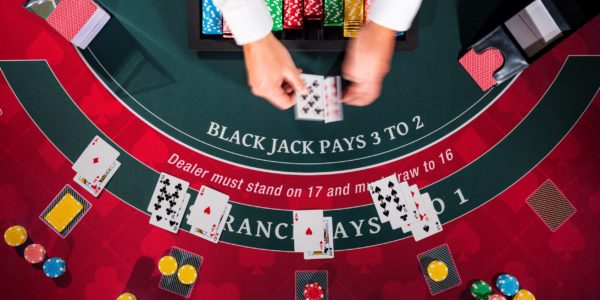
Online vs Live Blackjack
The fundamentals of optimum strategy remain the same whether you play in a land-based casino or online. However, the environment can change how the strategy is applied and experienced.
Online Blackjack
Online versions of blackjack use random number generators (RNGs) to simulate card dealing. Many also use multiple decks that are reshuffled after every hand. This makes advanced techniques like card counting nearly impossible.
The key advantage of online play is speed. Hands are dealt in rapid succession, which means you’ll face more decisions per hour. This accelerates both winning and losing streaks, making bankroll management essential. On the positive side, digital platforms often provide practice or demo modes. These allow beginners to rehearse optimum strategy without risking real money, a useful way to build confidence.
Live Dealer Blackjack
Live dealer blackjack, streamed from a studio or casino floor, brings more of the social element back into play. Players interact with real dealers and sometimes even with other participants via chat. The pace is slower than RNG-based games, giving players more time to consider strategy.
Land-Based Casino Blackjack
In physical casinos, blackjack tables add atmosphere and interaction. The pace is somewhere between live dealer streams and online RNG games. Here, distractions can also play a role, the noise, pressure from other players, and social dynamics may tempt players to stray from strategy.
Adapting Strategy Across Environments
While the mathematical logic doesn’t change, the discipline to stick with strategy can be tested differently depending on the setting. Online players may be pressured by speed; live players may be influenced by social cues. The optimum strategy remains constant. The challenge is applying it consistently.
FAQs
Is the basic strategy chart legal to use in casinos?
Does optimum strategy guarantee that I will win?
Can I memorise the entire strategy chart?
Is card counting part of optimum strategy?
Why does the number of decks matter for Blackjack?
Can optimum strategy be used online?

Top Content

Trending