Learn How To Play Whist
Whist first came into being around the 18th century (just a little bit before an online casino appeared), when a party of gentlemen was the first to play this game. Supposedly, the discovery or formulation of whist took place in 1728 at the Crown Coffee House in London, and since then, card fanatics have been playing and refining this entertaining forerunner of bridge.
Nowadays, whist is played by card games enthusiasts of all ages both at home, in public, and at Whist Drives, where players from a local area come together around the game in droves.
The Origins of Whist
Whist evolved from older trick-taking games like Ruff and Honours and Triumph. By the late 17th century, the game had gained popularity among the English elite. By the 18th century, it had cemented its place as a favourite pastime in coffee houses, parlours, and private clubs.
A key figure in Whist history was Edmond Hoyle, whose 1742 publication ‘A Short Treatise on the Game of Whist’ set down the “official” rules. The phrase “According to Hoyle” soon became shorthand for doing things properly, especially in casino games.
Whist in Society
In the Regency era, Whist became more than just a card game but a social pastime. At parties, it was not only played by those who wanted to test their memory, but also by those who wanted to show off their wit, cunning, or intelligence. For writers of the time, Whist was often used to represent intelligence and strategic thinking, in contrast to faster-paced games of the time like Hazard or Faro.
The Basics
Whist is played in groups of four. Each pair of two players seated opposite each other (known as partners) will compete against the other pair (opposing partners) for the win. Before the game begins, players will elect to play as “lady” or “gent”. No one has yet come up with a more suitable set of names, as ladies often play “gent” and vice versa, so the whist community has stuck using these two genders as identifiers. The purpose of these definitions is to decide who cuts and shuffles; this will be the “gent” players. The two gents cut the cards to decide who shuffles and who deals. The gent who cuts the lowest card shuffles and deals to the player on their left. The player who deals starts with the first card of the game.
It is important to note that there are many versions of the game. These rules are for partnership whist.
The Point of Whist
Each partnership attempts to score points by taking any “trick” that is higher than 6 points in value. The highest-scoring partnership wins the game.


The Rules
A standard deck of 52 cards is used to play. It’s best to use a pack that has two contrasting back designs to keep things clear and simple. While one deck is used for play, the other can be shuffled to deal next.
The cards rank as follows:
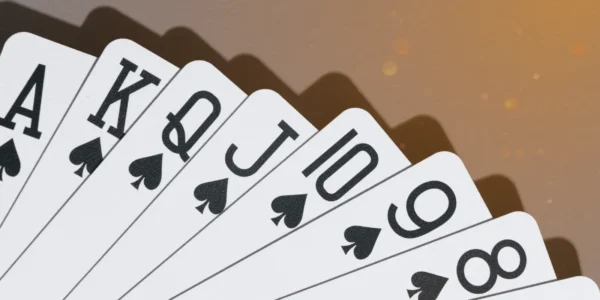
- In the classic version of the game, each player receives 13 cards from a 52-card deck ranking A, K, Q, J, 10, 9, 8, 7, 6, 5, 4, 3, 2. The last card dealt (to the dealer) should be shown and established as the trump suit. This will become part of the dealer’s hand when they play the first trick.
- The dealer deals one card at a time, placing them face down and beginning to their left.
- Play is clockwise and begins with the player on the dealer’s left, who may play any card.
- Every player plays a single card, following the first player’s suit if possible. If it’s impossible to follow suit, the player can play any other card.
- Every four cards played make up a “trick”. The winner of each trick will begin the next round.
- Each trick can be won by a player having the highest cards possible.
- Any trick that does not contain a trump will be won by the player holding the next high card of the suit. Each winner leads on.
- Every odd trick (this is a trick that adds up to a value higher than 6) adds one point to the winning side.

How to Set Up a Whist Game
While learning the rules is pretty straightforward, there’s a few traditions players can do to make the experience even more entertaining.
Choosing Partners
Traditionally, partners were chosen by drawing cards. The two highest cards would play against the two lowest. This method kept things fair and avoided players being accused of making unfair plans before the game.
Shuffling and Dealing
Two decks of cards are often used to keep the pace more quickly. While one deal is being played, the other deck is shuffled and prepared for the next round. Dealing is always clockwise, and each player ends up with 13 cards.
Strategy and Tactics in Whist
While the rules are simple, the true draw of Whist comes with the strategies that can be used within sessions.
Counting Cards
A strong Whist player is always tracking which suits have been played, especially trumps. With only 13 cards per suit, it’s possible to keep a mental record of what’s gone and what still waits to be drawn from the deck.
Leading the Right Card
The opening lead can set the tone for the entire hand. A safe option is to lead from a long suit, which is the one in which the player holds the most cards in. Leading a singleton, which is a lone card in a suit, can also be a clever move, since it might allow players to trump that suit later.
Teamwork
Whist is a game of teamwork, which means communication, without words, of course, is vital. Subtle signals, like returning a partner’s lead suit or playing a particular way, can help the partners get an idea of what each other’s hands look like.
Variations of Whist
Over the centuries, Whist has evolved into several different variations, some casual and others more formal.
Solo Whist
A later format, Solo Whist, allows for bidding and more solo-style play, making it a bridge between traditional Whist and modern Bridge.
Whist Drives
Popular in Britain during the 19th and early 20th centuries, Whist Drives were events held in communities where players rotated tables, competing in multiple short games across an evening.
The Legacy of Whist
By the early 20th century, Bridge began to overshadow Whist in popularity. However, the foundation of Whist lives on in Bridge, Spades, and Hearts, which are all games where trick-taking and teamwork are at their core. Even today, local clubs and social settings like traditional pubs keep Whist alive.
FAQs
What is the main goal in Whist?
Is Whist difficult to learn?
Why is Whist considered important in card game history?
Where is Whist still played today?

Top Content


Trending