Understanding Blackjack Odds and Probabilities: A Player’s Guide to Informed Play
Blackjack might look simple on the surface. Get as close to 21 as possible without going over, beat the dealer’s hand and you win. Behind those straightforward rules, however, is a game filled with probabilities.
Every card changes the possibilities. The value of a player’s hand affects the chance of going bust, the dealer’s visible card provides information about how their hand might develop, and even seemingly small differences in table rules can influence the overall house edge.
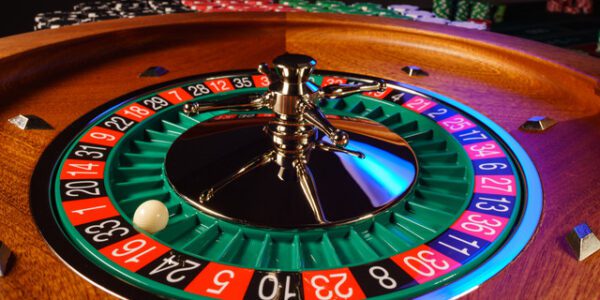
This makes blackjack particularly interesting for players who like to understand the maths behind casino games. Unlike roulette, where placing a bet doesn’t influence where the ball eventually lands, blackjack requires players to make decisions throughout a hand. Choosing whether to hit, stand, double down or split can affect the probability of different outcomes.
Understanding those probabilities won’t tell you which card is coming next, nor can it guarantee that a particular hand will win. What it can do is explain why certain decisions make more mathematical sense than others over a large number of hands.
In this guide, we’ll break down blackjack odds in accessible terms, looking at everything from the house edge and bust probabilities to dealer outcomes and different table rules. We’ll also explore how blackjack variants can change the maths and why short-term results don’t always reflect long-term probability.
Understanding Blackjack Odds and Probability
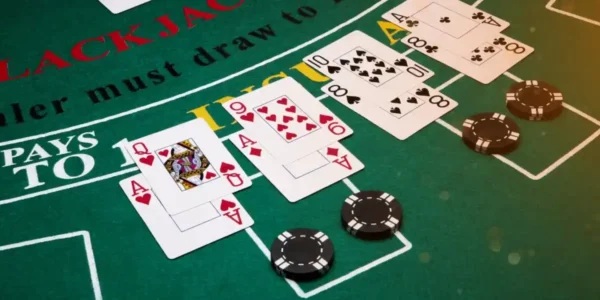
The important thing to remember is that blackjack probabilities aren’t fixed throughout a hand. They change according to the cards already on the table and the decisions made by both the player and dealer.
Imagine you’re holding a total of 12. Drawing a 2 would take you to 14, while drawing a 10-value card would cause you to bust at 22. If you’re already sitting on 20, almost every additional card would send you over 21. The probability associated with hitting therefore looks very different depending on your current hand.
The dealer’s visible card matters too. A dealer showing a 6 faces a different set of possible outcomes from one showing an ace, which is why blackjack players consider both their own cards and the dealer’s upcard when making decisions.
Why Are 10-Value Cards So Important in Blackjack?
There are more 10-value cards than any other value in a standard deck. The 10, jack, queen and king are all worth 10 points, giving each suit four different cards with the same blackjack value.
This is one reason 10-value cards feature so heavily in blackjack probability, from completing a natural blackjack with an ace to influencing decisions around doubling and dealer outcomes.
Blackjack Is About More Than Winning a Hand
When discussing blackjack odds, it’s also important to distinguish between the probability of winning an individual hand and the mathematical advantage built into the game.
You can make the statistically strongest decision available and still lose the hand. Equally, you could make a mathematically poor decision and happen to win.
Probability becomes meaningful across a much larger number of hands. Certain decisions may produce better expected outcomes over time, but they cannot determine what happens during one particular round.
This is why understanding blackjack odds should be viewed as a way to make informed decisions rather than predict results. The cards still introduce chance into every hand, regardless of how well a player understands the mathematics behind them.
What Is a Natural Blackjack?
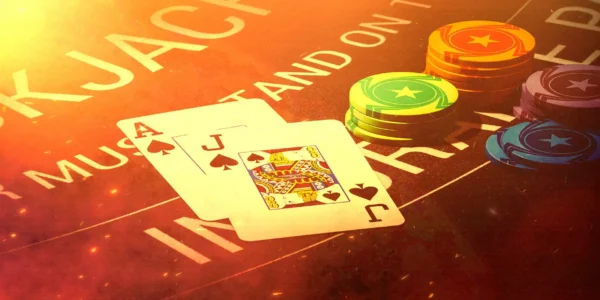
One probability players may encounter before making any decisions at all is the chance of receiving a natural blackjack: an ace alongside a 10-value card as the opening two cards.
In a standard single-deck game, there are four aces and 16 cards worth 10 points: the four 10s, jacks, queens and kings. This makes blackjack a relatively uncommon opening hand.
The exact probability changes slightly according to the number of decks being used, but it generally sits at just under 5%. In other words, players shouldn’t expect to see a natural blackjack particularly frequently, even during a fairly long session.
Understanding figures such as these helps put individual results into context. A run without a blackjack isn’t necessarily unusual, just as receiving several within a short period doesn’t mean the table has suddenly become more favourable.
What Is the House Edge in Blackjack?
The house edge describes the mathematical advantage that a casino has over players over an extended period of play. It is usually expressed as a percentage and is one of the most useful figures for comparing the underlying odds of different casino games.
Blackjack is unusual because its house edge isn’t represented by one universal figure. Depending on the rules of the table and the decisions made by the player, it can change considerably.
Under favourable rules and with players following basic blackjack strategy, the house edge can potentially fall below 1%. However, that doesn’t mean the casino only wins 1% of hands. Instead, the figure describes the casino’s expected mathematical advantage across a very large number of wagers.
Why Does Blackjack Have a House Edge?
One of the biggest reasons the casino maintains an advantage in blackjack is simple: the player acts first.
If a player goes over 21, their hand immediately loses. It doesn’t matter if the dealer subsequently draws cards and goes bust as well. The player’s wager has already been lost.
This order of play gives the dealer an inherent advantage even though both sides are ultimately trying to produce a stronger hand without exceeding 21.
Other rules then influence the size of that advantage. The number of decks, blackjack payouts, when players are allowed to double down and whether the dealer hits or stands on a soft 17 can all alter the mathematics.
Why the Blackjack Payout Matters
One particularly important rule to check is the payout for a natural blackjack.
Traditionally, blackjack pays 3:2. At some tables, however, players may encounter a 6:5 payout instead.
The difference might not immediately look substantial, but it has a noticeable effect on the house edge.
With a £10 wager, a 3:2 blackjack would produce £15 in winnings, while a 6:5 blackjack would produce £12. Because natural blackjacks occur often enough for that difference to accumulate over many hands, the less favourable payout increases the casino’s mathematical advantage.
This is a good example of why understanding blackjack odds involves more than simply knowing when to hit or stand. Two blackjack tables can look almost identical while offering noticeably different underlying odds because of their individual rules.
What Are the Chances of Busting in Blackjack?
A player busts when the total value of their hand exceeds 21. Naturally, the higher the starting total, the greater the risk that another card will take the hand over the limit.
If you’re holding 11 or less, you can’t bust with a single additional card. Even drawing a 10-value card would leave you with a maximum total of 21.
Once you reach 12, however, the calculation starts to change. Drawing a 10-value card would result in 22 and an immediate loss. As the value of the hand increases, more cards become capable of taking it over 21.
Approximate bust probabilities for common hard hand totals are:
- 12: around 31%
- 13: around 38%
- 14: around 46%
- 15: around 54%
- 16: around 62%
- 17: around 69%
- 18: around 77%
- 19: around 85%
- 20: around 92%
These figures can vary slightly according to factors such as the number of decks and cards already dealt, but they demonstrate how quickly the risk increases.
A hard 16, for example, is particularly uncomfortable. More than half of the possible cards can cause the player to bust, yet simply standing on 16 leaves a relatively weak total that the dealer may beat.
Looking at those percentages, it might seem logical to stop hitting as soon as the chance of busting becomes substantial. Blackjack strategy isn’t quite that simple.
Players aren’t trying merely to avoid going over 21. They’re trying to beat the dealer.
Why Soft Hands Are Different
Aces introduce another layer to blackjack probabilities because they can count as either 1 or 11.
A hand containing an ace valued as 11 is known as a soft hand. For example, an ace and a 6 create a soft 17.
If you hit soft 17 and receive an 8, you don’t bust at 25. Instead, the ace changes from 11 to 1, giving you a total of 15.
Soft hands therefore provide players with greater flexibility when drawing additional cards. This is why basic blackjack strategy often recommends playing a soft 17 differently from a hard 17, even though both hands currently have the same numerical total.
Understanding whether a hand is hard or soft is therefore just as important as knowing the number displayed beside it. When calculating blackjack odds, the cards making up that total can matter considerably.
Dealer Odds and Probabilities

Blackjack players don’t make decisions based solely on the cards in their own hand. The dealer’s visible card, known as the upcard, provides another important piece of information.
Unlike players, dealers don’t choose whether they feel like taking another card. They must follow predetermined rules, usually drawing until their hand reaches at least 17. Depending on the table, the dealer may also be required to hit a soft 17.
Because these rules are fixed, it is possible to estimate the probability of different dealer outcomes based on their upcard.
A dealer showing a 4, 5 or 6, for example, is generally considered to be in a relatively weak position. To reach 17 or higher, they will often need to draw additional cards, creating more opportunities to go over 21.
A dealer showing a 10 or ace presents a very different situation. These cards provide a stronger starting point and increase the possibility of the dealer finishing with a competitive total.
What Are the Dealer’s Chances of Busting?
Exact probabilities depend on the rules and number of decks being played, but approximate dealer bust probabilities by upcard are:
- 2: around 35%
- 3: around 37%
- 4: around 40%
- 5: around 42%
- 6: around 42%
- 7: around 26%
- 8: around 24%
- 9: around 23%
- 10: around 21%
- Ace: around 17%
The difference between a 6 and an ace is substantial. With a 6 showing, the dealer may bust in more than two out of every five hands. With an ace showing, the probability is closer to one in six.
These figures help explain why basic blackjack strategy can sometimes recommend standing on a relatively modest total against a weak dealer upcard. Rather than risking an unnecessary bust, the player may be better served by allowing the dealer to draw and potentially go over 21.
Dealer Outcome Distributions
Bust probability is only one possible dealer outcome. If the dealer doesn’t bust, they can finish with 17, 18, 19, 20 or 21.
The likelihood of each total changes according to the upcard.
A dealer showing a 10 has a particularly strong chance of finishing with 20 because any 10-value hole card immediately creates that total. With 10s, jacks, queens and kings all worth 10 points, there are more 10-value cards in a standard deck than cards of any other individual value.
An ace also creates the possibility of a natural blackjack if the hidden card is worth 10.
This is why simply asking, ‘What are my chances of busting?’ isn’t enough when making a blackjack decision. Players also need to consider what the dealer is likely to achieve if they stand.
Strong and Weak Dealer Upcards
For practical purposes, dealer upcards are often divided into stronger and weaker groups.
Cards from 2 to 6 are generally regarded as weaker upcards because the dealer has a greater chance of eventually busting. The 5 and 6 are particularly vulnerable.
Cards from 7 through ace are stronger because the dealer has a better chance of reaching a total of at least 17 without going bust.
This distinction forms the basis of many basic strategy decisions.
If the dealer is showing a weak card, players may take a more conservative approach with certain hands and allow the dealer’s compulsory drawing rules to create the risk.
Against a strong upcard, players may need to take greater risks themselves because simply standing on a low total is less likely to be enough.
Of course, none of these probabilities guarantees what will happen in an individual hand. A dealer showing 6 can still reveal a 5 and finish with 21, while a dealer starting with an ace can eventually bust.
The probabilities simply tell us how frequently different outcomes would be expected over a sufficiently large number of hands, giving players useful mathematical context for the decisions they make at the table.
How Blackjack Rules Change the Odds
Not every blackjack table follows exactly the same rules. Small differences in how a game is played can alter the house edge, sometimes more significantly than players might expect.
This is why experienced players often look beyond the table limits when choosing a blackjack game. The number of decks, blackjack payout and rules surrounding doubling, splitting and the dealer’s hand can all affect the mathematics.
Number of Decks
Blackjack can be played using anything from a single deck to a shoe containing six or eight decks.
Generally, fewer decks can be slightly more favourable to the player when other rules remain equal. One reason is that natural blackjacks occur slightly more frequently in a single-deck game.
However, casinos can compensate for this with other rules. A single-deck blackjack table offering a less favourable blackjack payout, for example, isn’t automatically better than a six-deck game offering 3:2.
The complete rules therefore matter more than deck count alone.
Dealer Hits or Stands on Soft 17
One rule you’ll commonly see is either S17 or H17.
S17 means the dealer must stand on all totals of 17, including soft 17. H17 means the dealer must hit when their hand is a soft 17.
Having the dealer hit soft 17 generally increases the house edge slightly. Although taking another card creates a possibility that the dealer’s hand will worsen, it also gives them an opportunity to improve a relatively weak 17.
For players comparing tables, dealer stands on soft 17 is generally the more favourable rule.
Rules for Doubling Down
Some blackjack tables allow players to double down on almost any initial two-card hand. Others restrict doubling to particular totals, commonly 9, 10 or 11.
Greater flexibility is generally advantageous to the player because it allows doubling to be used in more situations where the probabilities are favourable.
Another rule to look for is double after split, often shortened to DAS. This allows a player who has split a pair to double down on one or both of the resulting hands when appropriate.
Splitting and Resplitting
Casinos can also impose different rules on pairs.
Some games allow players to split a pair and then split again if another matching card appears. Others restrict how many hands can be created.
Aces often receive their own special treatment. Players may receive only one additional card on each split ace, and some tables don’t allow aces to be resplit.
These restrictions may appear relatively minor during an individual session, but each contributes to the overall mathematical profile of the game.
Blackjack Paying 3:2 vs 6:5
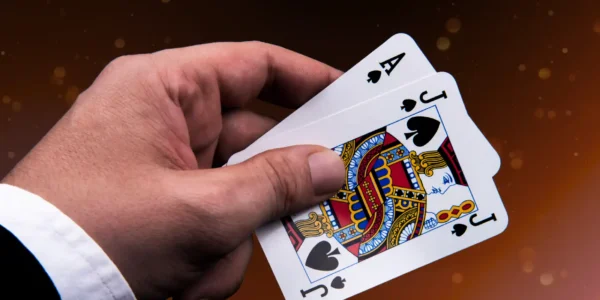
If there’s one table rule beginners should learn to recognise, it’s the blackjack payout.
A traditional 3:2 payout means a £10 natural blackjack wins £15.
At 6:5, the same £10 blackjack wins only £12.
That £3 difference occurs every time the player receives a qualifying natural blackjack, making 6:5 noticeably less favourable over the long term.
A table offering low minimum bets or an appealing format may therefore still have less favourable underlying odds if it pays 6:5 rather than 3:2.
Blackjack Variants and Their Different Odds
Blackjack has developed into numerous variations, particularly with the growth of online casinos and live dealer games. While the central objective usually remains reaching a stronger total than the dealer without exceeding 21, individual variants can introduce different rules, payouts and player options.
A strategy designed for one version of blackjack may therefore not be perfectly suited to another. Before playing an unfamiliar variant, it is worth checking exactly how the game differs from standard blackjack.
Classic Blackjack
Classic blackjack provides the useful baseline for comparing different versions of the game.
Players receive two cards and decide whether to hit, stand, double or split according to the table rules. The dealer follows a predetermined drawing procedure, and a natural blackjack will commonly pay 3:2 at tables offering traditional rules.
Even within classic blackjack, however, there can be considerable variation. A six-deck game where the dealer stands on soft 17 isn’t mathematically identical to an eight-deck table where the dealer hits soft 17.
European Blackjack
European Blackjack commonly uses two decks and has an important procedural difference: the dealer initially receives only one card.
The dealer’s second card isn’t drawn until players have completed their hands.
This can matter when the dealer shows an ace or 10-value card. In games where the dealer checks for blackjack immediately, players may discover the dealer has a natural before making additional wagers through splitting or doubling.
Spanish 21
Spanish 21 makes a much more noticeable change to the deck itself.
The four traditional 10 cards are removed from each deck, although jacks, queens and kings remain and continue to count as 10 points.
Removing those cards changes the probability of receiving particular hands, including natural blackjacks. To compensate, Spanish 21 generally provides players with additional rules and bonus payouts that aren’t found in conventional blackjack.
Blackjack Switch
Blackjack Switch gives players an unusual additional decision.
Two blackjack hands are played simultaneously, and after the initial deal, players can switch the second card dealt to each hand. A weak combination can potentially be transformed into two much stronger hands simply by exchanging those cards.
That sounds extremely favourable, so the game compensates with rule changes elsewhere. One common example is a dealer 22 resulting in a push against many player hands rather than a dealer bust.
Related Blackjack Articles

Conclusion
Blackjack might be a game of chance, but understanding the probabilities behind it can help players make more informed decisions at the table.
Everything from the cards in your hand to the dealer’s upcard can affect the mathematical picture.
This is also what separates blackjack from many other casino games. Players have decisions to make, and those decisions can affect their expected results over time. Following mathematically informed blackjack strategy can help reduce the house edge, but it can never remove chance from the game altogether.
FAQs
What are the odds of winning at blackjack?
What is the house edge in blackjack?
What are the chances of getting a blackjack?
Which dealer card is most likely to bust?
Is 3:2 or 6:5 better for blackjack?
Top Content

Trending