When Zero Was Banned From British Roulette Tables
If you play roulette online then you’ll have already encountered many different variants of the casino classic. You can probably reel them off like Bubba’s shrimp recipes in Forrest Gump: there’s French roulette, European roulette, American roulette, Age of the Gods bonus roulette, Lightning Roulette…But have you heard of British roulette? Didn’t think so.
What is British Roulette?
British Roulette is very similar to European Roulette, but with one key difference: there is no zero. Whereas American Roulette adds an additional zero (the double zero) to increase the house edge, British Roulette does the opposite.
In 1967, the House of Lords ruled that the zero pocket was illegal under British gaming laws. Removing the zero of course removed the house edge, meaning that wagers placed on red or black, odd or even and high or low numbers had exactly even odds.
The result was that the Metropolitan Police sent officers into casinos to look for wheels still using the illegal zero. This helped to create British Roulette. So why haven’t you heard of it before?
Why Banning Zero Mattered So Much
Roulette’s edge comes from a simple mismatch: even-money bets (red/black, odd/even, high/low) pay as if the chances are 50/50, but the green pocket makes them slightly worse than that in standard wheels.
Remove the zero, and the maths changes dramatically. On a zero-free wheel, even-money bets become genuinely even odds. That sounds great for players, but for casinos it creates a problem: there’s no built-in margin to keep the game profitable over time.
In practice, casinos rely on that small edge not just for profit, but also to cover staffing, premises, and operational costs. A roulette table that is genuinely “fair” is also, commercially speaking, a roulette table that becomes hard to justify running.
British Roulette and The Gambler’s Fallacy
It’s tempting to read the British roulette story as proof that the “right” format makes roulette beatable. In truth, the main lesson is that the house edge is structural, not something players can “out-think”.
Even on more favourable variants (like French roulette with La Partage or En Prison), spins remain independent. A number isn’t “due”, and streaks don’t create a predictable correction. This is exactly where the gambler’s fallacy creeps in, especially when players learn about house edge and start assuming they can time the “best moment” to bet.
You can choose a variant that is mathematically friendlier, but it doesn’t turn roulette into a game you can control.
Top tip: Don’t confuse “better odds” with “guaranteed wins”
Choosing a roulette variant with a lower house edge can improve the maths on paper, but it doesn’t change how roulette behaves in real sessions. Spins are still independent, streaks still happen, and outcomes don’t “balance out” on a schedule. The best use of this knowledge is picking the variant that suits your preferences, then setting sensible limits so the game stays enjoyable.
The End of British Roulette
Well, British Roulette was short-lived. In 1968, new legislation was introduced to gaming regulations that explicitly allowed the zero pocket in roulette wheels. This brought back the house edge to roulette games, which would have otherwise likely died off in the UK, and relegated British roulette to a quirky footnote of history.
Although British Roulette was short-lived, there are still several versions that exist in all corners of the globe.
American Roulette
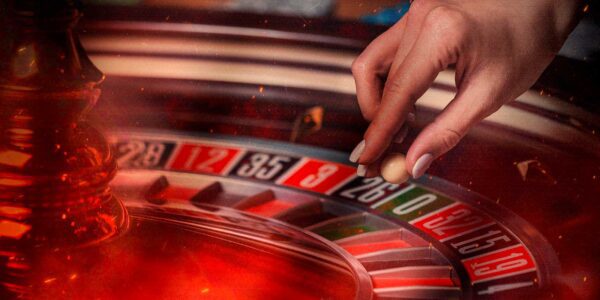
With the addition of a double zero meaning there are 38 slots on this version of a Roulette table (1-36, zero and double zero), the house edge jumps up to 5.26%.
French Roulette
The French version of the game is identical to European roulette when it comes to numbering(1-36 & zero), but it has two key different gameplay variations:
La Partage: If the ball lands on zero, then players will only lose half of their even-money bets: red or black, odd or even, and high or low.
En Prison: If the ball lands on zero, players have the option to leave their even-money bets ‘in prison’ for the next spin, rather than losing it.
Mini Roulette
The wheel consists of just 13 slots, with numbers 0-12, and this significant reduction in slots results in a whopping 7.69% house edge.
The game is played like traditional roulette, but with fewer numbers. There are reduced betting options, and the odds are adjusted to reflect the smaller wheel.
Mini roulette is often offered in online casinos as a simplified or more accessible version of the game, and is less commonly found in physical casinos.
Multi-Wheel Roulette

Primarily based on the European-Roulette wheel configuration, so 37 slots ranging from 0-36, however, in this version, players can bet on multiple wheels at the same time, often up to eight wheels. Although each wheel spins independently, the same bet is carried out across all tables i.e. you cannot bet red on four tables, and black on four tables, as an example; if you choose red then all of the in-play tables will carry that bet for the player.
Multi-Wheel Roulette offers a more dynamic and fast-paced experience for players, however, it is not often found in physical casinos, and is mainly available online.
Double-Ball Roulette
Based on European roulette, with 37 slots, however, two balls are used in this version – double the fun! Each ball is treated as its own spin for inside bets (bets with more than three outcomes), so if a player chooses 1-12 and one ball lands in the four pocket and one lands on 23, they still win due to the outcome of the four. However, when it comes to outside bets (odd or even, black or red), then both balls have to land on the desired outcome.
Again, much like Multi-Wheel Roulette, this version is typically found in online casinos and provides a more-engaging experience given the higher volume of outcomes and unpredictability.
Triple-Zero Roulette
This variation includes a third zero (000), taking the wheel layout to 39 slots, which further increases the house edge to 7.69%, therefore, making it one of the less-desirable versions of the game for players, and this is highlighted by its level of rarity – only a handful of United States of America casinos will run this game mode.
Gambler’s Fallacy
The reduction in the house’s edge on certain versions of Roulette is appealing to players, and increases the chance of success. However, it is important to remember to avoid the gambler’s fallacy that a certain number is due to appear having not cropped up for a while. Every roulette spin is independent, and therefore the odds do not change spin to spin.
Related Roulette Articles


FAQs
When was zero banned from roulette in Britain?
What did “British roulette” look like?
Did removing zero eliminate the house edge?
Why did British roulette end so quickly?
Is British roulette available online today?
Which roulette variant has the lowest house edge?

Top Content


Trending